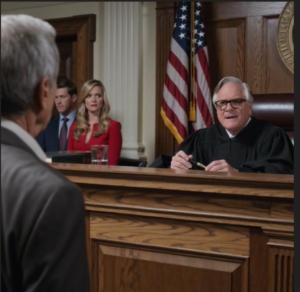
As I Walked Into The Courtroom, My Daughter Let Out A Laugh, While My Son-In-Law…
Bản gốc vượt giới hạn của một tin nhắn, nên mình chia thành các phần nối tiếp để giữ nguyên nội dung, không tóm tắt. Dưới đây là phần 1, đã bỏ timestamp, chỉnh dấu câu và chia đoạn, giữ nguyên tiếng Anh của bản gốc.
As I stepped through the heavy oak doors of the family courtroom, the air seemed to instantly freeze. The room was grand, lined with dark wood and filled with the suffocating silence of legal proceedings. My daughter, Celeste, leaned back in her leather chair and let out a soft, mocking laugh that echoed off the high ceiling. Beside her, my son-in-law, Preston, quickly turned his head. He stared down at the polished floor, completely refusing to meet my eyes.
Confidence poured off them both like heat. They were certain the outcome was already decided. A feeble man of seventy, inching his way down that aisle—what threat could he possibly pose? They saw easy prey, someone whose dignity was theirs to take.
Then the judge raised his eyes from the documents spread before him. Judge Lawrence Pemberton. Our eyes locked. The color vanished from his face in an instant, leaving him pale as chalk. That heavy wooden pen tumbled from his hand and struck the mahogany desk with a sharp crack. His fingers shook as a barely audible whisper broke the silence of the room.
“My God, is that really him?”
Every head swiveled in my direction. The smug satisfaction Celeste had been wearing dissolved from her features. Preston’s gaze finally climbed to meet mine, his forehead creased with bewilderment. Right then, the full weight of the truth landed on my daughter like something solid and crushing. Her whole entitled, greedy world had never once known the man I really was—until this moment.
Welcome back to Dad at Midnight. Glad you found your way here tonight. If stories like this one speak to you, consider sticking around and following along, because there are more where this came from. Before we go any further, are you listening through headphones right now, or are you letting this play out loud through a speaker? With a story this close and personal, I always find it hits differently when it feels like someone is speaking just to you.
One last thing before we begin: this story contains fictional elements added for dramatic storytelling purposes, and any resemblance to real people or events is entirely coincidental. What matters most is the truth at the heart of it.
It all began exactly three weeks before that dramatic courtroom showdown. I was living a quiet, solitary, and peaceful life on my fifty-acre farm just outside of Knoxville, Tennessee. After my beloved wife, Eleanor, lost her battle with breast cancer a few years back, that land became the only refuge I had left. We had bought those sprawling acres together decades earlier, bound by a shared promise to leave them untouched. It was our sanctuary, a green, breathing escape from the relentless noise and greed of city life.
My mornings were spent with my loyal golden retriever, Cooper, planting sweet corn and rebuilding a rusted hay baler in the barn. I genuinely believed I had settled my debts with the world, that I had earned the right to some peace. But peace is a fragile thing when your own blood starts seeing you not as a grieving father, but as a living, breathing bank account just waiting to be drained.
It was a crisp Tuesday afternoon when the sharp crunch of gravel in the driveway shattered the farm silence. Celeste and Preston rolled up without any warning in their gleaming, brand-new silver Mercedes sedan. They hadn’t come bearing groceries or warm embraces. They climbed those wooden porch steps with the cold, mechanical efficiency of hired collection agents.
Before I could ask about the drive or put a pot of coffee on, Celeste reached into her designer bag and dropped a thick, heavy stack of papers onto my kitchen table. The envelopes had been torn open, the documents stamped in aggressive red ink: past-due notices, final warnings from the electric company, the local water board, and the county property tax office.
I looked down at those papers, then slowly raised my eyes to my daughter. Celeste moved closer and rested her hand on my shoulder. What came out of her mouth was a sickly sweet, deeply patronizing tone that twisted my stomach immediately.
“Dad, you forgot to pay the electricity again,” she said, sighing with theatrical heaviness, as if I were a burden she was nobly shouldering. “The water bill is two months late now. Your memory is really slipping, isn’t it? We’re getting so worried about you out here all by yourself, miles from anyone. You could get hurt. We just want to help you get on top of things before the power goes dark and you’re left freezing.”
Preston cut in from the kitchen doorframe, leaning against it with a smug, self-satisfied smirk spread across his face.
“Yeah, Gerald,” he said—not even Dad. “It’s a lot for an older guy to stay on top of these days. Maybe it’s time we stepped in and formally handled your finances. Take that whole weight off your shoulders so you can just rest easy.”
I stood there, staring at those overdue notices on my table. I didn’t raise my voice. I didn’t argue or get defensive. Instead, I let my hands tremble just slightly. I played the role: the bewildered, helpless, fading old man they were counting on me to be. I rubbed my temples, exhaled a shaky breath, and offered a quiet, sheepish apology. But deep inside, a massive alarm was sounding.
You see, Celeste and Preston knew me as a devoted father and a dull, retired government worker who liked to garden. What they either dismissed or never bothered to look into was what I actually did for the federal government. For thirty-five years, I served as a senior forensic auditor for the Department of Justice. My entire career was built on tracing hidden offshore accounts, unraveling sprawling webs of corporate fraud, and taking the stand against some of the most dangerous financial criminals in the country.
I have an eidetic memory for numbers. I can still pull up the exact routing digits from shell companies in Mafia cases I worked two full decades ago. One glance at those bills told me, with cold, absolute certainty, that they had already been paid. I had written the checks myself on the fourth of the month. I remembered the precise amounts down to the last cent: $68.40 for the water, $127.85 for the electricity.
The documents on my table were genuine, but they were duplicates. They had likely pulled them from my mailbox before my paper checks cleared or accessed them through an online portal they had quietly broken into. My own daughter was standing there, looking straight at me and lying without flinching. She was building a false narrative from the ground up, deliberately sowing the seeds of dementia in my story, constructing a fabricated paper trail to establish my supposed mental decline.
What was driving her to do this? I didn’t have the full picture yet, but I had spent my adult life dismantling intricate criminal operations, and I recognized a setup the moment I was standing inside one.
I nodded slowly and thanked them for their concern, catching from the corner of my eye the quiet, triumphant look they traded. They were convinced they were running the play, that I was an easy mark. But the retired investigator buried inside me had just opened his eyes, and the hunt was now underway.
The days after their unannounced visit settled into a strange, unsettling pattern. When you live alone long enough, you know the precise geography of your own home. You build muscle memory around your daily life. My glasses always lived on the console table. My newspaper was always beside my coffee mug. Then the landscape of the house began shifting.
It started with the mail. I was expecting my tax assessment, a document I always filed with care. It never appeared—or rather, it showed up and then vanished from the counter. Two days later, my car keys went missing. I turned the house upside down. Eventually, I found them buried at the bottom of the laundry hamper, a place I had absolutely no reason to put them.
I stood there, staring at those keys tangled in dirty clothes. Anyone else might have panicked. They might have started questioning their own mind. But I didn’t panic. I felt the cold, familiar logic of my career slide into place. Someone had been inside my home. Celeste still held the spare key I’d given her for emergencies, and she was using it to methodically dismantle my grip on reality.
The true depth of their cruelty revealed itself on a Thursday afternoon. I went out to tend to Eleanor’s hydrangea bushes, a ritual that kept her memory breathing. I reached for her pruning shears, always kept on the second shelf of the shed. Gone. I tore the shed apart, searched every garden bed. The shears had simply vanished.
That evening, Celeste and Preston came by under the pretense of checking in. When I brought up the missing shears, Celeste responded with a gasp of exaggerated concern.
“Oh, Dad,” she said, her voice thick with manufactured sympathy. “You probably set them down somewhere in the yard. You know how easily distracted you get these days.”
Preston shook his head with a slow, overdone sigh. He crossed to the window and stood with his back toward me.
“Gerald, buddy,” he said quietly, “this is getting serious. First the bills, then your keys, and now things with real sentimental value. You’re becoming a risk to yourself. What if you leave the stove running next time? What if you wander off and can’t find your way home?”
I watched the two of them standing in my living room, coordinating a psychological ambush. Every instinct screamed at me to tell them I saw exactly what they were doing. But a seasoned investigator never tips his hand before the net is fully set, so I gave them the performance they had come for.
I let my shoulders sag. I dropped my gaze to the floor and worked my weathered hands together slowly. I let my voice crack just enough to carry the sound of a man losing his footing.
“You might be right,” I whispered, glancing up at Celeste with wide, hollow eyes. “I just don’t know what’s going on with me lately. Everything feels so muddled.”
Celeste stepped in and wrapped her arms around me. It was an empty, mechanical hug.
“Don’t you worry, Dad,” she murmured softly, patting my back the way you would a frightened child. “We’re going to take good care of you. We’ll make sure you’re completely safe.”
After they finally walked out, the house sat heavy with the stale residue of their deception. I moved to the kitchen for a glass of cold water, and that’s when it caught my eye. Sitting squarely in the center of the kitchen island, positioned where I couldn’t possibly overlook it, was a glossy, thick brochure.
I lifted it from the counter. The cover showed a circle of smiling, white-haired residents playing chess on a sun-washed patio. Ridgecrest Manor Assisted Living. I turned the pages. Inside: twenty-four-hour medical surveillance, secured memory care units, and full lifestyle management.
Celeste hadn’t left it there by accident. It was a deliberate seed pressed into my supposedly crumbling mind. She wanted me to open those pages and feel a wave of relief wash over me. She wanted me to surrender, to accept the comfortable fiction that I was broken and needed a gilded cage to keep me safe.
I stood alone in the low light of my kitchen, clutching that glossy brochure as the scattered pieces slammed into place. The deliberately moved keys. The intercepted mail. The fabricated bills. The missing pruning shears. And now this: a brochure for a specific assisted living facility. This was no ordinary grab for a retirement account. They were carefully constructing a documented, observable record of serious mental decline. They were laying the legal groundwork for a permanent conservatorship.
Celeste was planning to stand before a judge and have her elderly father declared legally incompetent. If she succeeded, she would gain immediate, unrestricted command over my finances, my medical choices, and, most critically, my fifty acres of prime land. She would hold the power to have me warehoused in a memory care unit and sell off the property that Eleanor and I had vowed to protect.
I set the brochure on the granite counter. I did not feel fragile or unsteady. I did not feel disoriented or lost. My mind was sharper than it had been in years. I understood their full endgame now, and every instinct built over decades of investigative work told me they would accelerate their tactics if I didn’t fold fast enough.
The passive remarks and the stolen garden tools were just the opening moves. They were going to force a confrontation, and standing motionless in the quiet of my house, I decided I would let them come. I would wear the mask of the helpless old man, pulling them deeper into their own snare until they crossed the point of no return.
The morning carried the smell of pine and wet soil, a scent that usually settled something in me. Cooper, my golden retriever, came bounding down the porch steps with his familiar, boundless energy. He was the last living thread connecting me to my life with Eleanor. His bright eyes and wagging tail kept me tethered.
I watched him nose around the base of the old oak tree, perfectly content in our solitude. I turned to pour a fresh cup of coffee. The deep quiet of the farm held until it was ripped apart by a sound that sent ice through my veins: a harsh, strangled hacking from the front yard.
I dropped my ceramic mug and heard it shatter behind me as I ran out the door. Cooper was lurching unsteadily near the edge of the driveway. His golden coat was slick with sweat. Before I could close the distance, his back legs buckled entirely. He went down hard on the gravel, his body seizing as violent retching overtook him. Thick foam gathered at the corners of his mouth, and his breathing broke into ragged, shallow gasps.
I hit my knees, the sharp stones biting through my trousers, and cradled his heavy head against my chest. I stroked his ears and whispered his name, trying to reach him through the fear filling his eyes. As I fumbled for my phone to call the clinic, the crunch of tires on gravel carried down the driveway.
Celeste and Preston were pulling up in their silver car. The timing was far too deliberate. It was a Tuesday morning, a time they ordinarily spent buried in their city schedules. Yet here they were, climbing out with faces that registered no real surprise.
Preston walked over, unhurried, arms folded across his chest, looking down at my suffering dog. He didn’t crouch to help. He didn’t ask what happened. He exhaled a long, theatrical sigh and shook his head.
“See, Dad,” he said, his voice thick with condescension, “this is exactly what we’ve been talking about. You’re so mixed up lately. You probably gave the dog your own blood pressure pills.”
I looked up at him with my hands trembling, holding Cooper close. I knew my medication was locked in the bathroom cabinet. Cooper had no way to reach it. But Preston pressed on with his calculated script, his eyes stripped of any real feeling.
“You can’t manage an animal anymore, Gerald. You’re confusing your medications, misplacing everything, and now this poor dog is suffering for it. It’s honestly painful to see.”
Celeste moved in beside him and arranged her face into a portrait of sorrowful concern. Her tone was soft, but underneath it ran something hard and commanding.
“Dad, we can’t stand by and watch this,” she said, keeping her distance from the mess on the ground. “We’ve been patient. We’ve given you room. But you’re slipping away from us, and what happened to Cooper is a wake-up call we can’t ignore. What if you leave the gas on next? What if you take the wrong pills yourself? Someone is going to get seriously hurt.”
She reached into her bag and produced a thick manila envelope.
“I’ve spoken with our legal team,” she continued in the same measured tone you’d use to discuss weekend plans. “They’ve drawn up the paperwork for a medical and financial power of attorney. It’s temporary, just until we get you settled somewhere with the right professional support. You need to sign these today. We can’t leave you out here like this.”
I looked down at Cooper, whimpering softly against the gravel, then back up at the two figures standing over me. The sheer scale of what they had done was staggering. They had deliberately hurt an innocent animal to manufacture evidence of my incompetence. The fury rising in my chest was a living thing, but I drove it down and buried it.
I let one tear trace a slow line down my face. I let my lower lip tremble. I gave a slow, defeated nod.
“You might be right,” I said, my voice fracturing in exactly the right places. “I’m so sorry. I don’t know what I did. I’ll look at the papers. Just let me take care of my boy first. Please, let me help my dog.”
Celeste’s mouth curved into a smile of cold satisfaction that she quickly smoothed away.
“We’ll leave the documents on the counter, Dad,” she said gently. “We’ll come back this evening to collect them. Don’t worry about a thing. We have it all handled.”
I stayed on the gravel, cradling Cooper, weeping quietly as they walked back to their car. I heard the doors close and the engine turn over. I didn’t move until the sound of their tires faded entirely down the country road and the silence of the farm returned.
The instant they were gone, the tears stopped. My shaking hands went perfectly still. I carefully cleared the foam from around Cooper’s mouth. The frail, crumbling old man they had just left behind dissolved without a trace, replaced by the forensic investigator who had brought down criminal networks. My gaze went cold and precise.
I didn’t waste a breath. I gathered my dog into my arms and rose with a steadiness that would have startled my daughter. They thought they had cornered me. They believed that poisoning Cooper would shatter whatever resolve I had left and hand them everything. But they had made a catastrophic miscalculation. They had crossed a line that couldn’t be walked back, and I was going to ensure they paid dearly for it.
I laid Cooper across the back seat and covered him with a woolen blanket. I drove fast, passing straight by the local vet in town. Celeste had almost certainly already called ahead to plant her story about a senile old man who’d accidentally poisoned his own pet. I couldn’t afford to trust anyone in my immediate orbit.
Instead, I drove forty-five minutes over the county line to find Dr. Amos Rutledge. Amos was an old friend, a plainspoken country vet who had treated Eleanor’s rescue horses years back—discreet, thorough, and entirely outside the reach of local gossip.
When I arrived at his small clinic, I carried Cooper through the door. My jaw was clenched so hard my teeth ached. Amos took one look at the dog’s pale gums and labored breathing and called his technicians without a word. They moved Cooper into the back at a run, getting him onto intravenous fluids and drawing several vials of blood.
I wore a path across the small waiting area. The antiseptic smell stung my nose and pulled up dark memories of hospital corridors during Eleanor’s final days. After what felt far too long, Amos came through the swinging doors. He peeled off his surgical gloves, his face set in a grave expression.
“He’s stable for now, Gerald,” Amos said, lowering his voice. “But we caught it just in time. His kidney function was falling fast.”
I leaned back against the counter and let out a slow, heavy breath. I told him I needed to know exactly what we were dealing with. I asked him point-blank whether it could have been human blood pressure medication, just to foreclose the ridiculous story my daughter had been building.
Amos frowned and shook his head without hesitation.
“Absolutely not,” he said. “No question about it. The initial blood panel showed a sharp spike in specific enzymes that leave no room for doubt. This was ethylene glycol poisoning. It was antifreeze, Gerald. And judging by his size and how the symptoms had progressed, it wasn’t a large dose. It was a small, deliberate amount, sufficient to make him severely ill but calibrated not to kill him outright.”
Those words settled over the room like a heavy fog. Antifreeze. A small, deliberate amount. A sickeningly sweet poison that any dog would eagerly lap from a food bowl if it were mixed in.
I thanked Amos, settled the emergency bill in cash, and asked him to keep Cooper overnight for monitoring. I told him I needed a complete, certified toxicology report printed on his official clinic letterhead. Amos gave a single nod, reading the gravity of what I wasn’t saying without pressing me for details.
I walked out to my truck and lowered myself behind the wheel. I didn’t turn the key. I just sat there, both hands wrapped around the leather steering wheel until my knuckles went white. I looked through the dusty windshield, but what I saw wasn’t the quiet road in front of me. I saw the faces of men I used to pursue in my years at the Department of Justice.
I tracked financial operators for major international cartels. These were merciless men who constructed vast empires on violence and fear. One particular case from 1997 came back to me. A cartel enforcer wanted to break a stubborn bank manager who wouldn’t launder money for the organization. He didn’t send a letter. He didn’t make a threatening call. He poisoned the man’s prized racehorse and left it to die slowly in its stall.
It was a precise, surgical act of psychological terror, designed to crush the victim’s sense of safety, instill a deep helplessness, and demonstrate that no boundary was beyond reach. Now, twenty-five years later, I was staring at the same predatory playbook laid open in front of me. Except this time, it wasn’t a cartel enforcer running those tactics. It was my own daughter—the little girl I had steadied on her first bicycle, the child Eleanor had sung to sleep every night.
Celeste and Preston were so consumed by their hunger for my assets that they were prepared to torment an innocent, devoted animal. They needed a manufactured crisis, something vivid and documented to demonstrate I was a hazard to those around me. They were constructing an airtight legal narrative against my competence, and they had no interest in who had to be hurt along the way.
Something hardened inside me in that moment. The raw grief of a father who had been betrayed burned away completely. What took its place was the cold, stripped-down clarity of a federal prosecutor who had spent decades preparing for exactly this kind of fight. I understood now that this was no longer a family matter gone sideways. These were adversaries—hostile, calculating, and entirely without moral guardrails.
They had mistaken my age for weakness. They had read my silence as evidence of a failing mind. They had walked into this ring expecting to dismantle a disoriented old man without resistance.
I turned the ignition. The engine caught with a low, steady rumble. I pulled out of the clinic lot with my mind already moving through operational priorities. The performance of the confused, helpless victim was finished. It was time to move from passive observation into active, aggressive countermeasures.
I needed to chart their full network. I needed to understand what catastrophic pressure was driving this sudden, reckless escalation. People don’t reach for tactics this extreme unless something is bearing down on them from the other direction. I had to find what that was.
The retired prosecutor was no longer dormant. The methodical, relentless investigator had stepped back into the room. I pointed the truck toward home and began mentally laying out the campaign ahead. The opening of the next phase had begun.
The drive back was a focused, tactical blur. Those winding back roads gave me the space to work through my immediate moves. I knew the moment I walked through my front door, I’d be in compromised territory. Celeste and Preston had already shown they had a key and no reluctance whatsoever to violate that space. If I wanted to catch them in the act, I needed eyes and ears they would never find.
I didn’t drive straight back to the farm. Instead, I took a wide detour to a specialized electronics shop buried in the industrial outskirts of a neighboring city. The owner was a former military intelligence contractor I’d encountered years earlier during a major federal sting.
I paid entirely in cash for a serious array of military-grade surveillance hardware: dozens of micro cameras no larger than a pinhead, high-fidelity audio devices engineered to pull whispered conversations right through solid drywall, and a compact, heavily encrypted local router system.
By the time I finally turned into my gravel driveway, the sun had gone beneath the horizon, drawing long shadows across the wooden porch. Celeste’s silver car was already parked near the barn. They had let themselves in, searching for documents or staging the next fabricated incident to support their narrative.
I pushed through the front door with my shoulders deliberately heavy, the surveillance equipment hidden inside a worn leather satchel hanging from my shoulder. Preston was sunk into my favorite armchair, scrolling his phone, while Celeste sorted through a pile of mail on the kitchen counter.
I slipped back into my carefully rehearsed persona without missing a beat. I let my shoulders drop, allowed my hands a faint tremor, and exhaled the long, hollow breath of an exhausted old man. I told them the ordeal at the vet had wrung me out completely and muttered something vague about needing to lie down.
I shuffled toward the bedroom. Celeste followed me to the doorway, her voice coated in that same cloying sweetness. She told me to rest well and said they’d stay in the living room to look after things. I thanked her, pulled the bedroom door shut, and turned the lock.
I lay on top of the covers, fully dressed, in the dark. I listened to the low murmur of their voices seeping up through the floorboards below. For over three hours, I didn’t move. When the house finally fell completely silent, I rose. I moved through the room with the quiet, measured precision I had first developed during early fieldwork. I opened the leather satchel and arranged the equipment on the bed.
I started in the living room, easing past Preston, who was dozing on the sofa. My pulse stayed even and purposeful. I pressed a micro camera into the hollow base of the ceramic owl figurine sitting on the mantel. I secured a sensitive audio device to the underside of the oak coffee table.
In the kitchen, I removed the faceplate from a wall outlet and seated a wide-angle lens behind the casing, angled to take in the full room. I moved like a shadow through my own house, wiring the dining room, the hallways, and the private office where my financial records were locked away.
Then I slipped out the back door into the cool, dark night. I wired the barn’s interior, positioning a camera high in the rafters with a downward angle that covered everything below. Then I turned to the driveway, tucking a weatherproof, motion-activated lens into the hollowed core of a decorative stone pillar beside the front gate. It would capture every plate number and every hushed exchange taking place outside their car.
Back inside my locked bedroom, I opened my laptop and completed the final, most critical layer of the operation. I connected the local router to a secure, encrypted offshore server based in Switzerland. Every frame of high-definition footage, every captured audio file, would be automatically pushed to a digital vault that no one on this side of the Atlantic could access or legally compel without my direct authorization.
As the live feeds began filling my screen, a clean surveillance grid of the entire property, a brief wave of sorrow moved through me. I sat looking at the grainy green glow of the night-vision feed showing my daughter asleep on my sofa. The bitter irony of it all was impossible to set aside.
My entire career had been built on these exact covert surveillance methods, the same tools I’d used to bring down violent criminal syndicates and sophisticated financial predators. I had constructed federal cases against men who obliterated innocent lives in the name of profit, and now I was deploying those same counterintelligence measures against my own blood.
I was treating my only daughter and her husband as what they had become: organized, dangerous criminals. But as I watched Preston shift in his sleep, the memory of that sweet-tasting poison he had casually fed my trusting dog still fresh in my mind, whatever sorrow I’d been carrying hardened back into something cold and immovable.
They had forfeited the right to be called family. They were hostile operatives inside my perimeter, and I intended to document every move they made. I sat in the dark, the monitors casting a faint glow across my face, completely prepared for whatever performance they had planned once the sun came up.
Dawn broke pale and cold, a thin light spreading across the frost-covered fields of my farm. I was already at the kitchen table with a cup of black coffee, waiting. At precisely ten in the morning, Celeste came through the front door, leading a man I’d never laid eyes on.
He wore a white coat thrown over a rumpled blue dress shirt, and he carried a polished leather briefcase. But I clocked his shoes immediately: cheap, scuffed at the toes, entirely wrong for the high-end medical specialist my daughter was presenting him as.
Celeste introduced him as Dr. Stanhope, a leading neurologist from a private city clinic. She used that familiar syrupy softness, explaining that he was simply here for a friendly conversation to check in on my memory. I wasn’t fooled for a second. This was no medical visit. It was a targeted deposition.
I nodded with a slow, glassy smile and shuffled my feet as I guided them into the living room. I made certain my hands trembled as I settled into the worn recliner, drawing a knitted blanket across my knees for effect.
Dr. Stanhope took the seat across from me and clicked his pen. He opened with the standard orientation questions: the day of the week, the current month, the sitting president of the United States. I let the silence stretch. I fixed my stare on the floral pattern of the rug, brow furrowed as though wading through deep, thick fog. Then I gave him the wrong month and named a president from two decades back.
Celeste produced a soft, practiced gasp and rested her hand on Preston’s arm. Preston barely looked up from his phone, responding as though my supposed collapse was an inconvenient interruption to his afternoon.
Dr. Stanhope made a few notes on his clipboard, his face giving nothing away. He wasn’t looking at me the way a doctor looks at a patient. He looked at me the way a man looks at a transaction that is proceeding exactly on schedule.
The cognitive evaluations followed. He leaned forward and recited three simple words for me to retain—apple, table, penny—and told me he’d return to them shortly. We talked through my daily routine, and I fed him carefully constructed stories about wandering the property at night, forgetting whether I’d fed the animals.
When he circled back to the three words, I let my expression cloud over. I pulled up “apple” without trouble, then fumbled the remaining two, substituting entirely unrelated objects with a look of strained helplessness. His pen moved quickly.
He slid a blank sheet of paper and a pen across the table and asked me to draw a clock face showing ten minutes past eleven, a standard neurological screen for cognitive impairment. I gripped the pen loosely, let my hand shake, and drew a lopsided, distorted circle. I crowded all the numbers toward the right side of the page, leaving the left bare. The hands pointed in directions that meant nothing.
When I passed it back, I caught Celeste pressing her lip between her teeth to hold back a smile of quiet triumph. She had everything she’d come for: documented, visual proof that her father was an empty and incompetent shell.
Dr. Stanhope gathered his notes, clicked the briefcase shut, and drew Celeste aside near the front hallway. Speaking in low, measured tones, he assured her the evaluation was fully conclusive and told her the necessary medical certificates would be forwarded to their legal team before the week was out.
Celeste thanked him with the practiced grief of a daughter at the end of her rope. Preston held the front door open and offered to walk the doctor to his car. I sat motionless in my recliner, staring out through the window with a slack, vacant look, watching them descend the porch steps.
I didn’t move until the house had emptied and the silence closed back in around me. Then I stood, folded the blanket, and set it aside. My trembling hands went completely still. The fog cleared from my eyes in an instant.
I waited for nightfall before retreating to my locked office. I opened the laptop and pulled up the encrypted offshore server, then navigated to the high-definition footage from the camera I had concealed inside the stone pillar near the gate the night before. I rewound to the moment Preston walked the doctor to his vehicle.
The image was razor sharp. I watched Preston lean against the driver’s door, glance back over his shoulder, and then reach inside his jacket. He produced a thick manila envelope and placed it in the doctor’s hand. The doctor lifted the flap, ran his thumb across the tight stacks of hundreds inside, gave a brief nod of satisfaction, and tossed the envelope onto the passenger seat.
A certificate of mental incompetence, purchased with cash in my own driveway. My family had just bought my legal destruction, and they’d done it right outside my front door.
I paused the frame on the handoff. They believed they had sealed a clean victory, but what they had actually done was hand me the precise weapon I needed to unravel everything they had built. The quiet war between us had now arrived at its real beginning, and I was ready for it.
I didn’t sleep that night. I kept that frozen image on the screen, letting the raw nerve of their crime burn away whatever reluctance still lingered. Well before sunrise, I was moving. I dressed in dark, plain clothes, slipped out through the back, and took my truck.
My phone stayed on the kitchen counter. Celeste had almost certainly buried tracking software in it under the cover of a family emergency app. Let her think I was still in bed.
I drove forty miles from the farm, across the county line, where the open fields gave way to crumbling strip malls and faded asphalt. I found a dim convenience store beside a rusting gas station, walked past the indifferent cashier, and paid cash for a cheap prepaid phone and a handful of activation cards. Untraceable. Disposable. Completely invisible to the surveillance net she thought she’d drawn tight around me.
Back behind the wheel, cold air sharp against my face, I activated the device and listened to the automated setup prompts. I felt the familiar gravity of my old life settling back into place across my shoulders. I was no longer a retired widower waiting out his days. I was running an operation again, building a case from nothing in the dark, and I needed someone who knew how to move through the murky depths of financial espionage without leaving footprints.
I dialed a number I had kept in memory for over a decade. It belonged to Clifford Hale. Years before I left the Department of Justice, Clifford had come in as a fresh, idealistic rookie. I was the senior forensic auditor who brought him up, teaching him how to read the gaps in a sanitized ledger, how to pierce the shell company structure, how to trace laundered money through the layered offshore maze.
But the grinding weight of federal bureaucracy eventually wore him down, and Clifford walked away from the agency to build his own private intelligence operation. He became a sharp, relentless investigator who made his living in corporate warfare, entirely comfortable working the deep gray areas where the law got blurry. He had access to tools, databases, and unsavory contacts that the government simply could not legally touch.
He owed me his career, and more importantly, he possessed exactly the kind of moral flexibility the assignment I was about to hand him would require.
The phone rang three times before the line clicked open. A brief silence followed, just the sound of a man on the other end waiting for the caller to speak first. I didn’t bother with introductions. I simply said his name.
“Gerald,” Clifford said, his voice instantly locking onto the gravelly tone of his old mentor. “It’s been a very long time. I figured you were spending your golden years planting sweet corn and keeping the rest of the world at arm’s length.”
I had neither the time nor the patience for sentimental small talk. My life and my property were under active siege.
“Listen to me carefully, Cliff,” I said, my voice stripped of any warmth. “I’m not calling to reminisce. I need you to run a comprehensive Level Four background sweep, entirely off the books. No digital footprint, no official channels, no paper trail of any kind.”
The line went dead silent. A Level Four sweep was our old agency shorthand for a deep, illegal dive. It meant cracking secure financial firewalls, accessing restricted banking nodes, and pulling private communications without a warrant. Just asking for it was a felony.
“You know I don’t take that kind of exposure for just anybody,” Clifford replied, his tone sliding into professional caution. “Who are we looking at?”
“Preston Varden,” I answered flatly. “CEO of Varden Development Group. He also happens to be my son-in-law.”
I heard the faint scratch of a pen through the speaker.
“Your own son-in-law,” Clifford echoed, dark curiosity threading into his voice. “What exactly did he do to pull you out of retirement for this?”
“He purchased a fraudulent diagnosis of severe cognitive impairment to have me forced into a locked conservatorship,” I said, keeping my voice cold and level. “He and my daughter are actively trying to strip away my rights and take everything I own.”
And people don’t engineer elaborate, highly illegal medical frauds simply for sport. They don’t risk serious prison time unless something catastrophic is bearing down on them. Preston was hiding something devastating inside that real estate firm. The speed they were moving—reckless, almost frantic—told me everything.
“Follow the money, Cliff. They’re desperate. Find out why.”
“I’ll need full authorization to bypass standard privacy protocols,” Clifford said, his tone conveying that he grasped the full gravity of what was being asked.
“Consider it granted,” I replied. “Dig into his hidden investors, his outstanding loans, his private offshore holding accounts. I want to know who he owes, how much, and exactly what kind of pressure is driving him to come after my life.”
“I’ll have a preliminary dossier to you within forty-eight hours,” Clifford promised.
We established a secure communication protocol, and I ended the call. I carefully pulled the lithium battery from the burner phone and tucked the device into the back of my locked glove compartment. Then I sat in the quiet of the early dawn, staring out at the rising sun as the sky bled into a deep, fiery orange.
The trap was set. The bloodhounds of my former life were officially unleashed, and my treacherous daughter was about to learn a brutal lesson about what happens when you wake a sleeping predator with nothing left to lose.
Two nights later, the damp midnight air cut right through me. I parked my truck at the edge of an abandoned logging road, several miles from the surveillance cameras I had installed at my own farm. A dense canopy of old pine trees swallowed the moonlight entirely, leaving me wrapped in pure darkness.
I sat motionless in the driver’s seat with the engine off, listening to the steady rhythm of crickets. At the stroke of midnight exactly, a pair of headlights swept hard across the gravel path. A dark sedan rolled to a quiet stop just inches from my front bumper. The engine died, and the lights went out.
A tall, broad-shouldered silhouette climbed out and walked deliberately toward my window. Clifford Hale dropped into the passenger seat, bringing with him the smell of stale coffee and cheap airport cologne. No handshake. He simply flipped open a thick leather binder across his lap and lit it up with a small penlight.
“You were right to trust your gut on this one, Gerald,” Clifford said, his voice a low, gravelly whisper. “Your son-in-law isn’t just swimming in debt. He’s drowning in shark-infested waters.”
He handed me a stack of heavily encrypted financial documents. I studied the glaring red figures bleeding across the detailed ledgers.
“Preston Varden is a complete fraud,” Clifford continued. “Varden Development Group has been functionally bankrupt for over eighteen months. He wildly overleveraged himself on three massive commercial development projects that all failed their critical zoning inspections. Traditional banks cut his credit lines last year. To keep up appearances and avoid a public collapse, Preston went to the shadow markets. Borrowed heavily from a syndicate of unregulated, highly violent private lenders out of Atlanta. These aren’t men who repossess your car when you miss a payment. These are men who repossess your kneecaps and come after your family.”
I stared at the horrifying bottom line. Preston owed fifteen million dollars in principal, and predatory interest was compounding every single day.
“He’s missed his last three penalty payments,” Clifford explained, his voice grim. “His handlers have run out of patience. They gave him a hard, nonnegotiable deadline: produce the fifteen million, or they dismantle him piece by bloody piece.”
I absorbed the full weight of Preston’s situation. It explained the sudden, vicious desperation perfectly, but it still didn’t explain why they were pouring so much effort into legally stealing my farm. I had told him plainly that my land was just an old agricultural plot, worth maybe a million on a good day.
Clifford shook his head slowly, reaching deeper into the binder. He pulled out a set of classified, heavily restricted topographical maps bearing the seal of the state transportation authority.
“That’s where you’re wrong, Gerald,” he said, tracing a red line across the map with his pen. “Your farm isn’t just dirt and trees anymore. Two weeks ago, the state government held a closed-door, unrecorded session. They secretly approved the final blueprints for a massive, multibillion-dollar interstate expansion project. The new logistics highway interchange is slated to cut directly through your fifty acres.”
I leaned over and studied the stolen government schematics. My sanctuary, the sacred land Eleanor and I had vowed to protect forever, was sitting squarely at the epicenter of a massive commercial bottleneck.
“Because the state needs to break ground before the next election cycle, they’re exercising eminent domain with extreme prejudice,” Clifford said, tapping the final page. “They’ve secretly set aside over thirty million dollars to forcibly acquire your specific parcel. Preston caught wind of the classified approval through a corrupt contact at the zoning board.”
I leaned back against the headrest and let the sheer, sickening magnitude of the betrayal settle over me. The puzzle was finally complete. The fake overdue bills, the stolen memories, the poisoned dog, the fraudulent neurologist—none of it was ever about my modest savings. It was all about controlling a thirty-million-dollar payout.
If Celeste successfully had me declared legally incompetent and locked down a strict conservatorship, she would gain the absolute legal authority to sign the eminent domain paperwork in my name. She would force the sale of my home, collect the thirty million dollars from the state, pay off her husband’s violent debts, and pocket whatever was left.
“She’s willingly trading your freedom, your sanity, and your legacy just to rescue her pathetic husband from the wreckage of his own greed,” Clifford said quietly, closing the heavy binder. “She’s selling you out to the mob, Gerald.”
I sat in the suffocating darkness of the truck cab, staring blankly at the dim penlight. My own daughter. She knew what this land had meant to her mother. She knew I wanted to die peacefully on this farm, and yet she was actively planning to have me locked inside a sterile, heavily medicated memory care ward while bulldozers tore through Eleanor’s hydrangea bushes.
A cold, absolute void opened inside my chest, swallowing the last remaining fragments of the paternal love I had carried for Celeste. The biological tie between us severed completely in that silent truck.
I quietly thanked Clifford and paid him his considerable fee in untraceable cash. I told him to stay on high standby. As he stepped out into the dark trees and disappeared into the night, a dangerous, predatory calm settled deep into my bones.
Celeste and Preston had built their entire criminal survival strategy on the utterly false assumption that I was a weak, oblivious victim. They were about to learn, painfully, that they had backed a highly trained predator into a dark corner, and I was going to tear their world apart at the seams.
Hết phần 1. Phần tiếp theo bắt đầu từ câu: “I drove back to the farm under cover of darkness.”