“He’s Gonna Lose His Mind When He Sees It’s Gone,” My Daughter Laughed While Draining My Grandson’s
I overheard my daughter-in-law on the phone in my own kitchen, laughing about how she’d already scheduled the transfer for eight in the morning, telling whoever was on the other end that I wouldn’t even notice until it was too late. That I’d be too proud to make a scene about it in front of the neighbors. She said my grandson’s college fund, all $184,000 of it, was as good as spent on a lake house by summer.
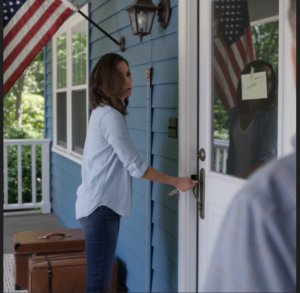
Two days later, when they came home from their trip, the front door had a lock they didn’t have a key for, and taped to the glass was a single envelope with my son-in-law’s name on it. I stood behind that door, and I told them I had a gift for them, too.
Welcome back if you’ve been here before, and welcome for the first time if you haven’t. I’m glad you’re here. Wherever you’re watching from tonight, drop the name of your town below so I know who’s sitting with me. Before I go any further, I want to say plainly that some names and details in this story have been changed, and certain scenes are dramatized for privacy, but the lesson inside it is as real as anything I’ve ever lived through. If a story like this isn’t for you, I understand completely, and I hope you find something else tonight that fits you better. But if you’re staying, settle in, because this one takes a while to tell right.
My name is Walter Puit. I’m sixty-three years old, and until eleven months ago, I lived alone in a narrow blue house on Corbin Street in a small town outside Harrisburg, Pennsylvania. The same house I bought with my wife, Dolores, back in 1989, back when the maples out front were thin as broom handles and the whole street still smelled like fresh-cut lumber from the new construction going up two lots down.
Dolores and I raised one daughter in that house, Melanie, and we did it on a mill foreman’s salary and a part-time bookkeeper’s paycheck, which meant we did not do it easily, but we did it honestly. And by the time Melanie left for college, we had exactly enough saved to call ourselves comfortable, and not one dollar more.
Dolores died of ovarian cancer on a Thursday in March, four years ago now. It took eight months from diagnosis to the end. Eight months of doctor’s appointments and half-eaten dinners and a hospital bed set up in what used to be our sewing room. And when it was finally over, I remember standing in the driveway afterward, not crying, just standing there in the cold with my hands in my pockets, wondering what a man does with the rest of his life when the reason he built it is gone.
I kept working another year after that because the alternative was sitting in a quiet house, and quiet houses have a way of making a man listen too closely to his own thoughts. When I finally did retire, I did it because my niece told me to, not because I felt ready.
What I did have, and what I’d built carefully over thirty-some years, was a college fund for my grandson, Caleb. It started the week he was born: a modest trust I opened with an old Army buddy who’d become a financial planner. And I fed it every month without fail. Birthday money instead of ties. The overtime I picked up every autumn during harvest season at the mill. The small life insurance payout after Dolores passed that I could have spent a dozen easier ways but didn’t.
By the time Caleb turned fourteen, that account held $184,000, enough to get him through any state school in the country without a single loan, which was more than I ever had and more than Melanie ever had. And it was, without question, the proudest financial accomplishment of my entire life.
Melanie married a man named Grant Oay nine years ago. Grant was—is—a regional sales manager for a company that makes commercial refrigeration units. A tall, easy-talking man with a salesman’s handshake and a laugh that arrived half a second too fast, like he was performing warmth rather than feeling it. I never disliked Grant exactly. I just never fully trusted the speed of him.
Dolores used to say, “Some men are rivers, and some men are faucets.” And Grant was a faucet. Turn the handle, and out it comes, right on cue, shutting off just as fast the second you looked away.
They lived two hours from me in a suburb outside Pittsburgh, and I saw them maybe six or seven times a year, mostly holidays, mostly brief. That changed last spring when Grant lost his job. The company restructured, he told me over Easter dinner, using the careful vocabulary of a man rehearsing an excuse before he needs it, and severance would only carry them a few months.
And did I—Melanie was the one who actually asked it out loud, God bless her for at least having the nerve—did I think it might make sense for them to move in with me for a little while? Just until Grant landed something. Save on their mortgage payment. Help me out around the house, since I was getting up there in years.
I want to be honest with you about something. I said yes almost before she finished the sentence. Not because I needed the company, though I did, more than I would have admitted to anyone, including myself. I said yes because Caleb was fourteen, and I had maybe four good years left before he’d be off at college, and I wanted those years. I wanted to teach him to change the oil in a car the way my own father taught me. I wanted Sunday breakfasts with someone across the table who wasn’t a memory.
So I told them to come whenever they were ready. And three weeks later, a moving truck idled in my driveway, and my house filled up with boxes and voices for the first time in four years. And for about a month, I will tell you honestly, it was one of the best months I’d had since Dolores died.
Grant helped me clear the storm gutters that first Saturday. Melanie cooked dinner most nights, and it tasted like her mother’s cooking in a way that caught me off guard more than once. Caleb, who I hadn’t seen much of in years because two hours might as well be two hundred to a busy teenager, turned out to be sharp and funny and curious about everything. And some nights after dinner, he and I sat on the back porch, and I told him stories about his grandmother that Melanie had never gotten around to telling him. Watching his face while he listened felt like something I hadn’t earned yet but was grateful for anyway.
Then slowly, the way water finds a crack in a foundation, things began to shift. It started small enough that I told myself I was imagining it. Dolores’s reading chair, the worn green wingback that had sat in the corner of the living room since before Melanie could walk, got moved to the garage one afternoon while I was at the hardware store, replaced by a sleek gray recliner Grant had ordered online.
When I asked about it, Melanie said the old chair was falling apart anyway, and Grant needed something for his back. She said it in the tone people use when they’ve already decided the conversation is over before it starts. I let it go. It was a chair.
Then it was the pictures on the hallway wall. Thirty years of family photographs that Dolores had arranged herself, taken down one by one and replaced with framed shots from Grant and Melanie’s recent vacation to the Outer Banks. Sunsets and matching swimsuits and Caleb squinting into the camera on a boat I’d never heard about.
I found my old photographs stacked in a box in the hall closet. Not thrown away, just relocated, which somehow felt worse than if they had been thrown away, because it meant someone had made a considered decision about where thirty years of my marriage now belonged. And the answer was a cardboard box on a closet floor.
I still didn’t say anything. I want you to understand that about me, whoever’s listening tonight. I am not a man who confronts easily. I spent forty years on a factory floor learning that the loudest man in the room is rarely the one who’s right, and that patience, real patience, is a tool sharper than any argument. So I watched.
I noticed the way Grant had started referring to “our house” at the dinner table, correcting himself half the time, not correcting himself the other half. I noticed Melanie’s voice on the phone with her sister-in-law, low and pleased, saying something about how good it felt to finally be settled somewhere permanent. I noticed all of it, filed it away, and kept setting the table for dinner like nothing had changed. Because a man who has worked with heavy machinery his whole life knows that you do not put your hand near a moving part until you understand exactly how it operates.
The morning that changed everything came on a Tuesday in late September, the kind of crisp, blue-skied morning that makes a man forget briefly that anything in the world could be wrong. I’d gone out to the garage before six to look for a torque wrench I thought I’d loaned to Grant weeks earlier, and the kitchen window above the sink was cracked open a few inches, the way Melanie always left it to air out the room after cooking bacon.
Her voice came drifting out into the cool morning air, low and pleased with itself, the voice of someone who believes completely that no one else is listening. She was on the phone. I stood very still beside the recycling bins, and I heard her say that everything was moving faster than expected. That once they had control of Caleb’s account, the money could be redirected into an investment property before Dad, meaning me, even noticed the balance had changed.
She said Grant’s cousin had a lake house going up for sale outside Erie, three bedrooms, boat slip included, and it would practically pay for itself if they turned it into a rental. And by the time I figured out what had happened, it would be too late to do anything but accept it, because what was I going to do? Drag my own daughter into court?
She laughed then. A light, easy laugh, the kind you’d give if someone told you a mildly funny joke at a barbecue. And she said the account transfer was already scheduled through the online portal for eight o’clock Thursday morning, right after the market opened, clean and quiet. No signatures required because Grant’s name had been quietly added as a joint custodian back in June, back when I’d let him borrow my laptop for two weeks while his own was in for repairs and never thought to check what he’d done with the access.
I did not move. I stood beside those recycling bins with the torque wrench still in my hand, and I let every word land exactly as hard as it was meant to. And something in my chest went from warm to cold in the space of about four seconds, the way a stovetop element does the instant you cut the power.
Caleb’s account, the one I had built dollar by careful dollar for fourteen years, redirected into a lake house rental scheme dreamed up over a kitchen phone call three days before it happened. And my own daughter was the one narrating it, laughing while she did.
I want to tell you—I need to know something. Whoever is listening tonight, have you ever had the people you trusted most in this world hand you a version of themselves you never once suspected existed? Type yes below if you have, because I promise you, you are not the only one. And I am about to tell you exactly what I did about it.
I went back inside that morning and made coffee like it was any other day. I smiled at Grant across the breakfast table and asked him how the job search was coming, and he said something vague about a promising lead in Cleveland. I nodded and said that sounded encouraging.
I drove Caleb to school like I did most mornings that fall. And I listened to him talk about a chemistry test he was worried about, and I told him he’d do fine because he always did. And none of what I was carrying showed on my face, not even a little. Because forty years around industrial equipment teaches you that a calm surface over a dangerous mechanism is not deception. It’s discipline.
That afternoon, while the house was empty, I called my financial planner, Roy Castellano, the same Army buddy who’d helped me open Caleb’s account fourteen years earlier, a careful, unhurried man who still answered his own phone. I told him what I’d heard, every word of it. And Roy went quiet on the other end for a long moment before he said, in a voice with an edge I’d never heard from him before, “Walter, tell me you didn’t actually add him as custodian.”
I told him I honestly didn’t know, that I’d let Grant use my laptop back in June and never thought twice about it. Roy asked me to hold, and I heard him typing. When he came back, his voice had gone flat and careful in the way people get when they’re trying not to alarm you further than necessary.
He confirmed it. Grant’s name had indeed been added as a joint custodian on the account back in June, with full transfer authority. And yes, there was, in fact, a scheduled distribution set up through the online portal for eight o’clock Thursday morning, moving the full $184,000 into an external account belonging to something called Kestrel Lake Holdings LLC.
I asked Roy what I needed to do to stop it, and I want you to hear his answer exactly the way he gave it to me, because it mattered more than almost anything else in this whole story.
He said, “Walter, you are the original grantor and the primary account holder. A custodian added after the fact does not outrank the person who opened the account and funded every dollar in it. You can revoke that access in about ten minutes with the right paperwork, and you can do it without his knowledge or his consent. And there isn’t a single thing legally wrong with doing it, because it is and has always been your money to protect until Caleb turns eighteen.”
I told Roy I wanted to come in first thing in the morning. He told me to bring my driver’s license and to get there before the bank branch downstairs opened its doors, because once the paperwork was filed, he wanted the funds moved somewhere entirely new before Thursday’s scheduled transfer had any chance to execute.
That night, I lay awake a long time, and I thought about Dolores and what she would have said, watching our daughter narrate a scheme like that over the phone with a laugh in her voice. I thought about my own father, a quiet man who never raised his voice in his life and still managed to be the most respected man on his street. Because respect, he used to tell me, isn’t load-bearing.
Somewhere around three in the morning, I stopped turning things over in my mind, and I started making a list instead. Because a list is a different kind of thinking, the kind that ends in action instead of circles.
The next morning, I was parked outside Roy’s office building at seven forty, watching the cleaning crew let themselves out the side door. Roy met me at his desk with two cups of coffee and a stack of forms already printed. And he walked me through every line before I signed anything, the way a man should when $184,000 is on the table.
We revoked Grant’s custodial access entirely. We moved every dollar of Caleb’s fund into a new trust account, restructured so that no one but me could authorize a transfer until Caleb’s eighteenth birthday, protected by verification steps that required my physical presence and a security question only I knew the answer to. The same one Dolores and I had used on every joint account we’d ever opened together. A private little piece of her that no one else could touch, even now.
Roy printed the confirmation, slid it into a folder, and told me, as I stood to leave, that he was sorry it had come to this. I told him he had nothing to be sorry for. I was the one who’d handed a man my laptop without checking what he did with it, and I intended to finish correcting that mistake myself.
I stopped at the hardware store on the way home. I bought a new set of high-security deadbolts for the front and back doors, plus one for the door to the garage, the kind the man behind the counter told me were rated to resist forced entry for a considerably longer time than most homeowners ever needed, and I paid cash. And when he asked if I was doing some fall maintenance, I told him something along those lines.
Grant and Melanie had taken Caleb to visit her cousin in Ohio for three days, timed, I understood now, so that the transfer would clear quietly while they were conveniently out of town, giving them an alibi of distance if I ever asked questions. That gave me the house to myself for the better part of two days, and I used every hour of it.
I want to tell you something that surprised even me. I was not angry while I worked. I had expected fury, the kind that makes your hands shake and your vision narrow. But what I actually felt, moving through that house room by room, was something closer to clarity, the calm of a man finally doing a job he’d been putting off far too long.
I started in the guest room where Grant and Melanie had been sleeping. I folded their clothes the way Dolores taught me forty years ago, corners matched, nothing crushed, and packed them into suitcases I found in the hall closet. Because whatever they had done, I was not going to be the kind of man who threw someone’s belongings into the yard like a scene from a bad movie.
I found the gray recliner in the garage, where it had been sitting since the day it replaced Dolores’s reading chair, and I hauled the reading chair back inside myself, setting it in its old corner, running my hand along the worn arm before I sat in it for a long moment, just to feel it under me again.
In the desk in what used to be my study, I found paperwork Grant had left behind. Half-finished loan applications for the Kestrel Lake property, listing my house—my house on Corbin Street that I had owned outright for thirty-five years—as collateral, with a signature line for me that had mercifully never been filled in. I photographed every page and set the originals aside for Roy.
By the second evening, everything they owned was packed neatly by the front door, suitcases zipped, boxes labeled in my own handwriting. I left an envelope on top of the stack with Grant’s name written across the front, and inside it, a single typed page explaining in plain and unemotional language that the custodial access to Caleb’s trust had been revoked. That the funds were secure and would remain untouched until Caleb turned eighteen. That I had photographs of the loan paperwork listing my home as collateral without my knowledge or consent. And that they were welcome to collect their belongings from the front porch at their earliest convenience.
I called the locksmith the next morning, a soft-spoken man named Denny, who arrived within the hour and replaced all three exterior locks with the deadbolts I’d bought, working with the kind of unhurried precision that made the whole process feel less like an act of anger and more like a repair, which, in its way, it was.
He tested each one twice, handed me three new keys on a single ring, and told me, with a small, knowing nod, that whatever was going on, it looked like I’d handled it the right way. I told him I hoped so.
They came home Thursday evening, right around the time the scheduled transfer would have hit if I hadn’t stopped it. I watched from the front window as Grant’s car pulled into the driveway, and I watched Melanie get out first, her face already tightening with the particular alertness of someone whose phone had been buzzing with failed transaction alerts for the last several hours.
She tried her key in the front door first. It didn’t turn. She tried it again, harder, and then looked up and saw the porch. Saw the suitcases and boxes stacked neatly under the overhang. Saw the envelope taped to the glass with Grant’s name on it.
I opened the door but left the storm door locked between us, and through the mesh, I watched my daughter’s face cycle through confusion, then disbelief, then something raw that she didn’t quite manage to hide in time. Caleb stood a few feet behind them on the front walk, looking between the suitcases and me with an expression I recognized immediately because I had worn it myself once, a long time ago: the look of a boy realizing the adults around him are not who he thought they were.
Melanie asked me what was going on, her voice climbing fast, and I told her evenly that I knew about the transfer scheduled for that morning. That I knew about Kestrel Lake Holdings. That I knew Grant had been added as custodian on Caleb’s account back in June. And that none of it mattered anymore because it was already undone.
Grant tried to say something about a misunderstanding, about how they’d only meant to grow the money faster for Caleb’s benefit. And I asked him quietly whether growing it faster required a lake house with a boat slip registered under a company neither Caleb nor I had ever heard of. He didn’t have an answer for that. Nobody ever does when the truth finally gets said out loud in the same room as the lie.
I looked past both of them to my grandson, and I told him, in a voice steadier than I felt, that none of what had happened was his fault. That his college fund was completely safe, every dollar of it, exactly where it needed to be, and that it would be waiting for him untouched, no matter what happened between the rest of us tonight.
Caleb nodded, and I saw something in his shoulders loosen just slightly, the relief of a fourteen-year-old realizing the ground under him was more solid than he’d feared a moment ago.
Melanie asked, her voice cracking now, whether I was really going to lock my own daughter out of the house over money. I told her this was never about the money leaving the account, because the money was never actually going to leave—not once I found out in time. It was about learning on a random Tuesday morning, by my own recycling bins, that my daughter could narrate stealing from her own son with a laugh in her voice, like it was nothing more than a funny story to share with a friend on the phone.
I told her that was the part I couldn’t unhear, and it wasn’t something a locksmith could fix. But it also wasn’t something I was going to pretend hadn’t happened just to keep the peace at my own dinner table.
Grant tried once more to talk his way past the door, something about needing at least one night to figure things out. And I told him everything they owned was on the porch, dry and untouched, and that they had jobs and a car between them and thirty-some years of adulthood behind them, which was more than enough to figure out a hotel for the night. I told them I would be in touch about arrangements for Caleb to visit, because that door, unlike this one, would never be locked to him.
I closed the front door. The deadbolt turned with a heavy, solid sound, and I stood in my own front hallway and listened to the muffled sound of suitcases scraping across the porch boards. A car door, an engine, tires on the gravel driveway, and then nothing.
I sat down in Dolores’s reading chair for the first time in months, and I stayed there a long while. Not triumphant exactly, just quiet in a way I hadn’t felt since long before any of this started.
My phone rang around eight that evening. It was Roy checking in, and I told him everything had gone about as well as a night like that could go. He told me he was proud of how clearly I’d handled the paperwork, and that Caleb’s fund was sitting exactly where it belonged, untouched and growing, waiting for the day he’d need it for something worth needing it for.
Caleb texted me two days later from his mother’s sister’s house in Cleveland, where they’d landed temporarily, and he asked if he could still come stay with me on weekends like we used to talk about. I told him my door was always open to him, day or night, no questions asked, and I meant every word of it.
Melanie and I have spoken exactly twice since that night, both brief, both careful, neither one angry, which somehow felt worse than shouting would have. I don’t know yet what our relationship looks like going forward, and I’ve made peace with not knowing, because some repairs take longer than a locksmith’s afternoon, and some don’t get made at all. And a man my age has learned slowly, and at some cost, which of those outcomes he actually has the power to control.
What I know for certain is this: Caleb’s fund is safe. My house is mine, every lock, every hinge, every square foot of it, and no signature I never gave will ever attach my name to somebody else’s lake house. And I have learned later in life than I would have liked that loving someone completely does not require handing them the keys to everything you’ve spent a lifetime building.
Love with no boundaries at all isn’t really love. It’s just an open door. And eventually, somebody walks through it who was never planning on wiping their feet.
If you’ve ever had to protect something you loved from someone you loved even more, I want to hear about it in the comments tonight, because every story you share helps somebody else out there feel a little less alone in theirs. Share this with anyone who might need to hear it today.
And if this is your first time here, consider staying a while longer, because there will be more nights like this one, more stories worth telling slowly, and I’d be glad for the company. Thank you, truly, for staying with me all the way to the end.