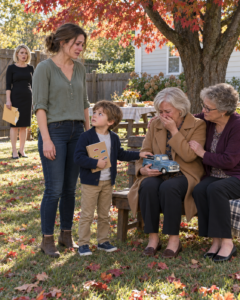
I Drove 3 Hours to See My Sister 20 Times — One Hour After a Screenshot, She Was at My Door
“Apologize to your sister, Tamara. You always did think you were too good to pick up a phone for this family.”
My mother didn’t say hello. She didn’t say congratulations.
I was standing at my kitchen counter in Richmond, 11 weeks pregnant, and the first thing my mother ever said about her new grandchild was an order. 120 hours on the road in 6 years, 20, 3 hours each way to see her and my sister in Rowenoke. And she wanted me sorry for a text.
I had called Dany with my last four pieces of good news. Every one of them went to voicemail.
“Your sister Danny cried for 20 minutes,” Mom said. “A text, like she’s some girl you went to high school with. She says you’ve never once made an effort. And honey, I’m starting to believe her.”
Half an hour before that call, Danny had answered the biggest news of my year with one word.
“Congrats.”
With a comma and nothing after the comma. No “How are you feeling?” No “When is it due?” Then she had phoned our mother and told her I had insulted her.
“Your father made you promise the week before we buried him to keep this family close,” Mom said. “You’re doing a real fine job of it.”
My thumb pressed a white half moon into the edge of the countertop.
Across the kitchen, my son Eli, who is five, was peeling a car sticker off a sheet with his tongue between his teeth. He was saving it for the next trip to grandma’s. He had 17 stickers in his little road book already. Every drive since the summer he was born.
I did not raise my voice. Raising my voice at my mother is how you lose Easter. And Eli had already drawn a circle around Easter.
“Mom,” I said, “did Danny ask you when the baby’s due?”
Silence.
“That’s all right,” I said. “I’ll send you something.”
I opened the note on my phone that I keep the way I keep my shift log at the treatment plant. Dates, mileage, who was there. On one side, my 20 drives. On the other side, the number of times my sister had driven to me.
Three.
I took one screenshot. I sent it to my mother with no words at all. I did not apologize.
58 minutes later, my doorbell chimed.
My sister lives 3 hours from me. For 6 years, she could not drive 30 minutes across Rowanoke when I was in town. Now, she was standing on my porch in Richmond, 1 hour after our mother opened that picture.
Her mascara was perfect. She had not been crying. She smelled of cigarette smoke. And my sister has never smoked a day in her life.
“Call mom,” she said through the storm door. “Tell her you were upset and you exaggerated.”
Then her phone rang. Her husband’s name lit up the screen.
She turned her shoulder, but not far enough.
“Still in Lynchberg, babe,” she said. “Spa ran late.”
She hung up and looked at me, and she knew what I had heard.
“You did this to mom,” she said. “Not me. Remember that.”
I did not open the storm door. I saved the doorbell clip. 4 minutes and 12 seconds of it. And I typed the time into my log: 4:52 p.m., the way I’d write down a pump that failed on my watch.
Nobody makes the drive from Lynchber in 58 minutes. Wherever my sister had spent that Saturday afternoon, it was close enough to my front door to reach it in under an hour.
I didn’t know the name of that place yet. I was going to.
Before I tell you where my sister had really been that afternoon, let me ask you one small thing. If you’ve ever been the one in your family who always makes the drive, stay with me and tell me in the comments where you’re listening from.
My name is Tamara Manat. I’m 32. I run the night side of a wastewater plant outside Richmond, and I have kept a log of everything for most of my adult life. That habit is the only reason any of this came out.
When she turned to go, a long white slip of paper slid half out of her coat pocket, and she pushed it back down with two fingers without looking at it. She walked back to her white Tahoe and sat in it with the engine running for 6 minutes. Then she pulled out, and she did not turn toward the interstate.
At 9:40 that night, my mother texted me.
“Your sister drove 3 hours to make peace with you, and you would not even open the door. I have never been so ashamed of one of my children.”
3 hours, my mother wrote. My doorbell said 58 minutes.
I watched the clip again after Eli was asleep. The screenshot had gone to my mother at 3:54. I had watched it deliver. My mother had read it at 3:55. My doorbell chimed at 4:52.
On the recording, before she saw me, Dany looked down at Eli standing behind my legs with his sticker sheet. She looked at him the way you look at a dog in a neighbor’s yard. Pleasant, not interested.
“Hey, buddy,” she’d said.
Then to me, a line I hadn’t even registered in the moment:
“You’re going to feel really stupid about this later.”
I typed back to my mother at 10:02. One line.
“I’m glad she’s home safe.”
Then I put the phone face down on the counter.
The next morning, Eli asked me over his cereal whether we were still going to grandma’s for Easter.
“We’ll see, baby,” I said.
He knew what that meant. 5-year-olds always know what that means.
To understand why that one text from my mother cut as deep as it did, you have to know about my father’s thermos.
It’s a green Stanley, the old kind, dented at the bottom where he dropped it off a tailgate in 1998. My father, Russ Minat, carried it every day for 31 years as a lineman for the power company in Rono.
When he had his heart attack in September of 2020, it was on the passenger seat of his truck. The nurses at the hospital put it in a plastic bag with his wallet and his reading glasses. And on the third night in the ICU, he asked for it.
He couldn’t drink anything by then. He just wanted to hold it.
“Tam,” he said.
He always called me Tam.
“You’re the one who drives. You know that, right?”
I said I knew.
“Keep your mother and your sister close. They don’t know how to come to people. You do. Go home to them.”
He died 2 days later, on a Saturday, with a thermos on the blanket next to his hand. My mother gave it to me after the funeral because she said she couldn’t stand to look at it.
So I drove.
Every drive I made to Rowanoke after that, the thermos wrote in my cup holder, full of coffee I usually forgot to drink. 20 times in 6 years. Christmases, Thanksgivings, my mother’s birthday in March, my father’s anniversary every September, Easter when I could get the weekend off.
3 hours down, 3 hours back, usually in the same weekend. Usually with Eli asleep in his car seat by the time we hit the county line.
And every time, I would text Danny from my mother’s kitchen:
“We’re in town till Sunday. Come by? Eli wants to see you.”
Salem is 20 minutes from my mother’s house in Vinton. 30 if the lights hate you.
“I wish,” she’d write back. “Can’t do the drive this weekend. I’m wiped.”
Or “Olivia’s got a thing,” or “my back,” or “Craig has the car.”
Craig never had the car. They had two.
The three times she came to me in Richmond, I remember like birthdays. The first was the day Eli was born in April of 2021. She stayed 40 minutes and took 11 pictures of herself holding him.
The second was the housewarming when Nate and I bought our place in Chesterfield in October of 2022. She left before the cake.
The third was 2 days after Christmas in 2023, when she drove up with her kids and stayed 2 hours. Olivia cried when they left.
That was the whole list. I didn’t need the log to remember it. I kept the log anyway.
The log is a work habit. At the treatment plant, if a pump fails at 3:17 in the morning, you write 3:17. You don’t write “early.” You write what happened, who was there, what you did about it. Someday, a state inspector might ask, and your memory is not evidence.
I started keeping the family log in the notes app about a year after my father died, when I noticed my mother telling people that I hardly ever came down anymore. I had been down four times that year.
I wanted to be sure I wasn’t crazy. I went back and filled in the first year from gas receipts and old texts, which have their own dates on them.
I wasn’t, but being right in a note on your phone doesn’t do much for you when your mother believes the other daughter.
Eli’s road book started with his first drive, the summer he was born. It was a spiral notebook from the dollar store with a cartoon truck on the cover. Every time we made the drive, he got to put one sticker on a new page, and I wrote the date under it in marker.
By January of this year, he had 17 pages. The early ones were crooked because I’d guided his hand. The later ones were perfectly square. He was proud of that.
He had never once asked why Aunt Danny didn’t have a book. I think he assumed grown-ups didn’t need them.
Easter came in April. I had the weekend off. The thermos was on the counter. Eli had his sticker ready.
For the first time in 6 years, I didn’t get in the car.
Nobody called on Easter. I want to be precise about that because precision is the only thing I had. Nobody called on Easter Sunday.
My mother sent a picture to the family group chat at 1:12 in the afternoon of her table in Vinton. The good tablecloth, the ham with the pineapple rings, and eight people around it. Dany was at the end of the table where my chair usually went. Olivia was wearing a yellow dress. Everyone was smiling.
The caption said, “Missing a few, but grateful for the ones who show up.”
Eli saw it over my shoulder. He counted the chairs out loud. Then he went to his room and came back with his road book and the car sticker he’d been saving since January.
“Can I put it in anyway?” he asked.
“It’s for a drive, baby. We didn’t drive.”
He thought about it. Then he put the sticker back on the sheet carefully so the edges wouldn’t curl and put the sheet inside the book.
“For next time,” he said.
I went into the laundry room and folded towels that were already folded.
The family group chat is called MyNat Crew. My aunt Peggy, my mother’s younger sister, made it in 2019 for a reunion, and nobody ever left.
There are 26 people in it. Cousins in Bedford and Blackburg and one in Tampa. My mother’s two old friends from church, who aren’t technically family but have been at every Thanksgiving since the Carter administration.
2 weeks after Easter, Danny posted in it for the first time since Christmas.
“Some people think a text message is how you treat family. Just know I’m praying for the day some people remember where they came from.”
It wasn’t my name. It didn’t have to be.
Aunt Peggy hearted it within 4 minutes. My cousin Brienne in Bedford wrote, “We love you, Danny.” Somebody posted a praying hands. My mother didn’t react to it at all, which in my mother’s language is a signature.
I didn’t answer. I took a screenshot. I checked that the timestamp showed. Then I opened my log and typed the date, the time, and 11 words.
“Group chat post. Danny Re: Peggy +4 reacted.”
My husband Nate read it over my shoulder that night in bed. Nate is an HVAC estimator, not a dramatic man. He has a way of reading things twice before he speaks.
“You’re building a file,” he said.
“I’m keeping a log.”
“Tam, that’s a file.”
I turned off the lamp. He didn’t push. That’s one of the reasons I married him.
The March scan hadn’t been able to get a clear look at her heart. So, they brought me back in the second week of May. Nate came with me.
Her heart was perfect. She was a girl, which we’d known, but this time the technician turned the screen so we could see her profile. A little nose, a fist up by her face like she was already arguing with somebody.
And I cried in a way I hadn’t cried since the ICU.
In the parking lot, I sent the picture to my mother. Just to her, not the group.
“It’s a girl, Mom. Due in August.”
The little word “delivered” came up. Then, eventually, “read,” 11:14 p.m.
Nothing else. Not that night, not the next morning, not ever.
I kept the screenshot of that, too. I wish I could tell you it was strategy. That one wasn’t. I think I just needed proof somewhere outside my own head that I had tried.
June was when the first thing happened that I couldn’t explain.
My brother-in-law, Craig Kesler, is not a texter. He’s an HVAC service tech in Salem, same trade as Nate, which is how the two of them ended up actually liking each other at Family Things.
Craig and I had maybe 15 texts between us in 10 years. All of them some version of “happy birthday” or “tell Nate the Hoke’s lost.”
On June 20th, a Saturday, at 6:31 in the evening, he texted me.
“Hey Tam, just wanted to say thanks for letting Danny crash at your place so much. She says Eli’s a handful, lol. Hope the pregnancy is going okay.”
I read it standing in the cereal aisle at Kroger.
Crash at my place so much.
Danny had not been inside my house since December of 2023. She had not been on my porch since January 17th, when she stood outside a locked storm door for 4 minutes and 12 seconds.
I didn’t answer Craig. I didn’t know what to say that wouldn’t be a grenade. And Craig had never done anything to me except remember my birthday.
I took the screenshot. I checked the timestamp. Then I opened my log and scrolled back.
“January 17th, 4:52 p.m. D at door on phone to Craig. Still in Lynchber, babe.”
Lynchberg, she’d told him in January. My place, she was telling him now. And whatever she was telling our mother, it was something that made our mother ashamed of me.
Three people, three different stories. One of them was me, and I was the only one who didn’t know which version of my life I was supposed to be living in.
I put the cereal in the cart. I paid. In the car, I sat with the engine off and the thermos in the cup holder, and I did the math on how many Saturdays there have been since dad died.
312, give or take.
I didn’t know yet how many of them my sister had spent telling somebody she was with me.
Violet Russell was born on Saturday, August 8th, at 5:06 in the morning at Chippenham Hospital in Richmond. 7 lb and 2 oz, with my father’s chin and absolutely no interest in being held by anyone but me.
Nate posted one picture to the group chat at noon. Me in the hospital bed looking like I’d been dragged behind a truck. Violet asleep on my chest. Eli standing on a chair so he could see.
“She’s here. Violet Russell. Mom and baby are great.”
My mother answered in 4 minutes.
7 months of nothing. 4 minutes.
“Oh, she’s beautiful. When can we see her?”
Then Danny, 2 minutes after that:
“Can’t wait to meet my niece. Aunt Danny is coming for those cheeks.”
23 reactions in the first hour. Aunt Peggy wrote, “Finally, some good news in this family.” My cousin Brienne wrote, “Welcome to the crew, baby girl.”
Nate looked at the phone, then at me.
“Well,” he said, “look who remembered the address.”
I held Violet a little closer and didn’t say anything because there’s nothing to say to a 4-minute answer after a seven-month silence. You just write down the four minutes.
By the time we brought Violet home on Monday, there were 31 messages waiting for me. I counted them. Of course, I counted them.
My mother, Monday morning:
“Can we come Saturday? Peggy says she’ll drive.”
My mother, Monday afternoon:
“Tomorrow. Saturday.”
Danny, Monday night:
“Just so you know, I’ve already asked off work for Friday. Aunt Danny needs her baby snuggles. Send me your gate code. I forget it.”
There is no gate. There has never been a gate. She had been to my house three times in 6 years, and she was asking for a gate code like she was a regular at a condo complex.
My mother, Tuesday:
“You can’t keep a grandmother from a baby, Tamara. That’s not how we raised you.”
Danny, Tuesday:
“Ant rights are a real thing, BTW. Just saying.”
I wrote back to both of them at the same time in the group thread I had with just the two of them. The one called Mom and Girls that my mother had made when dad died.
“You’re both welcome here any time. It’s 3 hours. I’ve driven it 20 times. The guest room is made up.”
I read it three times before I sent it. There was nothing in it I would take back.
My mother answered first.
“You know, I can’t do that drive with my eyes.”
That was true. My mother has macular degeneration, the wet kind. Diagnosed the winter after dad died. She can’t read regular print anymore. She gave up her license in 2023.
That’s part of why I always drove to her. I never once blamed her for it. But Peggy had just offered to drive her. It was right there, a message up.
Dany answered second.
“Wow. So, we have to come to you now after the way you treated me in January. Unbelievable.”
Nobody came that Saturday or the next.
Violet slept on my chest through both of them and didn’t know the difference, which was the only mercy in any of it.
The video call happened on the last Thursday of August. My mother called on FaceTime, which she almost never does because she can’t see the buttons. Somebody had set it up for her.
I answered because I thought she wanted to see Violet, and I’m not a monster. I held the baby up to the camera, and my mother made the sound grandmothers make. That soft high sound.
And for about 90 seconds, I let myself believe we might be all right.
Then the picture tilted, and Dy’s face filled the screen. She’d taken the phone. They were in my mother’s kitchen. I could see the yellow curtains behind her and the calendar from the funeral home that my mother has hung by the fridge every year since 2020.
“Where’s my buddy?” Danny said. “Where’s Eli?”
Eli was at the table with his crayons. He heard his name and came over shy and leaned into my side to see the phone.
“Hey, buddy,” Danny said in a voice I didn’t recognize. Sweet, sad. “Aunt Danny misses you so much. You know that, right? Your mommy just won’t let us come see you.”
Eli looked up at me.
“And that’s okay,” Danny went on. “Grownup stuff. Your mommy owes grandma a whole lot of money. And sometimes when people owe money, they get embarrassed and they hide. It’s not your fault, baby.”
I ended the call.
I said nothing. I pressed the red button and put the phone on the table, screen down, and I picked Eli up even though he’s getting too big to be picked up. And I held him against my shoulder with Violet asleep in the bassinet beside us.
“Mommy,” he said into my neck. “Do we owe Grandma?”
“No, baby.”
“Aunt Danny said—”
“I know what she said.”
He was quiet for a long time. Then he wiggled down and went back to the table, and he didn’t color anymore. He just sat there with a crayon in his hand.
Later that night, I opened my log. I typed the date, the time, and what she said as close to word for word as I could make it.
“Your mommy owes grandma a whole lot of money.”
I looked at that line for a long time. It was the first time anyone in my family had said the word “money” to me since dad died.
I had never borrowed a dollar from my mother in my adult life. Not one. I had paid for her new water heater in 2022 when the old one flooded her basement and she didn’t have it.
I thought it was a cruelty, something Dany said because she knew it would land on a 5-year-old. I didn’t understand yet that she had said it because she’d said it so many times before to so many other people that it had stopped sounding like a lie to her.
Two days later, on Saturday the 29th, Dany posted in my nat crew. It was a long one. It had a photo attached, a picture of her from the hospital in 2021 holding newborn Eli. The one visit of the 11 selfies.
“I’ve been going back and forth on whether to say anything, but I’m heartbroken. My sister has decided I’m not allowed to meet my own niece. I’ve been banned from her house. Mom has been banned, too. We’ve tried everything.
“I drove all the way to Richmond in January to make peace, and she wouldn’t open the door. I’m not going to say more because I love her, but please pray for our family. Some people change when they get a little money and a little distance.”
14 reactions in an hour. Broken hearts. Praying hands.
My cousin Brienne:
“Danny. I’m so sorry. You don’t deserve this.”
My mother’s friend from church:
“Praying for you, sweetheart.”
And Aunt Peggy, 40 minutes in:
“Heartbreaking. After everything your mother has done for that girl.”
That girl.
I screenshotted every reply. I checked every time stamp. I did not answer a single one.
Nate stood in the doorway of the nursery with his arms crossed.
“You’re really not going to say anything?”
“Not yet,” I said.
“Tam, people are reading that.”
“I know. I want them to keep reading it.”
He looked at me for a long moment. Then he nodded and went to heat up a bottle because Nate trusts me the way you trust someone who has never once lied to you. And I love him for it more than I can say.
Aunt Peggy called me that night at 8:15. Peggy is my mother’s younger sister by four years. She sells real estate in Bedford County and has the voice for it. Warm and fast and always a little bit selling you something.
She did not bother with hello either. It runs in the family.
“I’m going to say this once because somebody has to,” she said. “I’ve held my tongue for 6 years, and I’m done. I read what your sister wrote, and I’m sorry, but you don’t get to ban your mother from that baby after everything.”
“Everything,” I said.
“Don’t—don’t do that flat thing you do. Your mother has lent you $41,600 since your daddy died. 41,000. She keeps it in that book of hers. She’s never asked you for a penny back. And you can’t let her hold her own granddaughter.”
I was standing at the kitchen sink with a bottle in my hand. I remember the water was running. I remember I didn’t turn it off.
“Aunt Peggy,” I said. “Say the number again.”
“41,600. Joanne told me herself. Danny brings it up to you every month or two so you don’t have to face asking. Your mother didn’t want anybody to know. She said you’d be humiliated.
“Well, I think it’s time somebody was humiliated in this family. And it isn’t going to be your mother.”
The water ran. Violet made a small sound from the bassinet.
“Thank you for telling me,” I said.
There was a pause on the line. I think she expected me to cry. I think she’d rehearsed for crying.
“That’s it?” she said.
“Thank you for telling me. That’s it for tonight.”
I hung up. I turned the water off. I set the bottle on the counter and walked into the living room where Nate was on the floor building something out of Legos with Eli, and I said, “Can you do bedtime?”
He looked at my face and got up without a word.
I sat down at the desk in the spare room, and I opened the banking app for my checking account, then my savings. Then the old credit union account I had in college and never closed.
Then I logged into the joint account Nate and I opened when we got married, and I went back as far as each one would let me. And where the app stopped, I requested the statements.
It took me until 1 in the morning.
Here is what I found. Between October of 2020 and January of 2026, my mother had sent me money exactly twice. A check for $50 in my birthday card in 2021 and a check for $100 when Eli turned one.
I had deposited both. I had photos of both cards because I photograph every card my son gets because someday he’ll want them.
$150. Not $41,600. Not 4,000. Not 400.
And every one of those 20 drives, I had paid for the gas myself. I had the receipts for most of them in the glove box folder because at work we get reimbured for mileage and I’m used to keeping them.
Nate came in around midnight and read over my shoulder for a long time without speaking. Then he pulled the other chair over and sat down.
“She thinks you’ve been taking her money,” he said.
“She thinks Dany has been bringing it to me.”
“Every month or two?”
“Every month or two.”
He rubbed his face.
“Tam, Danny’s been to this house three times.”
“I know,” I said. “I have the list.”
We sat there. The house ticked. Somewhere down the hall, Eli turned over in his sleep, and the springs of his little bed creaked.
“So, where did it go?” Nate asked.
I didn’t answer that. I didn’t know.
I had a clip with a woman who smelled like cigarette smoke. A text from Craig about my sister crashing at my place and a long white slip of paper that had slid out of a coat pocket and been pushed back down fast.
I had pieces. I did not have the shape.
What I had was a number and a mother who could not read her own bank statements.
I called Peggy back the next afternoon. I made my voice smaller than it is.
“Aunt Peggy, I’ve been thinking about what you said. You’re right. I should know what I owe. Does mom have it written down somewhere? The dates?”
Peggy softened immediately. Peggy likes to be right more than she likes to be angry.
“Oh, honey. She’s got it all in that big print book, the one Danny set up for her with the thick black marker since Joanne can’t see the little numbers. It’s got a page that says tomorrow on top. Every time Dany takes a trip up, she writes it in for her. Date and amount.”
“That’s good,” I said. “That’s organized.”
“Well, your mother wants it fair is all. She’s going to see Bill Hensley on the 28th. Monday the 28th, to fix up her will. She says she’s not going to punish you. She’s just going to take what you already got out of your share so Danny doesn’t get shorted.
“Danny’s going to be the executive. It’s only right, honey. Danny’s the one who’s always there.”
The 28th of September. 4 weeks in one day.
“That sounds fair,” I said. “Thank you, Aunt Peggy.”
When I hung up, I opened my log and scrolled to the bottom and typed three things.
“September 28th, Hensley will. Big print book, page titled Tomorrow. Danny writes the entries. Danny equals executive.”
Then I scrolled all the way back up to the top of the log, to the first entry, October of 2020. And I started reading every Saturday I had ever driven to Rowanoke.
Three nights later, I found Eli’s road book in the kitchen trash can.
I wasn’t looking for it. I was scraping a plate. And there it was, under the coffee grounds, the cartoon truck on the cover gone brown at one corner, the spiral bent.
I took it out and wiped it with a paper towel and opened it on the counter. He had peeled the stickers off. Not all of them. He’d started at the back, at the newest ones, the square, careful ones, and he’d gotten about halfway before he stopped.
Nine pages had a clean pale rectangle where a sticker used to be and my handwriting underneath it with a date. The peeled stickers were stuck together in a little ball at the bottom of the trash like chewing gum.
I went to his room. He was awake. He’d heard me in the kitchen.
“Baby,” I said, “why’d you throw away your book?”
He didn’t look at me. He looked at the ceiling.
“Aunt Danny said nobody wanted us there,” he said. “On grandma’s phone, before you hung up. She said we just go there to get stuff.”
I sat on the edge of his bed.
“That’s not true,” I said.
“Then why doesn’t anybody come to our house?”
I didn’t have an answer for him that a 5-year-old should have to hear. So I lay down next to him on top of the covers with my shoes still on, and I held his hand until he fell asleep.
And then I went back to the kitchen and sat at the table with the ball of stickers and a butter knife.
It took me two hours to separate them. Some of them tore. I pressed each one back onto its page, over the pale rectangle, over my own handwriting. And when one was too torn to go back, I wrote the date again next to it in marker so he’d still know.
Nate found me there at 2:30 in the morning with the last one. He didn’t ask. He just looked at the book and then at me.
In the morning, while the coffee was brewing, I took the dry erase marker off the side of the refrigerator and wrote three numbers on the little whiteboard where we keep the grocery list.
Just numbers, no words.
11, 26, 28.
Nate read them on his way out the door. He didn’t ask about those either.
It was the 4th of September. I picked up my phone and called my mother. She picked up on the fourth ring. She sounded wary. The way you sound when a number you’ve been fighting with calls you first.
“Tomorrow.”
“Mom, I talked to Aunt Peggy.”
A long breath.
“Well, I told her not to.”
“I’m glad she did.”
I kept my voice low and even. The voice I use on the radio at work when a pump is down and nobody needs to hear me panic.
“I didn’t know you kept track. I should have. I’m sorry I made you carry that by yourself.”
Silence on the line. I could hear her kitchen clock. It’s shaped like a rooster. Dad bought it at a flea market in 1994, and she has never been able to throw it away.
“I want to pay it back,” I said. “All of it.”
“Oh, honey.”
Her voice cracked right down the middle.
“I never wanted you to feel like—”
“I know, but I want to. And I want to do it properly so nobody can ever say I didn’t. Not Danny, not Peggy, not anybody in that group chat.
“I want to come down and sit with you at your credit union with somebody from the bank and sign an actual repayment agreement. Monthly, in writing, so it’s on file. So it’s—”
“You don’t have to do all that.”
“I do, Mom. For me. Bring your book so we get the amounts right.”
She was crying now. The quiet way she cries where you only know because the breathing changes.
“And dad’s memorial,” I said. “The 26th. We’ll come. I’ll bring the baby, and I’ll apologize to Dany in front of everybody if that’s what it takes.”
“Oh, Tamara.”
She said my whole name like it was something she’d found in a drawer.
“Your father would be so proud of you.”
I closed my eyes.
“Can you ask for an appointment for Friday the 11th?” I said. “10:00 in the morning if they have it. I’ll take the day off.”
She said she would. She said she loved me. She said it twice, which she hadn’t done since the funeral.
I thanked her and I hung up and I wrote 10:00 a.m. next to the 11 on the whiteboard.
Danny found out within the hour. I know because my phone lit up at 11:48.
“Mom told me. Glad you finally grew up. Bring the baby. Saturday the 26th. People want pictures, and wear something nice. It’s for daddy.”
Then a second message 3 minutes later:
“Also, she’s going to want interest. Just so you know, 4% is fair. I’ll work it out with her.”
I read both of them standing in the hallway outside the nursery where Violet was asleep with both fists up by her ears. I wrote back one word.
“Okay.”
That afternoon, Dany posted on her own Facebook page, not the group chat, her real page, the public one with the church friends and the dental office patients and the girls she went to Salem High with.
A sunset over Smith Mountain Lake with some script font over it.
“Forgiveness isn’t for them, it’s for you.”
[snorts]
“So proud of myself for keeping the door open, even when it was slammed in my face. God is good.”
81 likes by dinner. My mother, who cannot read her own phone without the zoom turned all the way up, had shared it.
Nate read it on the couch and laughed once without any humor in it at all.
“Slammed in her face,” he said. “You didn’t even open it.”
“I know.”
“Tam, what are you doing?”
“I’m paying my mother back,” I said.
He looked at the whiteboard on the fridge and then at me. And he let it go.
The next morning, while Violet napped, I made one phone call. It went to a number in Rowanoke I’d looked up the night before. It lasted 6 minutes.
When I hung up, I took the dry erase marker and wrote a name under the 11 on the fridge.
Gloria.
That was all. Anyone walking through our kitchen would have thought it was a babysitter.
Dany called on the 9th. Not a text, a phone call, which from Dany meant she wanted something.
“So, I’m coming Friday,” she said. “To the bank.”
“Okay.”
“Because I handle mom’s money. You know that, right? I’m on her accounts. I’ve been on her account since the month after Daddy died. I’m the one who knows where everything is.”
“Then come,” I said.
That threw her. I could hear it throw her. Dany had spent her whole life pushing on doors, and she did not know what to do when one swung open.
“Well,” she said, “good. And bring the first payment, 5,000 cash. As good faith.”
“I’m not going to carry $5,000 in cash 3 hours up the interstate with a newborn in the car.”
“Then how are you going to—”
“A cashier’s check,” I said. “Made out to mom.”
A pause.
“Made out to mom,” Danny repeated.
“It’s her money, isn’t it?”
Another pause. Longer. Then she laughed. A bright hard laugh like somebody dropping a glass.
“Sure, whatever. God, you’re so dramatic about everything. See you Friday.”
I hung up. I went to the kitchen and looked at the whiteboard for a while.
-
Gloria. 10:00 a.m.
I did not write Dy’s name on it. There wasn’t room, and I didn’t need the reminder.
We left Chesterfield at 5:40 on the morning of Friday the 11th. Nate drove. I sat in the back between the two car seats, Violet on one side, five weeks old and furious about the whole idea of the interstate, and Eli on the other with his road book open on his knees.
It was my 21st drive. It was the first one since Christmas.
Somewhere past Farmville, Eli held up his sticker sheet.
“Do I put one in?” he asked. “Even though it’s for a bank?”
“It’s a drive, isn’t it?”
He thought about it. Then he picked the car sticker, the one he’d been saving since January, and pressed it onto a fresh page with the heel of his hand. I wrote the date underneath in marker. The letters wobbled with the road.
“18,” he said.
My father’s thermos wrote in the cup holder by Nate’s elbow. I hadn’t filled it. I just wanted it there.
My phone buzzed near Appamatics. Danny:
“Look who’s driving now. See you at 10:00. Don’t be late. Mom’s been up since 5.”
Then a minute later, in the group chat to 26 people:
“Big day for our family. Some of us are finally making things right.”
I didn’t answer either one.
The Star City Community Credit Union has a branch in Vinton in a low brick building across from the food line, with a drive-thru and a gumball machine by the door that my father used to give me pennies for.
My mother was already inside when we got there, sitting very straight in one of the lobby chairs, holding a thick spiral notebook against her chest with both arms like a himnil. Dany was beside her.
She stood up when we came in and took Violet out of my arms before I could say anything and held her up next to her own face and said, “Nate, get one of us.”
And Nate, bless him, just looked at her until she lowered the baby and handed her back.
“God,” she said. “Fine.”
A woman came out from the back offices. 60s, reading glasses on a beaded chain, a navy cardigan with a little enamel pin shaped like the Rowan Oak star.
“Mrs. Minet,” she said to my mother, “I’m Gloria Sykes. We spoke on the phone. And you must be Tamara.”
“Yes, ma’am.”
Dy’s eyes went to me, then to Gloria, then back to me.
“We spoke on the phone?” Danny said.
“Your mother called to set up the appointment,” Gloria said pleasantly. “And your sister called to ask what we’d need to have ready. Come on back, all of you. I’ve got a room with a big table.”
The room had a big table, a box of tissues, and a framed poster about home equity lines. Nate stayed in the lobby with the kids.
I sat on my mother’s left. Dany sat on her right. Gloria sat across from us with a manila folder and a pad.
“Now,” Gloria said, “Mrs. Minat, your daughter tells me you’d like to set up a repayment agreement between the two of you, and you want it documented against your account history so the numbers are clean. Is that right?”
“That’s right,” my mother said.
She set the notebook on the table.
“It’s all in here. Danny did it for me.”
She opened it to a page near the front. The top of the page said “Tamara” in thick black marker, 3 in tall. Under it, a list. Dates on the left, amounts on the right, in the same fat, careful handwriting.
26 lines.
November 2020, $1,200.
March 2022, $1,500.
July 2022, $2,000.
On and on, every line in Dy’s hand. The last line said December 2025, $1,800.
At the bottom, circled twice, $41,600.
“Wonderful,” Gloria said. “That’s very helpful. What I’ll do is match each one of those to the transaction on your statement, so the agreement shows the date the money left your account and how. That way, nobody can ever dispute it. Tamara mentioned that was important to her.”
“It is,” I said.
Dy’s hand was flat on the table. Her fingernails were a pale pink, freshly done. I watched one of them pressed down until the tip went white.
“Is that really necessary?” Danny said. “I mean, it’s all written down.”
“It’s standard, hun,” Gloria said. “Takes 10 minutes.”
It took 22.
Gloria had already printed the history. She’d printed it in 18point type because I’d asked her to on the phone because my mother cannot read anything smaller. She laid the pages in front of my mother one at a time and went down the notebook line by line with a yellow highlighter.
“November 14th, 2020,” Gloria read. “$1,200. I have a cash withdrawal that day for 1200. Card ending 4418. A TM location, Hall Street Road, Richmond.”
“That’s Danny’s card,” my mother said. “She took it up to Tamara.”
“Okay,” Gloria said.
She highlighted it.
“March 12th, 2022, 1500. Cash withdrawal, card 4418, Midlotheian Intern Pike, Richmond. I’m going to mark that terminal. It’s going to come up.”
She kept going. I kept my hands in my lap.
By the eighth line, Gloria had stopped saying “that terminal” and started just tapping it with the cap of the highlighter. By the 12th, she’d gone quiet in the particular way bank people go quiet, and she took her reading glasses off and polished them on the cardigan and put them back on.
“Mrs. Minat,” she said gently, “can I ask you something? Did anybody ever send any of this to Tamara electronically? A transfer, a zel, a check?”
“No,” my mother said. “Cash. Dany drove it up. Tamara doesn’t like to ask.”
Gloria looked at me.
“I’ve never received a dollar of it,” I said. “Not one.”
“She’s lying,” Danny said.
It came out fast and too loud for the little room.
“I handed it to her in cash every time. That’s why the machine’s in Richmond, Mom. I was in Richmond. I took it out right before I went to her house. Obviously.”
“March 12th, 2022,” I said.
Everyone looked at me. I took out my phone and open the log and turn the screen toward Gloria because my mother couldn’t have read it. And then I read it out loud myself.
“March 12th, 2022, Saturday, drive number 8. Arrived mom’s, vinton, 11:40 a.m. Mom’s birthday lunch. Texted Dany, 12:05. We’re here till Sunday. Come by? Dany replied, 11 12:31. Can’t do the drive today. I’m wiped.”
I scrolled to the screenshot of her text, dated and timestamped, and I set the phone down on the table next to the 18point printout.
“At 12:31 on March 12th, 2022, I was sitting in mom’s kitchen,” I said, “eating her birthday cake 3 hours from Richmond. Dany said she was too tired to drive 20 minutes. The same afternoon, her card took $1,500 out of mom’s account at a machine on Midlotheian Turnpike.”
I turned to the next page of the log.
“There are five more Saturdays like that. I was at mom’s. Danny’s card was in Richmond.”
Nobody said anything. The air conditioning kicked on.
Gloria looked at the printout, then back at the terminal code. Then she reached for a little binder at her elbow and ran her finger down a list.
“This terminal,” she said carefully, the way you’d say something you weren’t sure you were allowed to say, “is a third party ATM. The operator on file is a historical horse racing parlor. It’s a gaming facility. The machine is inside it.”
My mother turned her face toward Dany. Not her eyes. Her eyes don’t focus well anymore. Her whole face.
“Danielle,” she said.
I had not heard my mother say my sister’s full name since we were children.
Dany recovered faster than I thought she would. I’ll give her that. She’d had plenty of practice.
“Okay, so I stopped there sometimes,” she said. “On the way. They have the only ATM off that exit that doesn’t charge a fee. Mom, that’s all that is. You’re going to believe a print out over your own daughter?”
“It’s her print out,” I said. “It’s her account.”
Gloria cleared her throat.
“While we’re on the history,” she said, and she turned a page, “there’s one more thing I’d be remiss not to mention since Mrs. Minat is here in person. Ma’am, your recurring bill payment to the Rowan Oak County Treasurer for your real estate taxes, it was cancelled through online banking in June of 2024. There hasn’t been a tax payment out of this account since.”
My mother frowned.
“Dany pays my taxes.”
“Not from this account she doesn’t,” Gloria said. “Not for 2 years.”
Dany stood up. Her chair scraped.
“I’m not doing this,” she said. “I’m not sitting here while she ambushes you with some bank lady. Mom, come on. We’re leaving.”
My mother didn’t move.
“Mom.”
“I’m going to stay a minute,” my mother said.
Danny looked at me. There was something in her face I had never seen before. Not anger, arithmetic. She was counting something fast behind her eyes.
Then she walked out. We heard the lobby door. We heard through the window the Tahoe start.
Gloria folded her hands on the folder and spoke only to my mother.
“Mrs. Minat, you’re the primary owner on these accounts. Your daughter Danielle is a joint owner, which means legally she can withdraw. But you can open a new account in your name only today. Move the money over and close this one.
“I can issue you a new card, and I can put a trusted contact on file who isn’t her. I’d recommend it. That’s my professional opinion.”
My mother sat with both hands on the notebook. The page that said tomorrow was still open under her fingers.
“She’s my daughter,” she said.
“Yes, ma’am.”
“I need to think.”
“That’s fine,” Gloria said. “I’m here till 5, Monday through Friday. You call me direct.”
She wrote the number on the back of a card in marker, big so my mother could read it, and pressed it into her hand.
In the parking lot, my mother held Violet for the first time. She held her against her shoulder with her eyes closed, rocking a little from side to side, the way she used to rock me.
She didn’t say anything about the money. She kept quiet about Dany. She said, “She smells like you did,” and handed her back.
Then Aunt Peggy’s Buick pulled up to take her home, and she got in without looking at me, and they drove away.
Nate opened the car door for me.
“The cashier’s check,” he said quietly. “Did you give it to her?”
I touched my purse. The envelope was still in it. $5,000 made out to Joanne Minat, bought at my own bank on Wednesday afternoon.
If the signing had gone forward, I would have handed it over. I had been prepared to lose that money to get my mother into that room.
“Nobody signed anything,” I said.
We drove home.
[clears throat]
Eli slept. The thermos rode in the cup holder.
By the time we crossed back into Chesterfield County, Dany had already posted.
“Just so everyone knows, my sister brought my mother to a bank today and humiliated her in front of strangers with some fake print out. My mother is 64 and legally blind. I’m done protecting her. Pray for mom.”
38 reactions by dinner.
Cousin Brienne:
“That’s elder abuse. Honestly.”
My mother’s church friend:
“I’m sick over this.”
That night, my mother called me. It was late. She sounded tired down to the bone.
“Danny says your notes are made up,” she said. “She says you typed them up this summer. She says you could make a phone say anything.”
“The notes have dates, Mom. The texts have dates. Her texts.”
“She says you took the cash and you’re pretending you didn’t because you’re ashamed.”
“Then why was the machine in a gambling parlor?”
“She says it’s the only one with no fee.”
I let that sit on the line. I didn’t argue it. I’ve learned that you can’t argue somebody out of something they’re scared to stop believing. You can only put the next thing in front of them.
“Okay, Mom,” I said. “Get some sleep.”
On Sunday, Dany sent an email to Bill Hensley, my mother’s lawyer, asking him to draw up a durable power of attorney naming her as agent, effective immediately, “given what my sister is doing to mom.”
I know this because on Monday morning, Hensley’s parillegal called my mother to confirm. And [snorts] my mother, who had never been told anything about a power of attorney, called me.
“Did you know about this?” she asked.
“No,” I said. “Did you?”
She didn’t answer.
I pulled up the Rowanoke County real estate tax lookup on my laptop that afternoon. Anybody can do it. You type in the address.
My mother’s house on the little street off Washington Avenue in Vinton, the house I grew up in, came up on the screen in a gray box.
Tax years 2024 and 2025 and the first half of 2026. Five installments unpaid. Principal, penalty, and interest: $6,58827. Status: referred to delinquent tax counsel.
I sat there looking at that word, “referred.”
I knew from the plant, where we deal with the county all the time, what referred means. It means the county has stopped writing letters and handed the file to a lawyer whose job is to get paid one way or another. And the one way or another for a house is a courtroom and an auction.
I printed the page. I folded it into thirds. I put it in the side pocket of the thermos bag next to Gloria’s highlighted print out.
Then I called my mother and read it to her, every line, slowly. When I got to the word “council,” she made a sound I’d never heard her make.
“I never got a letter,” she said. “Tamara, I never got a single letter.”
“Mom, where does Danny put your mail?”
A long silence.
“The basket,” she said. “On top of the refrigerator. She sorts it when she comes by. I can’t see it anyway.”
“Is there anybody there who could look?”
My mother’s next door neighbor, Mrs. Herd, is 80 and has a key. She came over in her slippers. I stayed on the phone. I heard the kitchen chair scrape as Mrs. Herd climbed up and the basket come down and paper sliding.
“Joanne,” Mrs. Herd said from somewhere far from the phone. “Joanne, honey, there’s five of them from the treasurer. They’re not even opened.”
My mother didn’t say anything for a while. Then she said very quietly, to no one in particular, “That’s daddy’s house.”
It was the first time since the funeral I’d heard my mother call it that.
Craig called on Wednesday the 16th at 7:10 in the evening. I was nursing Violet in the rocking chair. I almost didn’t answer because in 10 years Craig Kesler had never once called me.
“Tam,” he said. “Sorry, is this a bad time?”
“It’s fine.”
“Danny says you took your mom to the bank and made some kind of scene.”
He said it carefully, like he was reading it off a card.
“She says you’ve got it in your head she’s been taking money. I’m not calling to fight. I just—I’m trying to figure out what the hell is going on in my house.”
I let it sit for a second. Violet had fallen asleep. I shifted her so she wouldn’t wake.
“Craig,” I said, “can I ask you something first? In June, you texted me. You thanked me for letting Danny crash at my place so much.”
“Yeah, she’s up there, what, every couple weeks? Saturday nights. She says your couch is killing her back.”
“Craig, she hasn’t been inside my house since Christmas of 2023.”
Nothing on the line. Not even breathing.
“I’m going to send you two things,” I said. “You don’t have to do anything with them. I’m not asking you to, but [snorts] you asked what’s going on in your house, and I think you should see them.”
I hung up. I sent him my log. Just the dates, the 20 drives I’d made, and the three times his wife had come to me, and the six Saturdays I’d been sitting in my mother’s kitchen while Dy’s card was in Richmond.
Then I sent him the clip. January 17th, 4:52 p.m. My porch, my storm door, his wife, the phone lighting up with his name.
“Still in Lynchber, babe. Spa ran late.”
I watched the little word “delivered” turn to “read.” I watched the three dots appear and disappear and appear.
22 minutes later, he texted back.
“There’s $4,000 gone out of Mason’s braces fund. She told me she moved it to a CD. I’m looking at it right now. It’s not in a CD.”
Then a minute after that:
“I’m sorry, Tam. I’m so sorry.”
I didn’t answer that one. There wasn’t anything to answer. I wrote it in the log.
Danny called me at 1:14 in the morning. I was up with Violet. I watched the phone buzz on the arm of the couch. Buzz and stop and buzz again. I didn’t pick up.
She called four times. Then the voicemail notification came and then another one.
I listened to them in the morning, standing at the kitchen counter with the volume low so Eli wouldn’t hear. The first one was screaming. I’m not going to repeat most of it.
The second one was quieter and slower, and I think she had been drinking.
“You had no right,” my sister said on my phone at 1:31 in the morning. “You had no right to send Craig anything. That was between me and mom. It’s her money. It’s family money. And you know what? It was going to be mine anyway.
“I’m the one who stayed. I’m the one who took her to every eye appointment. You got to leave. You got to go be somebody in Richmond. I got to sit in that kitchen every week for 6 years listening to her talk about you.
“So yeah, I took some back. Mom’s money was going to be mine anyway.”
I saved it. I saved both of them. I emailed the audio files to myself and then to a folder I’d made on Nate’s laptop. And then I wrote in the log:
“Voicemail, 1:31 a.m. D. Mom’s money was going to be mine anyway.”
She called again that afternoon. Sober. I picked up that time because I wanted to hear what she’d say in daylight.
“Tam.”
Her voice was soft. It was the voice from the video call.
“Tam, I’m sick. Okay? I’m saying it. I’m sick. It’s a real thing. It’s an addiction. They have groups for it. I didn’t mean for any of it. And you’re going to what? Kick a sick person? Your own sister while she’s down? Is that who daddy raised?”
I looked at the whiteboard on the refrigerator. 11 had a line through it now. 26 and 28 did not.
“You told my son I owe his grandmother money,” I said. “You told him nobody wanted us there. He threw his road book in the trash. Danny, he’s five.”
She started to say something.
“Get help,” I said. “I hope you do. But you don’t get to use dad on me.”
I hung up. My hands were perfectly steady. I noticed that. I didn’t feel proud of it. I just noticed.
My mother called that night at 11:50. It was the latest she’d ever called me. She wasn’t crying.
“Read me that page again,” she said. “The one from the county.”
I read it again slowly. The four installments, the penalty, the word “referred.”
When I finished, she didn’t say anything for a long time. I could hear the rooster clock.
“How many times did I ask her?” my mother said.
“Ask her what, Mom?”
“To go up and see you. How many times did I say, ‘Danielle, you go on up there. You take them something from me. You tell Tamara I love her.’ How many times?”
I didn’t have that number. It wasn’t in my log. It was in hers.
“I don’t know, Mom.”
“26,” she said. “It’s 26. I counted the lines today. Mrs. Herd helped me.”
She was quiet again.
“I’m still seeing Bill on the 28th,” she said. “I don’t know what I’m going to say to him yet. I just want you to know I’m still going.”
“Okay,” I said.
“And the memorial’s still Saturday, the 26th. Your father would want it.”
“We’ll be there.”
“She’ll be there, too,” my mother said. “I can’t not have her at her daddy’s memorial.”
“I know, Mom.”
“She says she’s bringing receipts to prove you’re lying. [snorts] She says she’s going to show everybody.”
“Okay,” I said again.
There was a long pause.
“Tomorrow,” my mother said. “Are you—”
“Am I what?”
“Lying?”
I held the phone against my ear and looked at the whiteboard.
“Come Saturday, Mom,” I said. “You’ll know.”
On Friday morning, a text came in from a number I didn’t recognize. The contact photo was a cartoon unicorn.
“Hi, Aunt Tamara. It’s Olivia. I have Mom’s old iPad. Is it true you didn’t want us to come to your house?”
I read it three times. Then I put the phone down and fed Violet and burped her and put her in the bassinet. And I picked the phone back up and wrote the answer the way I’d want somebody to write it to Eli.
“Hi Liv. I’m so glad you wrote to me. No, that’s not true. I have always wanted you to come. You and Mason both. You’re welcome at my house anytime, and you always will be. Grown-ups are having a hard time right now, and none of it is your fault. Not one bit. I love you.”
Three dots. Then:
“Can we come see the baby?”
“I’d love that. I’ll ask your dad.”
“Okay. Don’t tell mom I asked.”
I didn’t answer that part. I wasn’t going to make a 9-year-old keep secrets from her mother. And I wasn’t going to use one either.
I texted Craig instead.
“Olivia wrote me. She wants to see the baby. Whenever you’re ready, the first Sunday of any month. You’re welcome. I’ll never say a word against Dany in front of them. You have my word.”
He wrote back an hour later.
“Thank you. I don’t deserve that.”
“They do.”
That same Friday at 11 in the morning, Aunt Peggy drove my mother to the Star City Community Credit Union in Vinton, and they sat down with Gloria Sykes in the room with the big table and the poster about home equity.
My mother told me about it that night. She told it the way she tells church news. In order, with nothing left out.
Peggy had come over Thursday. My mother had shown her the five envelopes from the treasurer and the page in the big print book and had her read the print out out loud.
Peggy had read about three lines and then put her glasses down on the table and said, “Oh, Joanne.” And hadn’t said anything else for a while.
On Friday, my mother had removed Danielle Kesler as joint owner on her checking account and her savings account. Gloria had canled card 4418.
My mother had opened a new account in her name only and asked Gloria to put Peggy on file as the trusted contact, the person the bank calls if something looks wrong.
Gloria had also, because my mother asked her to, flagged the account so that any large cash withdrawal would need my mother in person.
“She asked me if I wanted to report it,” my mother said. “To the police. She said she would help me fill out the form.”
“What did you say?”
“I said, ‘Not yet.’”
A pause.
“I said I wanted to see my girls first. Both of them. On Saturday.”
“Okay, Mom.”
“Peggy cried in the car,” my mother said. “I’ve never seen Peggy cry. Not even at the funeral.”
On Saturday the 19th, a week before the memorial, Dany drove to Richmond again.
I didn’t know it at the time. Nobody did. She told Craig she was going to her friend Christristine’s in Lynchber to get her head straight.
She drove right past the Lynchberg exit and kept going east for another 2 hours and parked in the lot of the gaming parlor on Midlotheian Turnpike, 15 minutes from my front door.
She walked up to the ATM inside, the one with no fee, and she put in card 4418, and the machine ate it.
I know this because at 3:26 that afternoon, my mother’s phone rang, and it was Dany. And my mother answered it on speaker in her kitchen with Peggy sitting right there.
“Mom, my card’s not working. Did something happen to the account? It says the card’s been reported. It kept it. It just kept it. I need you to call the bank.”
And behind her voice, my mother told me later, there was a sound. A bright electronic chiming rising and falling like a hundred doorbells going off at once, and a man’s voice somewhere shouting, “Yes, come on.” And music, the kind with no words.
“Danielle,” my mother said, “where are you?”
“I’m at Kristen’s.”
“Where are you, Danielle?”
The line went dead.
Peggy told me afterward that my mother sat with the phone in her lap for 10 minutes without moving. Then she asked Peggy to pass her the big print book, and she opened it to the page that said Tamara, and she ran her fingers down the lines she couldn’t see.
All 26 of them.
“I heard it,” she said to Peggy. “I heard it with my own ears.”
That night in my nat crew, Dany posted one more time.
“I’ll be at Daddy’s memorial next Saturday like always. Some people are telling lies about me, and I’m bringing the receipts. Literally. Everyone will see the truth.”
Aunt Peggy didn’t heart it. Neither did my mother. Brienne did.
Peggy texted me privately 20 minutes later. It was the first private text Peggy had ever sent me.
“Are you still coming?”
“Yes,” I wrote.
“Good,” she wrote. “Then I owe you something. I’ll do it Saturday.”
We left Chesterfield on Friday the 25th at 4 in the afternoon. It was drive number 22.
Eli put a sticker in the road book without being asked. A fire truck.
“19,” he said.
“19,” I said, and wrote the date.
We didn’t stay at my mother’s house. I’d booked a room at a motel on the edge of Vinton with two queen beds and a crib. Nate didn’t ask why. I think he knew.
You don’t sleep under the roof of the house you’re about to walk into a fight at. You come in from outside.
At 8:20 that night, there was a knock on the motel room door. My mother was standing there with Aunt Peggy just behind her, holding her elbow.
My mother had on her good coat. She was holding a covered dish with both hands, and she was looking at a point about a foot to the left of my face, which is where her eyes land now when she’s trying to find a face in bad light.
“I made the chicken and dumplings,” she said. “You always liked the chicken and dumplings.”
I took the dish. I stepped back. She came in and sat on the end of the bed nearest the crib.
She didn’t answer about the money. She didn’t say anything about the bank or the treasurer or the phone call from the parlor. She held her hands out, and I put Violet in them. She held her a long time.
On the dresser was my father’s thermos. I’d set it there when we checked in. My mother reached over without looking, the way you reach for something you’ve reached for 10,000 times.
And her fingers found the dent at the bottom where he dropped it off the tailgate in 1998. She kept her hand there.
“Tomorrow,” she said to nobody. “Tomorrow.”
Then Peggy walked her back out to the car at 9. At the door, my mother turned around.
“She’s bringing an envelope,” she said. “She showed it to me this afternoon. She wouldn’t let me hold it.”
Then Peggy guided her down the steps, and they were gone.
My father’s memorial is always the last Saturday in September in my mother’s backyard, under the red maple he planted the year I was born. There’s a bench under it now with a little brass plate that says “Russat. He always came home.”
Peggy picked the words.
Every year somebody brings a ham, somebody brings deled eggs. And my cousin’s husband brings a cooler of yingling that my father would have complained about and drunk anyway.
23 people came this year. I counted.
We got there at 2. I carried Violet. Nate carried the diaper bag and the thermos. Eli carried his road book because he’d asked if he could show Grandma, and I hadn’t had the heart to say no.
People were polite. That’s the worst way I can describe it. Polite.
Brienne said hi without looking at me. My mother’s church friends couped at the baby from exactly one step farther away than they would have a year ago. Somebody’s teenager whispered something to somebody else’s teenager, and they both glanced over.
I’d been in that group chat. I knew what they’d read.
My mother sat on the bench under the maple with Peggy beside her. She had the big print book in her lap.
Dany came at 2:40. She was the last one. She walked in through the side gate in a black dress like it was a funeral and not a memorial, and she had a thick manila envelope under her arm.
Craig came behind her with Mason and Olivia. Craig didn’t look at anyone. Olivia saw me and started to lift her hand and then looked at her mother and put it down.
Dany went straight to the bench and kissed my mother on the cheek. Then she turned around and faced the yard and raised her voice the way she used to when we were girls and she wanted a grown-up to hear her side first.
“Before we do the prayer,” she said, “Tamara told mom she had something to say to me in front of everybody. So, I think we should let her.”
23 people turned and looked at me.
I handed Violet to Nate. I walked to the middle of the yard, to the spot where my father used to stand to flip burgers, where the grass never quite grew back.
“I did promise that,” I said. “So, here it is, Danny. I’m sorry.”
She smiled. It was a small smile, and it was real.
“I’m sorry I kept count quietly for 6 years,” I said, “instead of out loud.”
I took out my phone. I opened mine at crew. I had written the message the night before in the motel bathroom so I wouldn’t wake the kids. And I’d read it 40 times, and I had not changed a word.
It was the screenshot from January, the one I’d sent my mother. Two columns, 20 dates on one side, straight from the log, three dates on the other, and under it two sentences.
“These were the chances to hear the news in person. You declined all of them.”
I pressed send.
It’s a strange sound. 18 phones going off in one backyard at the same time. It’s not loud. It’s a scatter of little buzzes and chimes in pockets and purses and back pockets all over the grass like crickets starting up at dusk.
Then everybody looking down. Nobody said anything.
Then Aunt Peggy stood up from the bench. She had her reading glasses on. She held her phone at arms length because Peggy won’t admit she needs bigger ones. And she read it out loud, the whole thing, every date.
“October 2020,” she read. “Tomorrow drove down. November 2020, tomorrow drove down. December 2020, Christmas, tomorrow drove down.”
She read all 20. It took almost 2 minutes. Nobody moved. Somebody’s baby fussed and got shushed.
“April 2021,” she read from the other column. “Dany drove up. Eli born. October 2022. Danny drove up. Housewarming. December 2023. Danny drove up. Christmas.”
She lowered the phone.
“That’s three,” Peggy said. “I made that group. I’ve been in it for 7 years. I said some things in it this summer about my niece that I’m going to take back right now in front of all of you because I owe her that. I’m sorry, Tamara.”
Dy’s face had gone the color of the deileled eggs.
“That’s a list she typed,” Dany said. “Anybody can type a list. You want proof? I brought proof.”
She tore open the manila envelope. She pulled out a stack of paper and held it up.
Receipts. Gas receipts. Dozens of them, curled from being in a car.
“These are from Richmond,” she said. “Everyone, every time I drove up there to take her mom’s money. Look at the dates. Look where they’re from. I was there. I was in Richmond.”
I walked over to the picnic table where the ham was. I took the thermos bag from Nate and set it down beside it. And I took out the two things I’d kept folded in the side pocket for two weeks.
Gloria’s print out, highlighted in yellow, in 18 type, and the page from the Rowanoke County Treasurer.
I laid them on the table side by side, and I stayed quiet.
Peggy came over. Then my cousin Brienne’s husband, who’s a sheriff’s deputy in Bedford County and has read more receipts than anyone in that yard. Then three or four others.
Dy’s receipts were still in her hand. Brienne’s husband held out his hand for them, not unkindly, and she gave them to him. I think because she didn’t know what else to do.
He laid one next to the printout.
“Sheets,” he read. “Midlotheian Turnpike. March 12th, 2022, 11:58 a.m.”
He ran his finger down Gloria’s page to the yellow line.
“March 12th, 2022,” he said. “1500 cash, Midlotheian Turnpike, Gaming Parlor ATM.”
Then he looked up. Not at Danny. At my mother.
“Aunt Joanne,” he said, “wasn’t March 12th your birthday?”
My mother on the bench said, “Yes.”
“Where was tomorrow on your birthday?”
“In my kitchen,” my mother said. “She made the cake.”
He set the receipt down on top of the printout. He did it gently. He didn’t say anything else. He didn’t need to.
Dany had driven to Richmond on our mother’s birthday with our mother’s money, while I was 3 hours away eating cake in our mother’s kitchen, and she had brought the receipt to prove it.
For a long moment, the only sound in the yard was the maple leaves.
Then Brienne, over by the cooler, looked down at her phone and did something with her thumb, and I understood later that she had deleted her comment from August.
Two of the church ladies moved, without seeming to decide to, from the side of the yard where Dany was standing to the side where my mother was sitting.
Craig stood up from the lawn chair he’d been in. He didn’t say a word to his wife. He put his hand on Mason’s shoulder and said, “Go wait in the truck, bud.”
And Mason went, looking back twice.
“It’s family money,” Dany said.
Her voice had gone high and thin.
“It’s mom’s money. It was going to be mine. Everybody knows it was going to be mine. I’m the one who stayed.”
Nobody answered her. That was the thing. Nobody in that yard answered her.
All that time she’d been the one who told the story. And every time she told it, somebody said something back. Now there was just the maple and 23 people looking at their shoes.
That’s when Eli walked across the yard.
I hadn’t seen him go. He’d been on the blanket by Nate with his road book. He must have gone into the house because when he came out, he was carrying something against his chest with both arms, the way my mother had held the notebook at the bank.
It was his piggy bank, the ceramic one shaped like a pickup truck that my father had bought the summer before he died for a grandbaby he never got to meet.
Eli had brought it in his backpack. I hadn’t known.
He walked right past me. He walked past Danny. He went to the bench under the maple and stood in front of my mother and held it up to her.
“Grandma,” he said. “This is for Mommy Zo.”
My mother’s hands came out and found it. She didn’t understand. I could see her not understanding.
“It’s $31.40,” Eli said. “I counted with Daddy. You can have all of it and my book.”
He held up the road book in his other hand.
“So mommy doesn’t owe you anymore, and we can come for Easter.”
I have been in a lot of quiet rooms. I work nights in a treatment plant where the loudest thing at 3:00 in the morning is a clarifier turning. I have never heard anything as quiet as my father’s backyard when my son said that.
My mother made a sound. It started low, and it didn’t stop.
She put the piggy bank in her lap, and she put both hands over her face, and Peggy put an arm around her, and my mother cried in a way I had not seen her cry at the funeral or at the burial or at any of the five memorials since.
“Oh baby,” she said through her hands. “Oh baby, no. No, your mommy doesn’t owe me anything. Your mommy never owed me anything.”
Eli looked back at me, confused, to see if he’d done it wrong. I couldn’t answer him.
I had not cried in front of my family since the funeral. I cried then. Not loudly. I just stood in the middle of the yard where my father used to flip burgers and let it run down my face. And I didn’t wipe it because my hands were shaking too much to find my face.
Nate came and stood beside me. He didn’t touch me. He just stood there so I’d know where he was.
Eli wasn’t finished.
He took his road book back from my mother’s lap carefully and opened it to the back, to the sheet of stickers he kept tucked inside the cover. There was one left on it, a little red car. He’d been saving it since the night he threw his book away.
He peeled it off. Then he walked across the grass to where Dany was standing alone now by the side gate with the torn Manila envelope still in her hand. He held the sticker up to her.
She didn’t take it. I don’t think she knew what it was.
So, Eli took her hand, the one without the envelope, and turned it over and pressed the sticker onto the back of it with his thumb, the way he did with the pages in his book so the edges wouldn’t curl.
“I saved it for you,” he said. “For when you drive to my house.”
Then he walked back to me and took my hand.
Dany looked down at the red car on the back of her hand. She opened her mouth. Nothing came out. She stood there with her mouth open and nothing coming out of it.
And then Craig said very quietly, “Danny, truck.”
And she turned and walked out through the side gate without saying goodbye to anyone, not even our mother.
She didn’t peel it off. I watched her the whole way to the truck. She held her hand a little away from her body like it was wet.
After a while, my mother lifted her face.
“Tomorrow,” she said. “Come here.”
I went.
I knelt down on the grass in front of the bench so she could find my face. She put one hand on my cheek. She opened the big print book on her lap to the page that said Tamara in Dy’s fat black letters. She felt across it until she found the top of the page.
Then she asked Peggy for a pen, and Peggy gave her one, and my mother drew a line through my name.
Not neat. She couldn’t see it. It went across the T and the A and wandered off the edge.
“Read me yours,” she said. “Your list. The drives.”
So I read them. Everyone. October 2020, November 2020, Christmas 2020. The dates and the mileage and who was there.
She held up one finger for each one. When she ran out of fingers, Peggy held up hers.
When I got to the end, my mother said it out loud.
“20.”
She said it the way you’d say a name.
“I counted, tomorrow. 20.”
She pulled my head down against her good coat, and she held it there. And for the first time since my father told me in the ICU that I was the one who drives, I was not the one who drove.
On Monday morning the 28th, Aunt Peggy drove my mother to Bill Hensley’s office on Jefferson Street. I went too. Nate stayed at the motel with the kids.
Mr. Hensley is 70, and he’s known my family since before I was born, and he’d read Dy’s email about the power of attorney, and my mother had called him on Sunday. He had a draft ready.
My mother’s new will left her estate to her two daughters in equal shares, with one change.
Every dollar withdrawn in cash on card 4418 between November 2020 and December 2025, as documented by the Star City Community Credit Union, plus whatever the county’s tax bill came to by the time it was paid, was to be treated as an advancement, money already received and subtracted from Danielle Kesler’s share, less anything she had paid back under a written agreement.
Not mine. Hers.
My mother had Mr. Hensley read that paragraph to her twice. He declined, on my mother’s instructions, to draw up any power of attorney naming Dany. The executive named in the new will was Peggy Dunn, my mother’s sister.
My mother signed at 10:40. Mr. Hensley’s parallegal and a man from the insurance office next door signed as witnesses.
[clears throat]
My mother asked for a copy of the advancement paragraph in large print.
Then she asked Mr. Hensley for one more thing. She asked him to send a letter to Dany on his letter head telling her that her mother would meet her at the Star City Community Credit Union on Friday at 10 with Gloria Sykes to sign a repayment agreement.
“Monthly,” my mother said. “In writing, so it’s on file.”
She didn’t look at me when she said it. She didn’t have to.
It’s December now as I’m telling you this. Let me tell you where everybody landed because I kept a log, and I’m not about to stop now.
Danny signed the repayment agreement at the Star City Community Credit Union on Friday, October 2nd, at 10 in the morning, across the big table from my mother and Gloria Sykes.
$400 a month, drafted automatically from her paycheck account at the dental office into my mother’s new account until the day it’s paid or the day my mother dies, whichever comes first. And after that, whatever is left comes out of her share under the will.
Gloria read every line of it out loud in 18 type. My mother signed her name without being able to see it. Dany signed hers. Gloria notorized both.
With the collection lawyers fees added, the county’s bill had grown to $7,940 by the second week of October. Dany paid it at the delinquent tax lawyer’s office in Rowanoke, in person, with a cashier’s check, because once a file is with the lawyer, nobody takes a personal check from you anymore.
She got the money by selling the white Tahoe. She drives a 2011 Corolla now, silver, with a dent in the back bumper.
The delinquent tax lawyer closed the file on my mother’s house on October 19th. Peggy has the letter. It’s in a frame in my mother’s kitchen next to the rooster clock, which I think is a little much, but it isn’t my kitchen.
Craig didn’t leave. I don’t know if that was the right call, and it’s not mine to make. What I know is this.
He moved Mason’s braces fund into an account with only his name on it. He drove Dany back to the gaming parlor on Midlotheian Turnpike himself on a Tuesday in October and stood beside her while she signed the self-exclusion form at the customer service desk, which means if she walks through those doors again, they’re allowed to walk her back out.
She goes to a meeting in the basement of a Methodist church in Salem on Tuesday nights now. And on Saturday nights, she’s home.
Craig says she hates it. Craig says she goes anyway.
She is not the executive of anything. She is not on my mother’s accounts. She deleted the Facebook post about forgiveness sometime in the first week of October.
I noticed because Brienne sent me a screenshot of the empty spot where it used to be with a single word.
“Gone.”
Aunt Peggy posted in my nat crew on the Monday after the memorial. A long post. She apologized to me by name for the things she’d written in August, and she said, and I’m quoting:
“I believe the one who talked the most. I should have believed the one who kept showing up.”
19 people hearted it. My mother had Peggy read her every one of the names.
Craig brought Mason and Olivia to Richmond on the first Sunday of November, and again on the first Sunday of December. Olivia held Violet for 45 minutes and didn’t want to give her back. Mason and Eli built a fort in the living room out of every couch cushion we own.
I have never said one word to those kids about their mother, and I never will. They’ll figure out their own lists someday. They don’t need mine.
And my mother.
On the Saturday before Thanksgiving at 1:15 in the afternoon, my doorbell chimed. I was in the kitchen. I looked at the camera on my phone out of habit, and I didn’t understand what I was seeing for a second because I had never seen it before. Not once.
It was my mother on my porch in Richmond, in her good coat, holding a covered dish with both hands. Aunt Peggy was a step behind her, holding her elbow, with the Buick parked crooked at the curb.
It had taken them 3 hours and 20 minutes. Peggy told me later my mother had made her stop twice so she could use the lady’s room and once so she could buy a sticker sheet at the sheets in Farmville.
I opened the storm door.
“I made the chicken and dumplings,” my mother said, looking a foot to the left of my face.
“I know, Mom,” I said. “Come in.”
Eli came running from the back of the house. He stopped in the hallway when he saw her. Then he ran the rest of the way.
That night, after my mother was asleep in our guest room, the one I had kept made up all that time, Eli got out his road book and turned it over and started from the back.
He’d decided, he told me, that the front was for drives we made and the back was for drives people made to us. He put a sticker on the last page, the inside of the back cover. A blue minivan, because it was the closest thing he had to a Buick.
I wrote the date underneath.
“One,” he said.
There’s only one sticker back there so far. There’s a lot of room left.
On the very last line underneath my mother’s date, Eli wrote something himself in crayon with the N backward. And I haven’t had the heart to correct it.
“Aunt Danny,” it says, and then a blank space, waiting.
She hasn’t come yet. I don’t know if she will. The red car she carried out of my father’s backyard on the back of her hand is not something I can make her drive.
But the guest room is made up.
In March, on my mother’s birthday, will drive down. Not because anybody made me promise. Because I want to. The red buds will be out along the highway by then.
And Eli says that when he’s big, he’s going to drive to everybody.
Everybody.
He says it like it’s the simplest thing in the world. Maybe it is.
My father’s thermos is on the shelf by the front door now. I don’t take it on the road anymore. It stays home where people can find it when they come.
I learned something this year that I wish somebody had told me at 26, standing in an ICU with a green thermos in my hands. Being the one who always shows up is a gift. It is not a debt.
And the moment somebody starts writing it down as a debt, you are allowed to stop driving and see who gets in the car.
So now I want to ask you, in your family, who’s the one who always makes the drive? And has anyone ever turned that into something you owed them?
Tell me in the comments. I read every single one, and I keep a log.
Thank you for listening to my family story. If it meant something to you, stay close because I have more to tell.