My Father In law Broke My Rib, While My MIL Called My Parents “Country Trash”—So I Made One Call And
My name is Aara Whitmore, and the night my husband’s family finally learned who my parents were began with my mother-in-law calling them country trash.
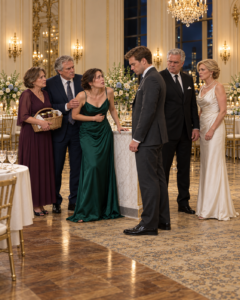
It was Harrison’s grandfather’s 70th birthday. 200 guests filled the ballroom of the Ashford Club, where Harrison’s family had spent decades treating their surname like royalty.
My parents arrived quietly. Dad wore the same navy suit he’d owned for years. Mom brought homemade preserves because Harrison’s grandfather once mentioned loving them.
Viven, my mother-in-law, looked at the gift basket and laughed.
“Good lord, Aara, did they bring produce?”
Several people heard her. My mother smiled politely.
Then Viven added, “I suppose country trash doesn’t understand formal occasions.”
I stood immediately.
“My parents have more class walking into this room than you’ve shown since I married your son.”
The laughter stopped. My father-in-law, Charles, crossed the room. He told me to apologize. I refused.
What happened next took seconds. During the argument, Charles shoved me hard. I struck the edge of a marble serving station. The pain stole my breath.
Harrison saw everything. He didn’t come to me.
He whispered, “Why couldn’t you just keep quiet?”
That hurt worse.
I left with my parents and went straight for medical treatment. One rib was fractured. From the parking lot, I called my older brother, Adrien.
“Handle it quietly,” I said. “Make sure they regret this.”
He understood exactly what I meant. No threats, no violence, just consequences.
Because Harrison’s family had spent years bragging that their hotel empire belonged entirely to them. It didn’t.
My parents weren’t poor farmers. They owned agricultural land, yes. But Adrien managed our family’s private investment company.
And 3 months earlier, without knowing I had married into the Ashfords, that company had quietly purchased their largest outstanding debt.
Adrienne paused, then said, “Elara, there’s something you don’t know. They missed today’s payment.”
I forgot about my rib for a second.
“What do you mean they missed it?”
Adrienne explained that Ashford Hospitality had been struggling for nearly a year. Their flagship hotel looked profitable from the outside, but expansion debt was crushing them.
The payment due that morning wasn’t small. $2.4 million.
Under the loan agreement, missing it triggered specific lender protections. I closed my eyes.
“Did Harrison know?”
“We don’t know yet.”
That answer bothered me. My husband handled acquisitions for his family’s company. He understood their finances better than anyone. Yet, he’d spent months telling me business was stronger than ever.
Adrien promised our company would follow the contract exactly. No special treatment, no revenge, just the same consequences any borrower would face.
Then he asked whether I wanted him to tell the Ashfords who controlled the debt.
“Not yet.”
The following morning, Harrison arrived at my parents’ house. He brought flowers. Not an apology.
Flowers?
He looked uncomfortable when Dad answered the door.
“I need to speak with my wife.”
Dad stepped aside only after I said it was fine. Harrison stared at the medical paperwork on the table. For the first time, he looked ashamed.
“My father shouldn’t have pushed you.”
“Pushed?”
He lowered his eyes. Then his phone rang. Charles.
Harrison answered. I watched the color drain from his face.
“What do you mean? The lender accelerated review.”
Silence.
“When?”
Another pause.
“No, don’t sign anything until I get there.”
He ended the call. I asked what happened.
“Company issue.”
He reached for his coat. Then Dad spoke from behind us.
“You should probably stay.”
Harrison turned. My father placed an envelope on the table. The letterhead had read Whitmore Capital Partners.
Harrison stared at the name, then at me.
Finally, Dad said, “Your company’s lender would like a word with you.”
Harrison read the letter twice. Then he looked at my father.
“You own Whitmore Capital.”
Dad shook his head.
“My children do.”
That stunned Harrison Moore. For six years, he’d believed my family lived entirely from a modest farm.
We did own the farm. What I hadn’t explained was that it covered thousands of acres and had financed our family’s first investments decades earlier.
I never hid it deliberately. Harrison simply never asked questions after deciding what my parents were.
His phone rang again. This time, Adrien.
Harrison answered cautiously. My brother explained that Ashford Hospitality had missed a contractual payment and requested updated financial records. Nothing threatening, nothing personal, exactly what the agreement allowed.
Harrison glanced at me.
“Is this because of last night?”
I felt anger rise.
“My fractured rib didn’t make your company miss a $2.4 $4 million payment.”
He had no response. Then Adrien said something through the phone that I wasn’t expecting.
“Mr. Ashford, we also need clarification regarding a transfer made 48 hours before the payment deadline.”
Harrison frowned.
“What transfer?”
Adrien gave him the amount. $3.1 million.
Money had left an Ashford Hospitality Reserve account and moved to an entity called VCA Holdings. Harrison went completely still.
I recognized the initials before he spoke. Vivien Clare Ashford, his mother.
Dad noticed my expression. Harrison asked Adrien whether he was certain.
“Your finance team provided the records.”
The call ended. For several seconds, nobody spoke.
Then Harrison whispered, “My mother doesn’t control company reserves.”
“Who does?” I asked.
“My father.”
The room seemed colder. Charles had shoved me hours after more than $3 million left his company for an entity named after his wife.
Harrison grabbed his keys. Then his phone displayed a message. He read it. His face changed again.
“What?”
He turned the screen toward me. It was from Charles.
“Do not come to the office. Your mother and I have left the country.”
Colon writing block end.
Harrison called his father immediately—straight to voicemail. Then Viven. Her phone was off.
Adrienne advised Harrison to contact the company’s own council and preserve every record connected to the transfer. I stayed out of it. My family controlled the debt, but that didn’t make us investigators.
Harrison left for Ashford Hospitality’s headquarters. 3 hours later, he called me. His voice sounded different.
“Can I come back?”
I almost said no. Then he added, “I found something about your parents.”
That got my attention. He arrived carrying a laptop and a cardboard archive box.
My mother wouldn’t let him forget what happened.
“You can speak to Aara,” she said. “You cannot minimize her injury in this house.”
Harrison nodded.
“I understand.”
For once, he actually sounded like he did. Then he opened the laptop.
The $3.1 million transfer to VCA Holdings was real, but VCA hadn’t been created recently. It had existed for 9 years, and every year, Ashford Hospitality had paid it consulting fees.
Total: more than $14 million.
Harrison claimed he’d never seen the arrangement because the payments were categorized under legacy executive contracts. Then he opened the archive box.
Inside were old board minutes. One document mentioned my father’s name.
23 years earlier, when Ashford Hospitality was close to bankruptcy, a private investor had provided emergency capital.
Thomas Whitmore. My father.
I looked at Dad. He sighed.
“I hoped that would stay buried.”
Harrison stared at him.
“You saved my family’s company.”
Dad corrected him.
“I invested in it. Your grandfather repaid me.”
Then Harrison pulled out another document. This one wasn’t repayment paperwork. It was a confidential side agreement signed by his grandfather.
If certain Ashford family assets were ever improperly diverted, Thomas Whitmore retained a dormant contractual right.
Harrison looked at Dad.
“A right to what?”
Dad answered quietly.
“25% of your flagship hotel.”
Colon writing block end.
Harrison looked as if the floor had shifted beneath him. Dad immediately cautioned him that an old agreement wasn’t automatically enforcable simply because we had found it.
Lawyers would need to examine everything, but the existence of that document explained something. Charles knew exactly who my father was.
I turned toward Dad.
“You’ve met him before.”
“Twice.”
My chest tightened. Charles had stood in that ballroom listening to Viven mock my parents as country trash. He knew Dad had once helped save their company, and he’d said nothing.
Then Mom surprised me.
“Viven knew, too.”
Dad looked at her. Mom explained that 6 months before my wedding, Viven had called her privately.
She asked whether Dad still held any rights connected to Ashford Hospitality. Mom assumed it was routine estate planning and told her to speak with attorneys. She never mentioned it because Viven never called again.
Harrison went pale.
“So they knew before I married.”
Apparently. The question was why that mattered.
Now, Adrienne’s attorneys began reviewing the historic agreements alongside the current loan documents. Meanwhile, Harrison’s company council traced VCA Holdings.
The entity wasn’t owned solely by Viven. Charles controlled 50%. The other half belonged to a trust, beneficiary undisclosed in the public records.
Then, Harrison received a secure message from his company’s general counsel. They had located internal correspondence concerning the $3.1 million transfer.
Charles had authorized it. Viven had approved it, but a third person had requested it. Someone using a private email address.
Harrison opened the attachment. I watched his expression collapse.
“What?”
He turned the laptop toward me. The email was signed with one name.
Graham Ashford, Harrison’s grandfather. The man whose 70th birthday would supposedly been celebrating when Charles broke my rib.
The problem: Graham Ashford had been legally declared incapacitated 8 months earlier. And according to Harrison, he hadn’t written an email in almost a year.
Colon writing block end.
Harrison immediately contacted the attorney overseeing Graham’s affairs. The answer came within an hour.
His grandfather hadn’t authorized the transfer. More troubling, nobody acting under Graham’s legal authority had authorized it either. The private email address wasn’t recognized.
Company council began preserving records. Adrienne’s team did the same from the lender’s side. I watched everyone move around a financial disaster that had somehow exploded from one ugly birthday dinner.
Then Harrison asked a question that changed the direction again.
“Why hold Grandad’s party if he’s incapacitated?”
I had wondered that too. Graham had attended for only 20 minutes. He sat quietly, surrounded by staff, before being taken upstairs.
Viven called it exhaustion. Harrison contacted his grandfather’s longtime assistant. She revealed that Graham’s birthday wasn’t the real reason for the gathering.
Charles had invited several board members because he planned to announce a restructuring of family ownership after dinner. The announcement never happened. My injury ended the evening first.
“What restructuring?”
The assistant sent Harrison a draft presentation. Under the proposed plan, Charles and Vivien would gain increased control over several Ashford assets.
Graham’s trust holdings would be reorganized, and Harrison would receive a new executive role. Harrison stared at the document.
“I never agreed to this.”
Then Dad noticed something on the final page. The restructuring assumed the dormant Whitmore hotel right had already been extinguished.
It hadn’t.
Attached was a waiver supposedly signed by Thomas Whitmore 6 months earlier. Dad looked at it once.
“That isn’t my signature.”
My stomach dropped. 6 months earlier. The same period Vivien had called Mom asking whether Dad still held rights.
Then Harrison scrolled to the witness section. Charles had witnessed the signature, but beneath his name was another witness.
My husband stopped breathing. I leaned closer. The second signature belonged to Harrison.
He whispered, “I’ve never seen this document.”
Then Dad looked at him.
“Someone forged both of you.”
Colon writing block end.
For the first time, Harrison stopped protecting his family. He turned the waiver over to company council and provided verified signature samples. Dad did the same.
The document would be examined properly. Nobody at our table pretended we already knew who created it.
Then Harrison said something I didn’t expect.
“If my parents knew the waiver was false, last night wasn’t random.”
I understood immediately. Viven had provoked my parents publicly. Charles had demanded I apologize. Then he’d shoved me when I refused.
Had they wanted us gone before the restructuring announcement?
Possible, but possibility wasn’t proof. Dad reminded us of that.
Then Adrien called. Charles and Viven hadn’t actually left the country. Their flight reservations existed. They never boarded.
Their phones had gone dark near a private Ashford property outside the city. Company council would handle contact.
I wanted nothing to do with chasing them. My rib already reminded me what happened when their panic became physical.
Then Graham’s attorney requested a private meeting. He arrived that evening carrying a sealed envelope.
Graham had prepared it 10 months earlier, shortly after his health declined. Instructions said it could be released if anyone attempted to alter the Whitmore agreement.
Inside was a handwritten statement. Graham confirmed Dad’s 25% hotel right still existed under specified conditions. He also wrote that Charles had pressured him repeatedly to eliminate it.
Harrison looked devastated. Then came the final paragraph.
Graham believed someone had been moving company money through VCA Holdings for years. He hadn’t known who ultimately benefited, but he’d discovered one account number.
Adrien ran it through records already available to the lender. The receiving account belonged to a family trust.
Harrison stared at the beneficiary name. I read it over his shoulder.
It wasn’t Charles. It wasn’t Viven. It was Harrison.
My husband looked at me and whispered, “I didn’t know this trust existed.”
Colon writing block end.
The trust had been created when Harrison was 17. Charles controlled it. Harrison had never received statements, distributions, or access. That mattered.
So did the records showing VCA payments had flowed through accounts connected to the trust while Charles remained trustee.
From there, attorneys took over. The disputed transfer, waiver, historic consulting payments, and Graham’s concerns went through formal financial and [clears throat] legal review. Dad’s dormant hotel rights were examined separately.
Nobody needed Adrien to destroy the Ashfords. Their own paperwork was doing enough.
Charles and Viven eventually returned through council. Charles never apologized to me personally. My injury became its own legal matter.
I refused every attempt to describe what happened as a misunderstanding. Harrison moved out of our house voluntarily. He asked me not to file for divorce.
I told him something he finally understood.
“Your father broke my rib, but you broke the marriage when you watched and asked why I couldn’t stay quiet.”
Months later, our divorce was finalized. Harrison cooperated with the investigations into his family’s finances. Whether that redeemed him wasn’t mine to decide.
Dad never celebrated the Ashford’s losses. Neither did Adrien. Whitmore Capital enforced only the rights its attorneys determined were valid.
One evening after my rib had healed, my parents invited me back to the farm. Mom opened a jar of the same preserves Vivien had mocked. Dad spread some across warm bread.
I started laughing.
“What?”
I shook my head.
“They called you country trash.”
Dad smiled.
“And—and they had absolutely no idea who they were insulting.”
He looked at me carefully.
“Money wasn’t why they were wrong, ARA.”
I knew my parents deserved respect before anyone knew their balance sheet. That was the lesson the Ashfords never understood.
I had asked Adrien to make them regret humiliating my family. In the end, he barely had to do anything. The truth handled it quietly.
Completed.