My Fiancé’s Father Recognized My Bracelet. His Brother Whispered, “Frank, Don’t.”
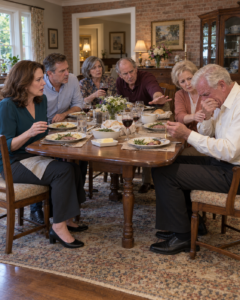
My fiance’s father burst into tears when I said my mother’s name. Before anyone could ask why, his brother leaned across the table and whispered, “Frank, don’t.”
That was how my first dinner with Ben’s family went. And to think I’d spent 20 minutes that afternoon worrying about whether my shoes were too casual.
My name is Claire Morgan. I was 47, divorced, and about 7 months away from marrying a man I honestly believed was the best thing that had happened to me in years.
Ben Whitaker was 49. He worked as a commercial electrician, drove a pickup that was always cleaner than mine, and had the unusual habit of doing exactly what he said he would do. We met when he came to fix an electrical problem at the community college where I worked. He asked me out 3 weeks later.
On our first date, he brought two umbrellas because the forecast said it might rain. I thought that was ridiculous. Then it rained.
My first husband had been wonderful at making promises. Ben was better at remembering them.
We’d been together 18 months when he proposed. Nothing elaborate, just dinner at our favorite little Italian place, followed by a question he was so nervous about asking that he nearly knocked over his water. I said yes before he could finish.
The only thing left was meeting his father. Ben’s mother, Ruth, had died in 2018. His father, Frank, had remarried a few years later, and Ben spoke warmly about his stepmother, Janet. His uncle Gordon was another matter.
“Dad’s brother likes to hear himself talk,” Ben warned me as we drove to Westerville that Friday evening.
“How much?”
“Enough that you’ll learn the entire history of the heating business before dessert.”
I told him I could survive one dinner. I really should have asked what kind of dessert they were serving.
Frank and Janet lived in a comfortable brick house with a wide front porch and a driveway that could fit three cars. Janet greeted me before Ben had even finished ringing the bell. She hugged me, took the flowers I’d brought, and immediately apologized for making too much food.
There were six of us. She’d cooked enough for 12.
Frank was a tall, silver-haired man with the kind of handshake that made you think he’d spent his life meeting customers. He welcomed me warmly and asked about my drive.
Gordon arrived 10 minutes later with his wife, Linda. Within 5 minutes, I knew he’d worked at Whitaker Heating Supply for 40 years, had personally saved the company during two difficult winters, and believed young people no longer understood customer service.
Linda seemed to have heard all of this before. She asked Janet where she could put her purse.
Dinner was roast beef, mashed potatoes, green beans, and homemade rolls. Janet kept offering me more food while Ben quietly moved the butter dish closer because he’d noticed I couldn’t reach it. It was a nice evening for about 20 minutes.
We were discussing our wedding when Frank noticed my bracelet. I’d worn it almost every day since my 18th birthday. It was an old gold bracelet with a small oval charm and a silver clasp that didn’t quite match.
My mother had given it to me. She said it had belonged to a dear friend. I never thought much about its value. I just liked wearing something that reminded me of Mom.
Frank stopped eating. At first, I thought he was looking at the ring on my left hand. Then he set down his fork.
“Claire, where did you get that bracelet?”
I glanced at my wrist. “This? My mom gave it to me.”
“May I see it?”
His voice had changed enough that Ben looked up. I unclasped the bracelet and handed it across the table.
Frank turned it over carefully. He examined the oval charm, then the silver clasp.
“That’s an unusual repair,” he said.
I smiled. “My mom always said whoever fixed it wasn’t much of a jeweler.”
Frank let out a short, unsteady laugh. “No, he certainly wasn’t.”
He showed me a tiny dent near the edge of the charm. “Did your mother ever tell you how that happened?”
I shook my head. Frank rubbed his thumb across the dent.
“I made it. I was trying to replace the clasp with a piece from an old watch. Nearly ruined the whole thing.”
Ben leaned forward. “Dad, what are you talking about?”
Frank didn’t answer him. He looked at me again.
“When did your mother give this to you?”
“My 18th birthday.”
“What year?”
“1997.”
He took a moment before asking his next question.
“What’s your mother’s name?”
“Evelyn Price.”
Frank covered his mouth. For a second, I thought he’d swallowed something the wrong way. Then his shoulders started shaking and he lowered his head.
He was crying. Not a few quiet tears, either. He was struggling to catch his breath.
Janet reached for his arm. “Frank, honey, what’s wrong?”
Gordon leaned across the table. “Frank, don’t do this here.”
That was the first thing that really frightened me. Not Frank crying. People cry for all kinds of reasons. It was the way Gordon said it, like he already knew exactly what Frank was about to say.
Ben pushed his chair back. “Uncle Gordon, what’s going on?”
“Nothing you need to worry about.”
“My father is crying at the dinner table.”
Frank raised one hand. “Gordon, please.”
He wiped his face with his napkin and looked at the bracelet again.
“This belonged to Ruth.”
Ben went still. “My mom?”
Frank nodded. “I gave it to her for our 10th anniversary.”
I looked from Frank to Ben. “I don’t understand. My mother said a friend gave it to her.”
“Ruth was her friend,” Frank said. “Your mother worked for us.”
Gordon immediately reached for his wine glass.
“That was a long time ago. There was an employment dispute, and frankly, I don’t see why we’re upsetting everyone over it now.”
I turned toward him. “What kind of dispute?”
“An unfortunate misunderstanding.”
Frank said nothing. I waited for him to correct his brother or at least explain what he meant. He kept looking at the bracelet.
Janet finally broke the silence. “Well, Gordon, you’ve managed to tell us absolutely nothing. That’s impressive, even for you.”
Linda put down her glass. For the first time all evening, she looked interested in the conversation.
But Frank wasn’t ready to explain. And I wasn’t going to interrogate a 75-year-old man in his own dining room while he was still wiping his eyes. Ben asked his his father if he needed a minute. Frank nodded.
Dinner never really recovered after that. Janet brought out the apple pie anyway. Nobody ate much of it, although Gordon made a determined effort to finish his slice.
When Ben and I got ready to leave, Frank followed us to the front door. He held out my bracelet. I took it, but before I could put it on, he asked whether my mother was still alive.
“Yes. She’s in Dayton.”
“Is she well?”
“She is.”
He looked relieved. “Would you give me her number? I’d like to speak to her.”
I closed my fingers around the bracelet. “I’ll ask her first.”
“Of course.”
He seemed about to say something else, then stopped. Finally, he looked me in the eye.
“Your mother was a good woman, Claire. I should have said that 32 years ago.”
I didn’t know what to say. Ben put his hand on my back and we said good night.
For the first 10 minutes of the drive home, neither of us spoke. Then Ben said, “I’ve never seen Dad cry like that.”
“Not even when your mom died?”
He shook his head. “He cried at her funeral. But not like that.”
I looked down at the bracelet in my lap. “Did you know my mother worked for your family?”
“No. Dad never mentioned her. Neither did Mom.”
Ben reached over and squeezed my hand. “We’ll figure it out.”
I wanted to believe him, but something about Gordon’s reaction kept bothering me. He hadn’t seemed surprised that Frank recognized the bracelet. He’d seemed afraid Frank would explain why.
When I got home, I called Mom. She didn’t answer, so I left a message saying I’d been to dinner with Ben’s family and wanted to ask her about my bracelet.
10 minutes later, she called back.
“Claire, honey, what’s going on?”
I told her Frank had recognized the bracelet and said it once belonged to his wife, Ruth. Mom didn’t respond. Then I mentioned Frank’s last name.
“Whitaker?”
“Yes. Frank Whitaker.”
Another silence.
“Mom?”
“Clare. Did his brother Gordon happen to be there?”
I sat down at the kitchen table. “Yes. Why?”
She took a breath. “Did Frank tell you what they accused me of?”
I didn’t answer Mom right away. I was still sitting at my kitchen table with my coat on and the bracelet beside my keys.
“Accused you of what?”
She was quiet for a moment. “It’s not something I want to explain over the phone, honey. Can you come down tomorrow?”
“Mom, you’re scaring me.”
“I know. I’m sorry. I’m all right. I just need to tell you properly.”
I almost insisted she tell me then and there, but I knew that voice. It was the one she used when she had already made up her mind.
“I’ll be there in the morning.”
After we hung up, I called Ben. He offered to drive down with me, but I told him I needed to talk to Mom alone first. He understood, or at least he said he did. I slept badly anyway.
The next morning, I left Columbus a little after 8 and drove to Dayton. Mom lived in a small ranch house she’d bought after retiring. She’d painted the front door blue herself and was forever finding projects for a house that, as far as I could tell, had run out of things that needed fixing.
When I arrived, she was sitting at the kitchen table, hemming curtains for her neighbor. There was coffee ready. She’d also bought the cinnamon rolls I liked.
That worried me more than anything. Mom usually saved the good bakery for birthdays or bad news.
I sat across from her. “Tell me about the Whitakers.”
She set down her needle. “Frank owned the company where I worked. Whitaker Heating Supply. I was their bookkeeper for almost 6 years.”
“You never told me that.”
“I know.”
“And Ruth was his wife?”
Mom nodded. “She was a good friend.”
She looked at the bracelet on my wrist. “I wondered whether you’d worn that last night.”
I unclasped it and put it between us. “Start at the beginning.”
Mom folded the curtains and moved them aside. In 1994, she was 40 years old and raising me on her own. I was 15, convinced that every problem in the world could be solved if adults would just stop bothering me.
Mom worked at the Whitaker office in Columbus. Frank handled sales and the big decisions. His younger brother, Gordon, managed much of the financial side.
“Gordon always acted like the company was his,” Mom said. “Frank started it. But Gordon thought that meant he deserved credit for keeping it going.”
She’d noticed payments that didn’t match the invoices. A few bills appeared to have been paid twice. Other amounts had gone to an account she didn’t recognize.
She brought the discrepancies to Gordon. A week later, he accused her of taking $18,400.
I stared at her. “From the company?”
“Yes.”
“But you didn’t.”
“No, Claire.”
She said it without raising her voice. I felt foolish for asking.
Gordon had produced paperwork that appeared to connect her to the missing money. Frank believed him. Mom was fired.
The company never reported her to the police. But that didn’t stop Gordon from talking. By the time she started applying for other bookkeeping jobs, people in the local business community had heard she’d been dismissed over missing funds.
I remembered that year. Mom had told me the company was cutting back. She took a temporary office job, then evening shifts at a medical billing service. We moved to a cheaper apartment before Christmas. I quit dance lessons because I thought we couldn’t afford them.
“You told me you were tired of the commute,” I said.
“I was tired of a lot of things.”
“Why didn’t you tell me?”
“You were 15. I didn’t want you worrying that your mother might go to jail over something she hadn’t done.”
I looked down at my coffee. I’d spent years remembering that period as a time when money was tight. Mom remembered it as the time people stopped trusting her.
“Did anyone believe you?”
“Ruth did.”
Ruth sometimes helped in the office, especially when things got busy. She and Mom had become friends over lunches at their desks and conversations about their children. When Gordon accused Mom, Ruth asked Frank to have someone independent review the records.
Frank refused.
“He thought Gordon knew the books better than anybody,” Mom said. “And I think he wanted to believe his brother.”
Ruth argued with him. She also helped Mom find temporary work through a friend. On Mom’s last day at the office, Ruth took off her bracelet and offered it to her. Mom refused.
“She told me it was an anniversary present from Frank. I wasn’t about to take something like that.”
“What made you change your mind?”
“Ruth said she wanted me to have something from a person who believed me.”
Mom touched the silver clasp. “She was stubborn. You would have liked her.”
I thought about Frank recognizing the repair. He’d known that bracelet for years. Yet he’d watched his wife give it away without asking himself what that meant.
Mom kept it in a drawer for a while. On my 18th birthday, she gave it to me.
“You were leaving for college,” she said. “I wanted you to have something nice.”
“You could have told me where it came from.”
“I could have.”
I let that sit between us. Then I asked the question that had been bothering me since the night before.
“When I told you I was marrying Ben Whitaker, did you know who his family was?”
Mom looked toward the window. “I wondered.”
“How much did you wonder?”
“Whitaker isn’t an uncommon name. You’d told me his father was retired, but I didn’t know his first name or what business he’d been in. When you said Ben grew up around Columbus, I started thinking it might be the same family.”
“And you didn’t ask?”
“I should have.”
I pushed my chair back a little. “Mom, [clears throat] we’ve been engaged for 3 months.”
“I know.”
“You could have told me there was a possibility. I would have asked Ben.”
She nodded. That almost made it worse. I wanted her to give me an explanation I could argue with.
Instead, she said, “After what happened with your first marriage, you finally seemed happy. I was afraid you’d hear my story and feel you had to choose between me and Ben.”
“That wasn’t your decision to make.”
“No, it wasn’t.”
I got up to refill my coffee, mostly because I needed a minute. I loved my mother. I knew how hard she’d worked to give me a decent childhood, but she’d kept something from me that might affect the man I was going to marry.
When I sat down again, she didn’t ask me to understand. She just said, “I’m sorry, Claire.”
I believed her. I was still upset.
After a while, I asked whether she’d ever seen Ruth again. They’d exchanged Christmas cards for years. Ruth died in 2018 and Mom went to her funeral.
“You went?”
“I sat at the back. I wanted to say goodbye to her.”
“Did Frank see you?”
“No. I wasn’t there for Frank.”
Mom got up and took a worn cardboard box from the hall closet. Inside were old payubs, copies of invoices, handwritten notes, and letters. She’d kept them through three moves.
“I tried to get the accusation corrected,” she said. “But the papers I had didn’t prove where the money went. I couldn’t afford a long fight with the company, and I had to keep working.”
She showed me a note in Ruth’s handwriting, asking her to hold on to the records.
“I kept these because after a while, when enough people treat you like you did something wrong, you start wondering if you missed something yourself.”
I picked up a copy of an old invoice. Mom had circled a payment date in red ink.
“Can I take these copies?”
“I want to keep the originals.”
That sounded like my mother. She went back to the closet and returned with another envelope. This one had a date written across the front: 2002.
“Frank contacted me 8 years after I lost my job,” she said.
I looked up. “Was he calling to apologize?”
Mom shook her head. “He was calling to make sure I stayed quiet.”
I kept looking at the date on the envelope. 2002. That was 8 years after Mom lost her job. 8 years of working wherever she could find someone willing to hire her. And apparently Frank Whitaker had called her with something to say, just not an apology.
“What did he want you to stay quiet about?” I asked.
Mom slid the envelope toward me. “Take it home and read it. I don’t want to go through all of that twice today.”
I wanted to argue. I also knew she’d already told me more in one morning than she’d told me in 32 years. So I put the envelope with the copies she’d made, hugged her goodbye, and drove back to Columbus.
Ben called while I was on the road. I let it go to voicemail until I stopped for gas outside Springfield. He’d left a message asking how Mom was doing and whether I wanted him to bring dinner over.
I called him back. “She told me what happened in 1994.”
“Dad told me some of it, too.”
That caught my attention. “What did he say?”
“Say that your mom worked for the company and there was money missing. He said Gordon handled the investigation and Dad believed him.”
“Did he tell you my mother was innocent?”
“He said he never knew for sure what happened.”
I watched a man at the next pump try to convince his dog to get back into the truck. The dog had apparently decided Springfield was where he wanted to retire.
“Ben, Gordon accused my mother of stealing $18,000. She lost her job over it.”
“I know, and I’m sorry.”
“Your uncle was at dinner last night acting like it was a misunderstanding.”
“I’m not defending Gordon.”
“But you’re defending your dad.”
There was a pause.
“I just don’t want us deciding what kind of man he is before we hear everything.”
I looked at the envelope on the passenger seat. “That’s exactly what I’m trying to do.”
“I know. I didn’t mean it that way.”
But he had, at least a little. We ended the call without making dinner plans.
I drove home thinking about my first marriage. My ex-husband, Paul, had never been much of a shout. His favorite phrase was, “Can we not make this a thing?”
His mother could insult my job, change our holiday plans, or announce that she’d invited six extra people to our house. If I objected, Paul would ask me to let it go. He was always trying to keep the peace.
It took me 12 years to notice I was the only person paying for it.
Ben wasn’t Paul. I knew that. But hearing him ask me to be patient with his father brought back a feeling I hadn’t missed.
At home, I made coffee I didn’t need and spread Mom’s papers across the kitchen table. The 1994 records were confusing. I could follow the invoice dates and payment amounts, but they didn’t tell me where the money had actually gone. Mom had circled several entries and written questions in the margins.
Then I opened the 2002 envelope. The first letter was from a Columbus law firm representing Whitaker Heating Supply. It offered Mom $8,000 to settle any claims related to her dismissal.
In exchange, she would have had to release the company from further claims and agree not to discuss the dispute publicly. There was no acknowledgement that she’d been falsely accused.
I read it twice. $8,000.
I thought about the apartment we’d moved into that winter, where the bedroom window rattled whenever a truck went past. Mom had worked two jobs to keep us there. And 8 years later, the company had offered her money in exchange for agreeing to stop talking about what happened.
The next page was Mom’s response. She’d declined the offer.
Underneath it was a handwritten letter from Ruth Whitaker. I recognized the name immediately, but I hadn’t expected to find her handwriting in the same envelope as a lawyer’s letter.
Ruth wrote that Frank had finally learned what happened to the missing money. An internal review had uncovered payments Gordon diverted from the company. He’d altered accounting records to conceal them, including records that had been used to accuse Mom.
Gordon admitted it to Frank. The brothers arranged for him to repay the money, and Gordon was removed from direct control of the books.
I stopped reading for a moment. I just sat there listening to the refrigerator hum.
Frank knew. Not last Friday. Not after seeing the bracelet. He’d known since 2002.
I picked up the letter again. Ruth had urged Frank to tell the former employees and business contacts who’d heard the accusation. He refused. He was worried about the company, its bank, and the people who depended on it.
Ruth wrote that she was ashamed of his decision. She wanted Mom to know that Gordon had admitted what he’d done, even if Frank wouldn’t say so publicly. At the bottom, she’d added that Mom should keep the letter with her other records.
I thought of Frank crying at dinner. I’d felt sorry for him. I’d imagined an old man suddenly remembering a woman his family had treated unfairly, perhaps realizing for the first time how much damage had been done.
But he’d had 24 years to do something about it.
I called Mom. “Did you know what Ruth wrote in that letter was true?”
“Yes.”
“Did you ever see the company’s actual findings?”
“No. Ruth told me what Frank had shown her. I asked him to correct the record, but he wouldn’t.”
“Why didn’t you tell me about the letter this morning?”
“I gave it to you, Claire.”
“I know. I just wish you’d told me what was in it.”
“I thought you should read it yourself.”
I couldn’t really argue with that.
“Mom, he knew you didn’t take the money.”
“Yes.”
“And he still let people think you did.”
She was quiet. Then she said, “That’s the part I’ve had the hardest time understanding.”
I asked whether she wanted me to confront Frank.
“I want you to understand what happened before you decide what to do. And I don’t want you fighting with Ben on my account.”
“I’m not fighting with Ben on your account.”
Even as I said it, I knew that wasn’t entirely true. I was angry for her. I was also frightened by how quickly Ben had wanted to believe his father.
After we hung up, I called Ben and asked him to come over. He arrived a little after 7 with a bag of sandwiches. I hadn’t eaten since breakfast, which annoyed me because it meant he was right to bring food.
He put the bag on the counter and saw the papers on the table.
“What did you find?”
I handed him Ruth’s letter. He read it standing up. Halfway through, he pulled out a chair. When he finished, he went back to the beginning and read it again.
“Dad told me he never knew,” he said.
“I know.”
“Maybe he meant he didn’t know in 1994.”
“Then why didn’t he tell you what he learned in 2002?”
Ben didn’t answer. I showed him the settlement offer. He looked at the amount, then at Mom’s unsigned acceptance page.
“Did she take any money?”
“No.”
He set the papers down carefully. I could see him trying to put together the father he knew with the man described in Ruth’s letter. I didn’t envy him that.
“I need to talk to him,” he said.
“Yes.”
Ben took out his phone and called Frank. His father answered on the third ring.
“Hey, son.”
“Dad. I’m at Claire’s. I’ve read a letter Mom wrote to Evelyn in 2002.”
There was silence on the other end. Ben looked at me.
“Did Gordon admit he took the money?”
Frank didn’t answer.
“Dad?”
Finally, he said, “Ben, there are things your mother never forgave me for.”
Ben closed his eyes for a moment. Then he asked the question I’d been waiting to hear.
“Why didn’t you tell Evelyn she was innocent?”
Frank didn’t answer Ben’s question. I could hear the faint sound of a television in the background. Then a door closed and the room on his end went quiet.
“Dad,” Ben said.
“I should explain this in person.”
“Then I’ll come over tomorrow.”
“Ben, it’s late.”
“It’s 7:30.”
Frank sighed. “All right. Tomorrow morning.”
Ben ended the call and sat there with the phone in his hand. I wanted to ask him what he was thinking. I also wanted to tell him exactly what I thought of his father. And I knew those two things weren’t going to help each other.
“Your sandwich is getting cold,” I said.
He looked at the bag on the counter. “That’s probably the least of my problems.”
We ate at my kitchen table. Neither of us said much. Before he left, Ben asked if I wanted him to call after he spoke to Frank.
“Yes,” I said, “but I don’t need you to convince him of anything for me. I need to know what he says.”
He nodded.
The next morning, Ben went to his father’s house alone. He called me just before noon.
“Can I come over?”
I knew from his voice that the conversation hadn’t gone well. When he arrived, he took off his jacket, folded it over the back of a chair, and asked for a glass of water. Ben only did that when he needed something to occupy his hands.
“Dad admitted it,” he said. “All of it. He admitted Gordon took the money. He admitted he knew in 2002. And he admitted he agreed to the settlement offer.”
I sat across from him. “Did he explain why he never cleared Mom’s name?”
“He said the company was in a difficult position. They had loans, employees, contracts. He was afraid if people found out Gordon had been stealing, the business might not survive.”
“And my mother losing her job was acceptable?”
“I asked him that.”
Ben rubbed his forehead. “He said Evelyn had found other work by then. He thought offering her money would help.”
I couldn’t help laughing. It wasn’t a particularly pleasant laugh.
“$8,000 to keep quiet about being called a thief. Very generous.”
“I know.”
“Does he understand she wasn’t asking him to save her? She wanted him to tell people she hadn’t stolen anything.”
Ben looked at me. “I don’t think he understood it then. I’m not sure he wanted to.”
He told me Frank had also admitted that Ruth kept bringing up the subject. She wanted him to correct the accusation, even after Evelyn had moved on to another job. Frank had always said there was no point reopening it.
After Ruth died, he’d put the records away and stopped discussing them altogether.
“Dad said he thought he’d done what was necessary to protect everyone,” Ben told me.
“Everyone except Mom.”
“Yes.”
It was the first time he’d said it without adding an explanation for his father. I appreciated that more than I expected. Still, there was something we needed to talk about.
“Ben, when you told me not to judge your dad too quickly, I felt like you were asking me to let this go.”
“I wasn’t trying to.”
“I know, but that’s what it felt like.”
He waited.
“My first husband was always asking me to be reasonable. His mother would say something nasty and he’d tell me she didn’t mean it. His brother would borrow money and forget to repay it. And somehow I was the one making Thanksgiving uncomfortable if I mentioned it.”
Ben gave a small, unhappy smile. “You told me some of that.”
“I left out how long I put up with it.”
I looked toward the window. The neighbor across the street was struggling to get a patio umbrella into his garage. It was a perfectly ordinary Saturday, and I hated that I was sitting in my kitchen wondering whether I was about to make the same mistake twice.
“I love you,” I told Ben. “But I can’t marry someone who needs me to stay quiet whenever his family does something wrong.”
He didn’t reach for my hand or tell me everything would be fine. He thought about it.
“I love my dad,” he said. “I remember him helping employees who couldn’t pay their heating bills. I remember him working weekends so people could get home to their families. I don’t know how to fit what he did to Evelyn into all of that.”
“You don’t have to figure it out today.”
“But I do have to stop asking you to make it easier for me.”
That was the first thing either of us had said all weekend that made me feel a little better. We agreed not to make any wedding decisions until we’d talked more.
Ben wasn’t going to cut his father out of his life, and I wasn’t asking him to. But I wasn’t going to attend family dinners and pretend Gordon’s little misunderstanding had been resolved.
2 days later, Gordon made that decision considerably easier. Janet called while I was at work.
“Claire, are you somewhere you can talk?”
I stepped into an empty conference room. “Is Frank all right?”
“Frank’s fine. Gordon, unfortunately, is also fine.”
I nearly smiled. Then Janet told me me Gordon had sent an email to several relatives. He claimed Mom was reviving an old dispute because I’d become engaged to Ben. He suggested I might be encouraging her to seek money from the company.
Janet forwarded it to me. There it was in writing. Gordon called Mom’s accusation against him unsubstantiated and described my questions as an attempt to create leverage before the wedding.
I read that sentence three times. 32 years ago, he’d called my mother dishonest. Now he was suggesting I was trying to shake down my future in-laws.
“Does Frank know?” I asked.
“He does. Gordon told him he was protecting the family.”
“And what did Frank say?”
Janet paused. “He told Gordon not to send any more emails.”
I closed my eyes. Of course he did.
Janet suggested we meet for coffee after work. She arrived 10 minutes early, wearing a navy cardigan and carrying a folder. She put it on the table between us.
“I printed the email. Frank has a copy, too.”
“Thank you.”
“Don’t thank me yet. I’m married to the man who spent 24 years hoping his brother would develop a conscience.”
She stirred her coffee.
“Frank isn’t a cruel man, Clare, but he has a terrible habit of trying to end an argument without making the person who started it take responsibility.”
I told her Mom didn’t want a family war. She wanted people to know she hadn’t stolen anything.
“Then that’s what Frank needs to address,” Janet said. “Not whether Gordon’s feelings get hurt.”
I asked whether she thought Frank would do it.
“I don’t know, but I know Gordon won’t stop on his own.”
That evening, I drove to Dayton again. Mom read Gordon’s email at her kitchen table. She didn’t seem surprised, which made me angrier than if she’d thrown the paper across the room.
“I don’t want you fighting with Ben over this,” she said.
“I’m not. Ben knows what happened.”
“Good.”
“But Gordon’s telling people we’re after money. If we let him keep doing that, we’re right back where you started.”
Mom folded the email and set it down. “What do you think I should do?”
It would have been easy to tell her. I had several suggestions, most of them involving Gordon and a microphone.
Instead, I asked, “What do you want?”
She took her time. “I want the company to correct what it said about me in writing, and I want Frank to tell the people who heard that accusation that he knew it wasn’t true.”
I nodded. “Then that’s what we ask for.”
Ben came with me when we met met Frank the following evening. I showed Frank the email. He read it without interrupting.
“Gordon shouldn’t have sent this,” he said.
“No,” I answered. “But he did. And now people who weren’t even involved in 1994 think my mother and I are trying to get money out of your family.”
Frank looked at Ben.
Ben said, “Dad, don’t look at me. Claire’s talking to you.”
Frank lowered his eyes to the paper. I told him what Mom wanted: a formal correction to the people the company could still reach and a public acknowledgement that she’d been falsely accused.
He asked for time to think. I wanted to tell him he’d already had 24 years, but Ben spoke first.
“Dad, Gordon’s still doing it. This isn’t just about what happened back then.”
Frank didn’t answer. He folded the email and put it in his jacket pocket.
The next day, he called Mom and asked if he could visit. She agreed. I was there when he arrived, though I stayed in the living room while they talked at the kitchen table.
Frank brought copies of the company’s 2002 records. He admitted that Gordon had taken the money and that he’d chosen not to correct the accusation against Mom. He apologized.
Mom listened, then asked him why he’d offered her a private settlement when the accusation had been spread around the office. Frank said he thought it would help her move forward.
“It would have helped me if people knew I hadn’t stolen from you,” she said.
He didn’t argue. When he asked whether they could finally put the matter behind them, Mom shook her head.
“I don’t need you to make me feel better, Frank. I need you to correct what you told people.”
Frank looked at the papers he’d brought. “The anniversary dinner is in 2 weeks.”
“I know.”
“Some of the people who worked there in 1994 will be attending.”
“Then they’ll be in the right room to hear it.”
He left without a promise. I walked him to the door. For once, I didn’t feel the need to fill the silence.
The following morning, Mom called me.
“Frank just phoned.”
I sat down. “What did he say?”
“He wants me at the anniversary dinner.”
“Why?”
Mom’s voice was steady. “He said he should have told the truth the first time I was standing in that room.”
Mom didn’t ask me to come to the anniversary dinner with her. She told me Frank had invited her, then asked whether I thought she should go.
“I think you should do whatever you want,” I said.
“That sounds like something a daughter says when she has a very strong opinion.”
“I learned from you.”
She laughed a little. Then she said she wanted to be there, not because she trusted Frank to say everything perfectly, but because she was tired of hearing about her own life secondhand.
Ben offered to drive us. Mom said she’d rather ride with me. I didn’t take that personally. Ben was still Frank’s son, and Mom had spent 32 years keeping her distance from that family. She was entitled to a little more time.
The anniversary dinner was held at a banquet room in Columbus on October 24th. There were about 80 people, including current employees, retired workers, suppliers, and relatives who’d apparently been promised a free meal.
Ben met us in the parking lot. He gave Mom a hug, which surprised both of them.
“I’m glad you came, Evelyn.”
“So am I,” she said. “Ask me again when it’s over.”
Inside, the company had set up a display of old photographs. There was Frank standing beside his first delivery truck, Gordon at a trade show in the 80s, and a group of employees gathered around a birthday cake.
Mom stopped in front of that last one. She was standing near the back, wearing a green sweater. Ruth was beside her, holding a paper plate.
I studied Mom’s face. She was 40 in that picture, 7 years younger than I was now. I’d spent most of my life thinking of her as the woman who knew how to handle everything. Seeing her there, smiling at a job she hadn’t yet lost, made me realize how young she’d been when it all happened.
“That’s the sweater you used to wear to my school concerts,” I said.
“I wore it everywhere. It was the only decent one I had that year.”
She moved on before I could say anything else.
Janet found us near the dining room and led us to our table. Frank was already there, looking as though he hadn’t slept much. He greeted Mom politely.
“Thank you for coming, Evelyn.”
“I came to hear what you have to say.”
Frank nodded. He didn’t try to hug her. I appreciated that.
Gordon appeared a few minutes later. He’d been working the room, shaking hands, and pointing people toward the photographs as though he’d personally invented central heating.
When he saw Mom, he stopped. Then he went straight to Frank. They spoke near the doorway. I couldn’t hear every word, but Gordon wasn’t making much effort to keep his voice down.
“You invited her?”
“Yes.”
“To this?”
“Gordon. We’re not doing this here.”
Gordon looked almost offended to hear his own favorite line used against him. He said something about the company’s reputation. Frank replied quietly, and Gordon glanced toward our table.
Janet came back carrying two glasses of water.
“Everything all right?” I asked.
“Depends on whether Gordon remembers how to behave in public.”
“Does he?”
“Not historically.”
She put a glass in front of Mom. Dinner began soon after that. The food was good, although I couldn’t have told you what I ate. Ben sat beside me and occasionally touched my hand under the table.
Mom listened to a retired office manager tell a story about a winter when the phones had stopped working during a snowstorm. I was surprised she remembered the woman. Then I realized that, for Mom, these people hadn’t disappeared when she lost her job. She’d carried their opinions with her long after they’d stopped thinking about her.
After dessert, Frank went to the microphone. He thanked the employees, talked about starting the company in 1976, and told a story about delivering equipment in a borrowed truck with a heater that didn’t work. People laughed.
He thanked Janet for putting up with him in retirement and mentioned Ruth, who’d helped with the office in the early years. Then he set his notes down.
“Before we recognize some of the people who’ve helped build this company, [snorts] there’s something I need to correct.”
The room quieted. Frank looked toward our table.
“Some of you remember Evelyn Price. She worked in our accounting office until 1994.”
A few heads turned.
“At the time, Evelyn was dismissed after we accused her of taking $18,400 from the company. That accusation was false.”
I felt Ben’s hand close around mine. Frank continued.
“Evelyn did not take that money. My brother Gordon did.”
Gordon pushed his chair back. “Frank, that’s enough.”
“No,” Frank said. “It isn’t.”
He explained that Gordon had diverted company funds and altered records, including documents used to accuse Mom. In 2002, the company had confirmed what happened, and Gordon had agreed to repay the money.
Frank paused.
“I knew then that Evelyn had been wrongly accused. I chose not to tell the people who’d heard the accusation. I was afraid of what it would do to the business, and I was afraid of what it would say about my judgment.”
He looked directly at Mom.
“I let her carry the consequences of a decision I should have corrected 24 years ago.”
Nobody moved for a moment. Then Gordon stood.
“You’re going to throw away everything we built over something that was settled years ago ago?”
Frank kept his place at the microphone. “It was settled for the company. It wasn’t settled for Evelyn.”
Gordon gave a sharp laugh. “You always got to be the good brother, Frank. I was the one who kept this place running.”
“You worked hard,” Frank said. “That doesn’t give you the right to steal from it or blame somebody else.”
Gordon turned toward Mom. “Are you happy now? You’ve got everyone looking at you.”
I started to stand, but Mom touched my wrist. She rose slowly, smoothing the front of her jacket.
“I didn’t ask anyone to look at me, Gordon. I asked Frank to tell them the truth.”
“You could have let this go.”
“You got to put it behind you, Gordon. I had to live with it.”
Her voice wasn’t loud. She didn’t need it to be.
“Your company got its money back. I didn’t get those jobs back. I didn’t get to correct what people said about me when I wasn’t in the room.”
[snorts] She looked around at the tables.
“Some of you knew me. Some of you heard I was fired for stealing. I came tonight because I wanted you to hear that I didn’t do it.”
Then she sat down. There wasn’t a standing ovation. A few people clapped and others followed. One woman at a nearby table was crying. A man who’d worked in the warehouse stared at his folded hands.
Frank waited until the room settled. He said the company would issue a written correction to former employees and business contacts it could still reach. The records would be reviewed by the current leadership, and Gordon’s honorary advisory position would be reconsidered.
The award Gordon had been scheduled to receive that evening would not be presented.
Gord left before Frank finished speaking. Linda stayed seated long enough to finish her cheesecake. Janet watched her put down her fork.
“She’s been married to him for 40 years,” she whispered to me. “Let the woman finish her dessert.”
I nearly laughed, which felt strange after everything that had happened. But Mom smiled, and I hadn’t seen her smile like that all evening.
After the speeches, people began coming over. A woman named Carol, who’d worked with Mom in the office, apologized for believing Gordon. She said she’d wanted to call after Mom was fired, but hadn’t known what to say.
Mom thanked her for coming over. She didn’t tell Carol it was all right. She didn’t have to.
Two more former employees stopped by. One remembered Mom bringing homemade cookies to the office. Another asked whether she was still doing bookkeeping.
“I retired,” Mom told him. “I finally got tired of telling people where to put their receipts.”
He laughed and they talked for a few minutes about their grandchildren. I watched from beside Ben.
For the first time since this began, I understood that Mom hadn’t come for a dramatic confrontation. She’d come to stand in a room where people could speak to her without that old accusation between them.
When most of the guests had gone, Frank approached us. He looked exhausted.
“Evelyn, I know tonight doesn’t make up for what happened.”
“No,” Mom said. “It doesn’t.”
“I’ll make sure the correction goes out.”
“I’d appreciate that.”
Frank glanced at the bracelet on my wrist. “Ruth would have wanted me to do this a long time ago.”
Mom studied him for a moment. “Did Ruth know you were going to let me carry this for the rest of my life?”
Frank’s face changed. “She knew I wasn’t going to make it public in 2002.”
Mom nodded. She’d known the answer. I think she just wanted to hear him say it.
Then she looked at the bracelet. “She was a better friend to me than you were a husband to her.”
Frank didn’t defend himself.
Mom picked up her purse and asked if I was ready to go. I was. Ben walked us to the car. He hugged Mom again, and this time she hugged him back.
On the drive to Dayton, Mom was quiet for a while. Then she asked whether I’d noticed Linda finishing her dessert.
“I did.”
“Good for her,” Mom said. “That cheesecake was excellent.”
I laughed so hard I had to wipe my eyes. Mom reached over and patted my knee.
For 32 years, she’d had to live with a story somebody else told about her. Tonight, she’d finally been able to tell her own.
The written correction arrived 3 weeks after the anniversary dinner. Mom called me from Dayton to say she’d received a copy in the mail. Frank had signed it along with the company’s current president.
It stated that she’d been dismissed in 1994 because of an accusation that was later found to be false and that the company had known the truth since 2002. It also confirmed that she’d had no involvement in the missing money.
Mom read the letter twice. Then she put it in the same cardboard box where she’d kept the old invoices and Ruth’s letters. I asked if she wanted to frame it.
“Claire, I spent 32 years looking at those people in my head. I don’t need to look at them on my wall.”
Fair enough.
The company sent the correction to former employees and business contacts it could still reach. Some addresses were out of date. A few people had died.
Frank couldn’t undo all the conversations that had happened in grocery stores and parking lots and offices where Mom wasn’t present. But he could put his name on the truth. And this time, he did.
Gordon lost his honorary advisory position after the company’s leadership reviewed the records. According to Ben, he was still furious with Frank and had stopped answering his calls.
I didn’t celebrate that part as much as I might have expected. Gordon had spent decades acting as though the company owed him something. Losing a title wasn’t going to change his mind. At least he no longer had that title to hide behind.
Frank also offered to pay for Mom to speak with an attorney of her own choosing about possible compensation. He made it clear there would be no confidentiality agreement attached to anything she decided.
Mom said she’d think about it, and for once, everyone let her. She wasn’t interested in turning the rest of her retirement into a fight over a number. She also wasn’t willing to let Frank decide what would be fair without her.
She made an appointment with an attorney in Dayton and told me she’d call when she had something she wanted to share. I didn’t ask her for updates every other day. That was harder than it sounds.
Ben and I had our own decisions to make. We’d put most of the wedding planning on hold while everything with his family unfolded. Now that things had settled a little, we sat down one Sunday afternoon with the guest list, the venue brochures, and a calculator.
Frank had offered to host the reception at a private club where the company held events. I looked at the brochure. There were chandeliers, white tablecloths, and a photograph of a dessert station that probably cost more than my first car.
“It’s beautiful,” I said.
Ben studied my face. “You don’t want to get married there.”
“I don’t want our wedding to become a family reunion where everyone watches to see whether your dad and my mom are speaking.”
“Neither do I.”
That was the end of the the private club. We found a small restaurant in Columbus with a garden patio and a room that could hold 40 guests. It had good food, sensible prices, and a manager who didn’t seem personally offended when we said we didn’t need chair covers.
Ben looked at the estimate and said, “We could spend the difference on a trip.”
“Or replace your truck.”
“My truck is fine.”
“Ben, the passenger door makes a noise like a goose being stepped on.”
“It’s a perfectly reliable goose.”
I hadn’t realized how much I’d missed having ordinary arguments with him.
We still talked about his father. Ben visited Frank regularly, and I went along sometimes. Frank was polite to me, though he no longer tried to make every conversation comfortable by pretending nothing difficult had happened.
I didn’t need him to become a different man overnight. I needed to know Ben and I could disagree about him without one of us being asked to surrender.
One evening, after we’d spent 20 minutes discussing whether Frank should be invited to a holiday dinner at our house, Ben said, “I think I’ve been treating every disagreement like there’s a correct answer I can find if I just keep everybody talking.”
I looked at him. “That sounds exhausting.”
“It is, especially when my dad and Janet both think they’re right.”
“Janet usually is.”
“Please don’t tell her I said that.”
I promised nothing.
By February, we’d set the wedding date for the following May. Mom offered to help me choose a dress. I told her I wanted something simple, which apparently meant we needed to visit four stores and examine 37 variations of simple. She was in excellent spirits.
One afternoon, while I was at her house, we went through an old box of photographs. She was looking for a picture of my grandparents to put on a table at the reception. Instead, she found one of Ruth.
Ruth was standing in the Whitaker office, laughing at something outside the frame. She had short brown hair, a blue blouse, and the bracelet on her wrist.
I held the photograph closer. “She looks like someone I’d have liked.”
“You would have,” Mom said. “She was funny, and she had no patience for people who made extra work for everyone else.”
“Sounds familiar.”
“Don’t start.”
Mom took the picture and smiled. Then she told me something she’d never mentioned before. When Ruth offered her the bracelet in 1994, Mom had been offended.
“I thought she was giving me jewelry because she felt sorry for me. I didn’t want charity from the boss’s wife.”
“What changed your mind?”
“Ruth told me she’d worn that bracelet when Ben was little, when the company nearly went under one winter, and on just about every anniversary she and Frank celebrated.”
Mom turned the photograph over. Ruth had written the year on the back.
“She said she loved it, but she couldn’t keep wearing a gift from Frank while he refused to do right by me.”
I looked at my own wrist. “She gave away something she loved.”
“She said a bracelet didn’t mean much if she couldn’t look her friend in the eye.”
For a while, neither of us spoke. Then I told Mom something I’d been thinking about since October.
“When you didn’t tell me about Ben’s family, I was afraid I was doing it again.”
“Doing what?”
“Building a life around people who expect me to keep quiet.”
Mom put the photograph down. “I know.”
“I was angry with you. Not because I thought you should have spent 30 years fighting Frank. I just needed you to trust me with the truth.”
“I should have told you as soon as I suspected.”
“I know why you didn’t.”
“That doesn’t make it right.”
“No,” I said, “but I understand.”
She reached across the table and took my hand. I wasn’t angry anymore. I also didn’t want us to pretend that keeping secrets was a kindness just because the person doing it meant well.
“Next time there’s something I need to know,” I said, “tell me. Even if you think it’ll upset me.”
“Same goes for you.”
“Deal.”
She squeezed my hand, then went back to sorting photographs.
“Now, do you want your grandparents looking dignified at the wedding, or do you want the picture of your grandfather asleep in the lawn chair?”
I told her we should use both.
In May, Ben and I got married on a Saturday afternoon. It rained that morning, which Ben took as proof that he’d been right to buy two umbrellas on our first date. By the time we reached the restaurant, the clouds had cleared and the patio was dry.
Mom helped me get ready. I wore a simple ivory dress, low heels, and the bracelet she’d given me almost 30 years earlier.
The clasp had started coming loose in April. Ben offered to fix it, then took one look at the tiny hinge and admitted that being good with electrical wiring didn’t qualify him to repair antique jewelry. We took it to a jeweler together.
“I’m glad you didn’t try your pliers,” I told him afterward.
“So am I. I like being engaged to you.”
Frank and Janet came to the wedding. Mom greeted them both. She and Frank were courteous, and nobody tried to arrange a photograph of them together to prove that everything had been forgiven.
Gordon wasn’t invited. Linda sent us a card and a gift certificate to a restaurant she liked. I thought that was rather nice of her.
Just before the ceremony, Mom fastened the bracelet around my wrist.
“Ruth would have loved this,” she said.
I looked at the little oval charm with its familiar dent. “I think she’s here in her own way.”
Mom smiled and straightened my sleeve.
After the ceremony, Frank asked whether Mom would mind taking a picture with Ben. He said Ruth would have liked to see her son standing beside her friend. Mom agreed.
I took the photograph. Ben stood between them, smiling. Mom had one hand on his arm. Frank looked a little uncertain, as though he still wasn’t sure what he was allowed to ask of her.
It wasn’t a picture of a family with no hard feelings left. It was a picture of three people who’d chosen to stand together for a moment without pretending the past had disappeared.
Then Ben came over, took my hand, and asked if I was ready for dinner. I was.
I used to think Mom gave me that bracelet because she wanted me to have something beautiful. It took me a long time to understand that she’d given me something more important.
Ruth had stood beside her when doing so made life difficult, and Mom wanted me to remember that kind of friendship existed. Frank couldn’t give her those lost years back. Neither could I.
But he finally told the truth, and she got to hear it in a room full of people who’d once believed the lie.
On my wedding day, when I looked at the bracelet, I didn’t think about the family it had come from. I thought about the woman who gave it away.
If someone ever stood by you when it would have been easier to look away, I’d love to hear about them. My mother had Ruth, and I hope you’ve had someone like her.