My Parents Paid For My Brother’s College, But Not Mine. At Graduation, Their Faces Went Pale When…
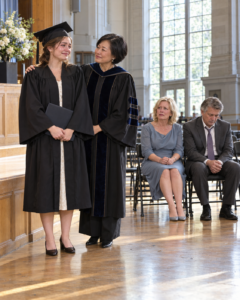
Phân cảnh 1: The day of graduation
That afternoon, under the bright May sun, my name was called right after my brother’s. I am Delila Knox, 23, a freshly graduated student who learned early that fairness at home was never guaranteed. While he studied with every bill covered, I spent four years working late shifts just to afford what my parents freely handed to him.
The crowd in the stadium erupted when my brother stepped forward. Our parents stood, beaming as if his success belonged entirely to them. Cameras clicked. His name echoed through the speakers, and my mother dabbed at her eyes with a tissue.
Then the room quieted. The announcer read my name next. The applause scattered like loose confetti, fading before it reached the front row where my parents sat.
My heels touched the stage, but their eyes looked past me, searching for him again. I smiled for the photos anyway, holding my diploma tight enough to keep my hands from shaking.
Only a few people knew what really happened behind that smile. The scholarship that bore his name, the savings I had spent, the nights I skipped sleep to make rent—all of it led here.
And when the dean turned toward me, announcing a new recognition I hadn’t told anyone about, my parents’ smiles faltered. In that moment, every unspoken truth they’d buried finally surfaced in front of everyone.
What would you have done if you were in my place that day? Leave your answer below. I’m curious to see how you’d handle it.
Phân cảnh 2: Growing up in the shadows
Growing up above our family’s grocery store in De Moines meant waking to the sound of delivery trucks and falling asleep to the hum of the refrigerators downstairs. The walls always carried the rhythm of work: boxes sliding, glass bottles clinking, the register bell ringing.
Life felt simple, but even as a child, I sensed it was balanced unevenly. My brother Carter never had to help with anything. Mom said he needed time to focus, that school was his job, and the store would only distract him.
I never heard those words directed at me. My job was whatever needed to be done.
Most mornings, I helped Dad unload crates of fruit before school. After classes, I took my place behind the counter, sorting coins into stacks and handing change to customers.
Carter passed by, sometimes on his way out with friends, tossing me a quick wave. I always waved back, pretending it didn’t sting to see him free while I stayed behind, counting cash and wiping the counter clean.
Mom would glance at me, nodding toward the broom, and say, “You’ve always been responsible.”
It was meant as praise, but it sounded more like permission to keep carrying the weight no one else wanted.
At night, after the store closed, the quiet had its own kind of noise. Dad tallied numbers at the register while I swept the aisles. The scent of detergent mixed with the cool air from the freezer, and through the floorboards, I could hear the muffled laughter of Carter’s television.
Sometimes I tried to imagine what it felt like to sit upstairs without worrying about the next day’s work. Those thoughts never lasted long because there was always something left to do.
Mom’s favorite phrase became a line etched into memory.
“Your brother needs to focus. He’ll take care of us someday.”
Every time she said it, I wondered who “us” included. I learned not to ask.
Instead, I found comfort in small achievements: the clean counters and balanced ledgers that earned no applause but kept the business alive. I didn’t need to be told that affection in our family came with terms. It was given freely to Carter, conditionally to me.
One cold evening, when the wind rattled the windows, Dad called Carter down from upstairs. He was wearing his school jacket, the emblem bright under the store light. Dad smiled, a real unguarded smile, and placed a hand on his shoulder.
“Proud of you, son,” he said.
The warmth in his voice filled the room. I froze where I stood, holding a box of canned beans, waiting for a glance or a word. None came.
Dad’s smile faded as he turned back to the register, and I placed the box down gently, feeling invisible in a space I helped keep standing.
Later that night, in my small room above the store, I studied under a flickering lamp. Outside, snow drifted against the windows, and every passing car sent a faint vibration through the floor.
I tried to focus on the pages, but my mind lingered on Dad’s words. For the first time, I realized the applause in our house had already chosen its direction. No amount of effort could make it turn toward me.
Phân cảnh 3: Choosing independence
The night our college letters arrived, the air inside our small apartment felt heavier than usual. The dinner table was set with Mom’s best dishes, the one she only brought out for birthdays or holidays.
Carter sat across from me, his envelope already torn open, a broad smile on his face as he waved the letter like a trophy. Mom clapped her hands together and said it was the best news of the year. Dad raised his glass of iced tea and told him how proud he was.
I held my own envelope under the table, the corner bent slightly from how tightly I was gripping it. When I finally opened it, my heart nearly burst. I had been accepted into the University of Minnesota with a partial scholarship.
It was the first real proof that my hard work could take me somewhere beyond this store, beyond the hum of the freezers and the scent of oranges that had followed me my whole life. I wanted to tell them right away, to share the victory.
But as soon as I looked up, the conversation had already shifted back to Carter’s dorm assignment, his orientation schedule, his future. My letter suddenly felt smaller in my hands.
Mom looked at Carter and said, “We’ll handle your tuition first. You shouldn’t have to worry about anything except your studies.”
Then she turned to me and smiled. That soft kind of smile that means a door has quietly closed.
“Delila’s smart. She’ll figure things out.”
The words landed in my chest like cold rain. Everyone returned to their plates, the clinking of silverware filling the silence that followed. I tucked my letter back into the envelope and slid it into my pocket.
After dinner, I excused myself and stepped outside. The sky was turning a deep shade of blue, the kind that makes the street lights flicker to life one by one. The grocery store lights downstairs were already off.
I walked along the cracked sidewalk, breathing in the cool night air, and tried to stop the ache that had been building inside me for years. For the first time, it wasn’t disappointment that I felt. It was clarity.
If no one was going to stand behind me, I would have to build the ground under my own feet.
I passed by the dark windows of the store and glanced inside. The shelves were neatly stocked, the cash register covered for the night. I could almost see my younger self behind that counter, counting pennies, dreaming of something bigger.
I pulled out the acceptance letter, read it again under the street light, and whispered to myself, “No one owes me. I owe myself.”
The words came out steady, not bitter. They felt like a promise.
When I returned home, the house was quiet, except for the faint hum of the refrigerator. Carter’s laughter echoed faintly from his room as he spoke on the phone, probably telling someone about his big plans.
I went into my room, took out my small notebook, and wrote that same line across an empty page. Then I added a new one beneath it: “Tomorrow, I start.”
The next morning, the sun crept through the thin curtains, painting soft lines across my desk. I folded my letter carefully, placed it inside my drawer, and grabbed my resume, the one I had typed weeks ago, just in case.
Mom and Dad were still asleep when I stepped out, the floorboards creaking softly beneath my feet. I walked to the cafe two blocks away, the one that smelled of roasted beans and baked bread.
The manager, a middle-aged woman with tired eyes, asked if I had ever worked before. I told her no, but that I was willing to learn. She smiled faintly and handed me an apron.
It wasn’t much, but as I tied the straps behind my back, a sense of calm settled over me. The day I got accepted to college was also the day I realized no one was coming to rescue me.
Phân cảnh 4: Surviving the early years
And somehow, that realization didn’t break me. It built me.
That first winter at college was the coldest I had ever known. The radiators in my rented room hissed but never quite warmed the air, and the window panes rattled whenever the wind swept across the street. The place smelled faintly of old paper and damp wood.
I shared the narrow hallway with two other students who mostly kept to themselves. The building leaned slightly to one side, and every step made the floor creek like it was remembering something. Still, it was mine, paid for with my own work, and that meant more to me than comfort ever could.
Carter called one evening to tell me about his new dorm.
“You should see my place,” he said. “It’s like a hotel. There’s a gym, a cafe, even heated floors.”
I smiled at the phone, though he couldn’t see me. My own room had a single flickering bulb and a radiator that coughed more than it worked.
When he hung up, I stared at the quiet screen and let the silence stretch. I didn’t envy him anymore. I was just tired.
Most nights, I worked the late shift at the campus library. The rows of shelves became familiar companions; the hum of the vending machine, my lullabi.
Students came and went, wrapped in scarves, talking about exams and plans for holidays. I stayed until 2:00 in the morning, stacking books, cleaning tables, and walking home under falling snow. My hands stayed red from the cold, my eyes heavy, but every paycheck felt like proof that I could keep going.
One night after closing, I sat on the library steps and dialed home. The phone rang longer than usual before Mom picked up. Her voice sounded distracted, like she was watching something else.
I asked how everyone was. She said they were fine, then added, “We’ve done enough for you, Delilah. You’re on your own now.”
In the background, I heard the television and faint laughter. It was the sound of a house I no longer belong to.
I wanted to ask if Dad was there, if Carter was home for the weekend, but the words never left my mouth. I just said good night and listened to the click of the line disconnecting.
After that call, something in me settled into silence. I stopped expecting their voices to fill the empty spaces. My world became the rhythm of work and study, the slow drip of time measured in pages read and cups of coffee finished.
When snow covered the city, I walked carefully through it each morning, the cold biting my cheeks, my breath turning into thin clouds. I passed groups of students laughing together, their scarves bright against the gray. I didn’t feel lonely exactly, only distant, like I was watching life through a window I couldn’t open.
That winter, I learned to live with the quiet. I found peace in the small routines: the click of the library lights at closing, the taste of cheap instant noodles, the soft scratch of a pencil moving across notes.
Sometimes I caught myself thinking of home, of the store and the smell of oranges, of the sound of Dad’s voice saying he was proud of Carter. But the memory no longer hurt. It just felt far away, like a story that once belonged to someone else.
There was a moment in February when I stood outside the library and watched the snow fall in slow spirals under the street light. My hands were numb, but my chest felt warm. I realized I hadn’t cried once that semester.
Maybe it was because I no longer expected fairness, or maybe because I was finally learning what independence really meant.
I walked back to my apartment, my shoes soaked, the city lights blurring in the distance. When I reached my door, I paused before going inside, hearing nothing but the hum of the city. It was a quiet that no longer frightened me.
Phân cảnh 5: Finding academic success
By the second spring of college, the cold had finally lifted, and sunlight streamed through the tall windows of the environmental studies lecture hall. The room smelled faintly of chalk and soil samples. I sat in the third row, my notebook filled with cramped notes from weeks of classes.
That morning, Professor Meghan Lu announced that she wanted to read a few essays aloud, examples of strong critical thinking in the recent assignment. My name was the second she called.
For a moment, I thought I had misheard. Then she began reading my essay, the one I had written half asleep at the library desk about sustainable composting systems in small cities.
Her voice carried my words across the room, steady and deliberate. I felt a strange warmth spreading through me, something I hadn’t felt in a long time: recognition.
When she finished, there was a brief pause. Then a few students turned toward me, nodding.
Professor Leu smiled and said, “That’s the kind of practical insight we need more of.”
After class, she asked me to stay for a moment.
“I’m leading a small research team,” she said. “We’re studying bow-waste processing models for lowincome communities. I think you’d be a good fit.”
The words took a moment to sink in. I nodded, trying not to sound too eager, and she handed me a folder with project details. It felt heavier than paper. It felt like a door opening.
The lab was small, tucked behind the main science building, filled with glass jars, soil samples, and half-built equipment. That’s where I met Khloe Scott, another student researcher. She greeted me with a grin and an outstretched hand.
“Finally, someone else who actually enjoys this stuff,” she said.
She had a quick laugh and an easy confidence that made the room feel less intimidating. During the first few weeks, Khloe showed me how to run the tests, how to record the data correctly, and how to fix the occasional equipment failure that every new student caused at least once.
Working in that space became the highlight of my week. The smell of the compost mixture didn’t bother me. It reminded me that something could decay and still create life again.
Chloe often stayed late with me, talking about classes, future goals, and sometimes, when things grew quiet, about how people underestimate what you can do when you don’t have help.
“You don’t need permission to succeed,” she said once, her voice soft but sure.
She was the first friend I had made in college, the kind who didn’t need explanations or apologies. When she learned I was working two part-time jobs, she didn’t pity me. Instead, she helped me refine my scholarship application essays, editing them line by line while eating cold pizza on the lab counter.
“You’ve got the work ethic,” she told me. “Now, let’s make sure they see it, too.”
Weeks turned into months, and our project began showing promising results. We developed a small prototype for community composting that used biodegradable filters. Professor Louu was impressed enough to submit our findings to the Iowa State student conference.
When she told me the news, I couldn’t speak at first.
She laughed and said, “You earned this. Get ready to present.”
The day of the conference, the hall buzzed with energy. Students in formal clothes stood beside posters, rehearsing their lines. I wore a simple blazer borrowed from Chloe and held my notes tight enough that my knuckles turned pale.
When my turn came, I took a deep breath and began speaking. The words flowed easier than I expected. Faces in the audience nodded. A few even smiled.
For the first time, I felt the kind of pride that didn’t need anyone else’s approval.
Afterward, Khloe clapped the loudest. Professor Louu patted my shoulder and said, “Remember this moment. It’s only the beginning.”
I walked out into the spring sunlight, the air carrying the scent of wet soil and blooming trees. The campus seemed brighter than before. Or maybe I was just seeing it differently.
That night, I sat at my small desk and reread the scholarship confirmation email that had arrived just hours after the presentation. It wasn’t a full ride, but it was enough to lift part of the weight I’d been carrying.
I thought about the long nights at the library, the phone call that had ended with silence, and the way I had learned to live without expecting applause. Now, standing on my own felt less like loneliness and more like freedom.
As I turned off the light, I caught my reflection in the window. There was a quiet strength in that image, the kind that didn’t come from approval or luck. It came from persistence.
I finally understood that my worth had never been measured by the people who overlooked me. It had been waiting inside me all along, just needing the right door to open.
Phân cảnh 6: Choosing integrity over family
Summer arrived, and the air carried that mix of relief and anticipation that always came before graduation season. One morning, as sunlight filtered across my desk, an email notification blinked onto the screen.
The subject line read, “Congratulations, Green Innovation Award recipients announced.”
My heart thudded once, then twice before I opened it. Our research group had been selected for the state level award recognizing environmental innovation. The email mentioned my name specifically alongside Professor LS and Khloe’s.
I stared at it until the words blurred, then pressed a hand to my chest, letting the quiet joy sink in.
The news spread quickly across campus. Professor Lou stopped by the lab to tell us she was proud. Khloe brought cupcakes, laughing as she said, “This is proof that sleep deprivation pays off.”
For the first time, I allowed myself to celebrate without caution, to feel deserving of what I had earned. Yet that same evening, as I scrolled through social media, I saw my hometown mentioned. Someone had shared the local newspaper’s small feature about our award.
The caption read, “Local student leads environmental breakthrough.”
I smiled faintly, unaware that the headline would travel further than I wanted.
A few days later, my phone buzzed while I was organizing samples in the lab. It was Mom. Her voice was strained, and behind it, I could hear Dad speaking in low tones.
“Your brother isn’t doing well,” she said. “There’s talk at his college, something about plagiarism in his management paper.”
My hand tightened around the phone. She continued.
“The Knox family called us. They’re worried. They think you might be able to speak to your school. Maybe say a few words to make things easier for him.”
I paused before answering. The hum of the lab machines filled the silence.
“Mom,” I said slowly. “I can’t do that.”
She hesitated.
“But you know how hard this is for him. You’ve been through—”
“I have,” I interrupted, calm but firm. “And I learned that integrity isn’t something you borrow. He has to face this himself.”
There was a long silence followed by a sigh.
“I just thought maybe you could help your brother.”
“I am helping him,” I said softly. “By not lying for him.”
When the call ended, I sat there for a while, the screen still glowing. Outside, the spring light was sharp, the world bright and indifferent. I wanted to feel guilt, but instead I felt a deep steadiness, like a line had finally been drawn where it always should have been.
Rumors reached me over the next few weeks through old acquaintances. Carter had denied everything, then claimed it was a misunderstanding, but the investigation had begun.
Our family avoided mentioning it directly, though I could sense their discomfort through short, polite messages. I didn’t respond to most. My focus stayed on our project, which had now attracted interest from a local environmental firm offering internships.
One afternoon, Professor Lou called me into her office. Her shelves were stacked with papers and small plants, and a faint scent of coffee lingered in the air.
“You’ve shown more than academic ability, Delilah,” she said. “You’ve shown character. The faculty would like you to give the commencement address this year.”
I blinked. “Me?”
She smiled.
“Yes, you. It’s rare to find a student who not only learns, but also stands for something. You’ll do well.”
For a long moment, I couldn’t find words. I had always imagined graduation as a quiet end, not a moment on stage.
“Thank you,” I finally said, the words feeling both small and vast.
That evening, as I walked across campus, the trees were heavy with green leaves, and the air hummed with the sound of students celebrating early. I passed the library where I had once worked nights, the window glowing like a memory. Every step carried the weight of years I had spent proving to myself that I could be enough.
When I reached my apartment, I opened the old notebook I had carried since freshman year. On the first page were the words I had written long ago: “No one owes me. I owe myself.”
I added one more line beneath it: “And I’ve kept that promise.”
A soft breeze slipped through the open window. For the first time, I didn’t feel the coldness of distance from my family. I felt the warmth of self-respect instead.
Success had stopped being about proving them wrong. It had become about finally living right.
Phân cảnh 7: The commencement address
That afternoon, when everything came full circle, the main hall of Iowa State University glowed beneath layers of white light and muted applause. Rows of students in caps and gowns filled the stage, and beyond them, families leaned forward in anticipation.
The air hummed with pride and the low murmur of whispered names. From my seat near the front, I could see the stage shimmer under the spotlights and the subtle movements of faculty preparing the next round of introductions.
When the master of ceremonies began reading the graduates’ names, applause echoed rhythmically through the hall. Each name was met with cheers, camera flashes, and brief embraces.
My hands stayed still in my lap. I knew what was coming.
When they reached the K section, my brother’s name never came. There was a faint hesitation from the announcer, followed by the next student’s name as if nothing had happened. A few people glanced around, confused.
My parents sat in the front row, their posture rigid, their eyes locked on the stage but seeing nothing. The silence between them and me stretched like a wall made of years.
Then I heard my name.
“Delilah Knox, honor speaker, College of Environmental Studies.”
The hall erupted in applause that rolled across the room like a wave. I stood, my legs steady despite the tremor in my chest, and began walking toward the stage. The robe brushed against my shoes with each step, the sound sharp in the stillness of my thoughts.
As I reached the podium, the hall quieted. The microphone gleamed beneath the stage lights, and for a moment, I saw the reflection of the girl who once worked nights at the library, counting coins for tuition and chasing meaning in a world that didn’t hand her much.
I began to speak.
“4 years ago, I entered this university believing that hard work could build a bridge between where we come from and where we hope to go. What I didn’t know then was that the bridge isn’t built by what others give us, but by what we dare to believe we can make for ourselves.”
There was a pause, soft and full. I looked toward the rows of students, faces bright with dreams, then toward the crowd beyond them.
“Some of us walked here on paths that weren’t always even. We stumbled. We questioned. We learned to stand without a hand reaching back.
“And to those who believed in us when others didn’t, you changed everything.”
The audience clapped, some wiping their eyes. I took a slow breath, letting the sound rise and fade like a tide.
I didn’t need to look far to find my parents. They were sitting motionless, their hands folded together. My mother’s face had lost its practiced calm.
My father’s jaw tightened as though words had failed him. The spotlight caught their expressions: pale, silent, undone.
I didn’t feel anger. What filled me instead was a quiet clarity, the kind that comes only when truth no longer needs to be spoken aloud. My story had unfolded in front of them, not as revenge, but as proof that resilience could shine without bitterness.
When the speech ended, the hall stood in applause again. Professor Lu met me at the edge of the stage, her eyes glinting with pride.
“You did beautifully,” she said.
As I walked back to my seat, the cameras shifted across the audience, catching faces, moments, flashes of light. One frame lingered longer than the rest: my parents’ faces, pale and still beneath the bright hall lights. The image felt distant, like a closing scene in a story that had taken years to write.
The ceremony ended with caps thrown into the air, laughter spilling across the hall, and music echoing through the atrium. I stepped outside into the afternoon sunlight, the warmth pressing against my skin.
The world felt wide, alive, and clean in a way it never had before. For the first time, I wasn’t the daughter left behind or the sister overlooked. I was simply myself, and that finally was enough.
Phân cảnh 8: Building a life of one’s own
Weeks after graduation, the world seemed to exhale. The rush of ceremonies, goodbyes, and photographs had faded, replaced by quiet mornings and unhurried choices.
I moved north to Minneapolis, where the air smelled of rain and new beginnings. The small apartment I rented overlooked a park, its trees whispering like gentle reminders that life somehow always keeps growing.
The first morning there, I opened the curtains wide and let the light fall across the boxes still stacked in corners. For the first time, I wasn’t surrounded by memories I had to survive. I was surrounded by possibility.
I began work at a local environmental firm that specialized in sustainable waste management. It wasn’t glamorous, but it was purposeful.
My supervisor, a woman named Ruth, taught me that progress didn’t always look like applause. Sometimes it was simply the quiet satisfaction of fixing what others had overlooked.
I loved the rhythm of it, the hum of machines, the scent of compost, the calm sense of contribution. When I signed my first independent report, I thought about the girl who once counted tips at the library counter and smiled at how far she had come.
Meanwhile, the news from home traveled slowly, like an echo carried by people who still remembered the Knox family. My brother lost his scholarship shortly after the investigation confirmed academic misconduct. The university allowed him to withdraw quietly to avoid further humiliation, but word had already spread.
The same neighbors who once praised his potential now whispered behind closed doors. My parents stopped attending church, and the store that had once been their pride now felt like a room full of ghosts.
One morning, an envelope arrived at my Minneapolis address. The handwriting was unmistakable, careful, practiced. The same loops I had once tried to imitate as a child.
Inside was a short letter from my mother. She wrote that they had made mistakes, that sometimes love gets confused with fear, and that she hoped I would come home for Sunday dinner.
At the bottom, there was a postcript in my father’s handwriting: “We are proud of you, Delilah. We always were, just too late to say it.”
I folded the letter and placed it back in the envelope without replying. For days, it sat on my desk beside a cup of unfinished tea. Every time I looked at it, I felt the faint tug of something between forgiveness and distance.
In the end, I realized I didn’t need to choose between them. Silence was its own kind of peace.
On Saturday evenings, I often walked to the riverbank where the city lights shimmerred against the dark water. I would sit there watching families stroll past and children laugh at nothing in particular.
It was easy to see now that closure isn’t something another person gives you. It’s something you build, brick by brick, when you stop expecting others to finish your story for you.
Sometimes I thought about Carter, about how we had started on the same line but ended on separate paths. I didn’t wish him harm. I wished him clarity.
There was a time I would have given anything for his approval or for my parents’ affection to feel fair. But fairness, once truly learned, stays with you like a compass. It teaches you to walk forward without resentment.
Months passed, and life settled into a gentle routine. I grew plants on my balcony, made friends from the office, and learned to sleep without guilt.
One evening, while organizing my bookshelf, I found the old notebook where I had once written the words that defined me: “No one owes me. I owe myself.”
I smiled at the memory. It wasn’t defiance anymore. It was peace.
As I closed the notebook, I whispered to myself, “Sometimes distance is the only closure you need.”
The words didn’t sound bitter. They sounded earned.
I thought about all the people who might one day hear my story, those who had felt unseen, unheard, or unloved in the very places they expected to belong. To them, I would say this: when love becomes conditional, it stops being love. But fairness, once you find it within yourself, never leaves you again.
And if this story touched you, share your thoughts in the comments. Thank you for listening until the end. Your time truly matters.